Economic
Sudan’s Debt… Scenarios for Resolution
Report by: Rehab Abdullah
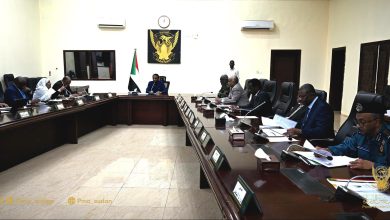
As a high-level delegation led by Finance Minister Dr. Jibril Ibrahim participates in the 2024 Annual Meetings of the International Monetary Fund (IMF) and the World Bank Group, held from October 21-26 in Washington, they aim to make progress in addressing Sudan’s external debt, which exceeds $60 billion. The Sudanese delegation, including Planning Undersecretary Mohammed Bashar Mohammed and a technical team from the ministry’s relevant departments, is expected to achieve some progress in debt resolution and refinancing critical projects in health, education, and humanitarian aid through international organizations.
During the meetings, the finance minister is expected to meet with representatives from international organizations, the IMF, the World Bank, and regional financial institutions. He will also hold bilateral meetings with his counterparts to strengthen economic cooperation and enhance relations with countries engaged in bilateral cooperation.
Sudan became eligible for the Heavily Indebted Poor Countries (HIPC) Initiative, following its removal from the U.S. list of state sponsors of terrorism in late 2020. This initiative aims to reduce the debt burden for low-income countries. Sudan has already settled arrears with the World Bank and the African Development Bank, and hopes to secure funding in Paris to settle IMF arrears, moving the country closer to the decision point. Sudan has undertaken economic reforms under IMF supervision, including fuel subsidy removal and a significant devaluation of its currency. More reforms are required to reach the “completion point.”
A Negotiating Delegation However, Dr. Abdul-Azim Al-Mahal, Dean of the Faculty of Economics at Sudan University, believes that addressing Sudan’s debt requires careful preparation, taking advantage of the current situation, and forming a negotiating delegation of diverse specialists rather than politicians or figureheads. He suggests that parts of the debt issue could be resolved through the HIPC initiative, as Sudan meets the criteria. He also mentioned the G20 initiative, which allocated around $60 billion for poor African countries, of which Sudan is eligible, along with initiatives by Bill Gates and other wealthy philanthropists.
Bilateral Debt Settlements Al-Mahal also pointed out that Sudan is currently facing war, floods, dengue fever, cholera, and other crises. He emphasized that some of the debt could be settled bilaterally with creditor countries. Another solution could be the “BOT” system, where creditor countries are given agricultural and industrial projects to recover their debts and profits before returning the projects to Sudan.
Approaching Debt Resolution Meanwhile, banking expert Waleed Daleel noted that Sudan is approaching a crucial stage in resolving nearly $50 billion of its external debt, particularly by meeting the requirements of the HIPC initiative. He explained that Sudan’s total debt reached at least $50 billion by the end of 2019, according to the IMF, with about 85% of the debt consisting of arrears, including unpaid interest and penalties.
Daleel warned that the economic cost would increase significantly if the war continues. He noted that the finance minister reported an 80% drop in state revenues, and the war has caused the largest contraction in Sudan’s economy, shrinking by nearly 40%, with complete deterioration in all sectors.
Policies and Measures Daleel emphasized that the government should address this crisis through several policies, including turning to the IMF. Given the significant erosion of foreign reserves during the war and the limited effectiveness of current monetary and fiscal policies in addressing the foreign currency crisis, he pointed out that external loans present a quick solution. However, he warned that borrowing from international institutions such as the IMF has become increasingly difficult due to global economic challenges.
Selling State Assets One of the potential measures Daleel highlighted is the sale of state assets, noting that while selling assets may not burden the broader population, it could lead to corruption and undervaluation of critical assets. He cautioned that this approach could weaken the state’s sovereignty and long-term economic stability, especially if strategic assets such as ports are sold to foreign companies.
In conclusion, Daleel stressed that political reform is essential for solving Sudan’s economic crisis. He called for a national reconciliation process to foster political stability, which would encourage the return of foreign investments and the inflow of funds from Sudanese expatriates. A stable political environment would allow for difficult economic decisions to be made, even if they require sacrifices from the population.
🔴🔴🔴🔴🔴
Bank of Khartoum Raises the Dollar Exchange Rate
Sudan Events – Rehab Abdullah
On Thursday, the Bank of Khartoum raised the exchange rates of foreign currencies after months of stability. The bank set the dollar buying rate at 1987 SDG and the selling rate at 2001.91 SDG.
Foreign exchange rates in the parallel market fluctuated between increases and decreases. Currency traders mentioned that the dollar rate in Thursday’s parallel market trading ranged between 2600-2700 SDG, while the Saudi Riyal ranged between 691.48-718.08 SDG. The UAE Dirham ranged between 708.44-735.69 SDG, and the Euro traded between 2795.69-2903.22 SDG. The British Pound fluctuated between 3376.62-3506.49 SDG, while the Egyptian Pound decreased to 53.36-55.41 SDG. The Bahraini Dinar ranged between 6842.10-7105.26 SDG, while the Qatari Riyal traded between 710.38-737.70 SDG. The Omani Rial ranged between 6842.10-7105.26 SDG, and the Kuwaiti Dinar was priced between 8387.09-8709.67 SDG.
—🔴🔴
Director of Mineral Resources Witnesses the Issuance of the First “Gold Export Certificate” from the Unified Window
Sudan Events – Reports
Dr. Maqdam Khalil Ibrahim, the Acting General Director of the Sudanese Mineral Resources Company, visited Port Sudan to inspect the preparations for the opening of the Sudanese Unified Window for Gold Exports. He was accompanied by journalists and media representatives to ensure that the government has taken the necessary steps to facilitate gold export procedures, recognizing it as a crucial economic resource for the country. During the visit, Dr. Maqdam and the media witnessed the issuance of the first gold export contract certificate for the Ministry of Foreign Trade through the unified window, in the presence of the Director of Exports at the Ministry of Trade, Ansaf Al-Mufti.
Dr. Maqdam announced that the unified gold export window is now complete, and its official launch will be soon. He also assured Sudanese citizens, miners, and exporters of the simplified documentation process for exports, urging them to follow official channels to ensure all the gold produced supports the national economy. On his part, Seif Al-Din Mohamed Ayoub, Director of the Unified Window for Gold Exports, explained that eight government entities related to gold exports are integrated into the window. He emphasized that the operations would adhere to international standards and that the development process would continue until reaching the stage of electronic transactions to ease the tasks of exporters and traders.
—🔴🔴🔴
Minister of Agriculture Welcomes African Development Bank Cooperation for the Winter Season
Sudan Events – Reports
The Acting Minister of Agriculture and Forestry, Dr. Abu Bakr Omar Al-Bushra, welcomed the African Development Bank’s grant of 100 million dollars to implement the second phase of the wheat production project. In a press statement, he affirmed the ministry’s commitment to maximizing the benefits of cooperation with all international entities. The minister reiterated the Sudanese government’s determination to move forward with cooperation with all organizations willing to assist the Sudanese people through the Ministry of Agriculture and Forestry.