The Cost of Misdiagnosing the War—Victory is at the Door: We’re Overjoyed!

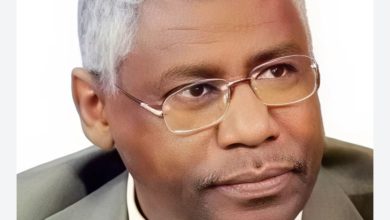
Dr. Moatasem Aqra’a
At the onset of the war, four distinct stances emerged from four different camps:
1. The RSF camp and its supporters, whether openly or tacitly.
2. The unconditional pro-army camp, which supports the military regardless of concerns about democracy or civilian rule.
3. The pro-democracy camp, which has consistently opposed the RSF, viewing it as an unsuitable alternative to the army or the state, despite their flaws. This camp considers the war as primarily one of the RSF against the Sudanese state and civilian population. Their priority has been resisting RSF violence while maintaining their commitment to democracy and civilian governance after repelling the RSF invasion.
4. The neutral camp, which argues that the war is between two equally bad sides—RSF and Islamists (or an army controlled by Islamists). They see both factions as criminal and fail to recognize the war’s impact on over 40 million Sudanese people, reducing it to a mere struggle between the RSF and the so-called “Islamist Army,” as if the conflict were taking place in a deserted wasteland rather than inside people’s homes and communities.
The Consequences of These Stances
With the army’s recent victories and the overwhelming joy of Sudanese people returning to their cities and villages after the RSF’s expulsion, those who supported the state’s fight against the RSF see no issue in celebrating alongside the people. They feel no discomfort in expressing their joy because they diagnosed the war as a battle between the Sudanese state and foreign-backed feudal militias owned by a single family.
For them, this victory belongs to the state and the people, not to the Islamists or military dictatorship—making celebration fully justified.
This camp sees the victory as the result of widespread national resistance, involving contributions from the battlefield, political efforts, media campaigns, and grassroots solidarity. The military and Islamists played a role, but their contributions were part of a much larger effort by various sectors of Sudanese society.
Thus, those who stood with the Sudanese state against the RSF invasion celebrate openly without any political contradictions. Their joy is an extension of their commitment to defending the Sudanese people and state without aligning with the Islamists. Moreover, they do not grant the military a blank check and remain steadfast in their historical calls for democracy and good governance.
The Dilemma of the Neutral Camp
In contrast, the neutral camp, which insisted the war was merely between the RSF and an “Islamist-controlled army,” now finds itself in an uncomfortable position.
They cannot celebrate alongside the Sudanese people, because their entire framework dictates that this victory belongs to the Islamists or the so-called “Islamist Army.”
By their own logic, public celebrations of the military’s victories must be celebrations of military rule and Islamists, which is a mistaken conclusion based on a flawed diagnosis.
The people are not celebrating dictatorship or Islamists—they are celebrating the presence of an army and state institutions fulfilling their constitutional duty. They are celebrating their right to live in peace, the same right they defended against both dictatorship and Islamism on April 11, 2019.
This misanalysis ultimately hands the victory to the Islamists and military, making it one of the greatest own-goals in Sudanese political history.
The Future is Uncertain, but a Correct Stance is Crucial
This does not mean Sudan’s future is settled. The country still faces terrifying possibilities—escalating foreign intervention, the arrival of foreign jihadist groups, and the complete collapse of state institutions. However, these threats do not change the core argument of this article. Instead, they reinforce the need to take the correct stance in this war before it’s too late.
It is foolish to accept the destruction of Sudan out of sheer spite for Islamists—a mindset that has clouded the judgment of a deluded elite, paralyzing them with indecision.
Sudan’s Islamists have historically succeeded not because of their own brilliance, but because of the theoretical and strategic failures of their opponents. Islamists do not need to outmaneuver their adversaries—they simply watch from the sidelines as their rivals defeat themselves.
If the neutral camp remains silent and loses its momentum, it will further alienate itself from the Sudanese people in their most difficult historical moment. This alienation will carry heavy political costs in the future.
Notably, many from this camp have begun shifting their stance, conceding that it is permissible to celebrate the RSF’s expulsion from Madani, Sennar, and other cities (thank you for this “permission”—the Sudanese people truly needed this fatwa).
At first, neutrality seemed like an easy and safe “politically pure” stance, despite the moral betrayal of a raped and brutalized nation. But neutrality is now proving costly, and its price may rise even further in the future. In addition to isolating itself from the people’s joy, this stance has handed its political adversaries a rope to hang it with.
One day, many will wonder who scored this own-goal, because neither the Islamists nor the military had to do anything—it was self-inflicted.
Time to Stop Digging
Merely permitting joy over the RSF’s expulsion is not enough. As the first rule of intelligence states: If you find yourself in a hole, stop digging.
Likewise, if you realize you’re on the wrong train, get off at the first station—delaying will only make the journey back longer and more expensive.
What seems like the easiest option at the start can often become the most costly in the long run. In historic moments like these, there are no easy or “perfectly clean” choices.
More importantly, the first rule of the drug trade is that the dealer should never use his own product—because that would destroy him.
The same applies to politics. Never believe your own propaganda—neither about yourself nor your enemies, even if they are Islamists. Instead, build your stance on scientific analysis, not on convenient narratives that numb the mind like opium.
Bottom Line: We Are Overjoyed, and Rightfully So
Yes, we are celebrating—not out of allegiance to Islamists or military rule, but out of joy for the Sudanese people’s victory over the RSF.
We will continue to demand democracy, civilian rule, and human rights.
Defending the state’s existence and the people’s safety against foreign-backed militia rule does not mean endorsing genocide—whether in Rwanda 1994 or the hypothetical “Um Barmbita Massacre” in Sudan 2026.
The lesson here is clear: Political miscalculations can have severe costs. In moments of national crisis, mistaking a people’s survival struggle for a mere power struggle is a historic blunder.