The National Agenda: An Initial Reading (1)
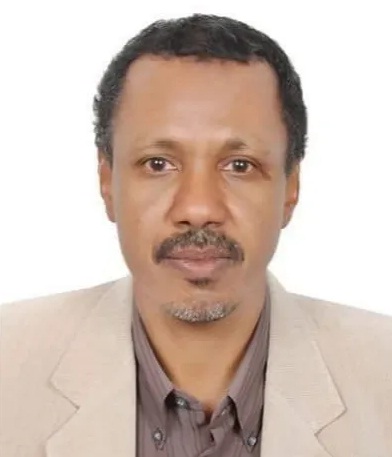
Dr. Ibrahim Al-Siddiq Ali
The first reactions to the National Congress Party’s project (“Future Agenda”) are questions: Is this vision for public discussion, or for internal consultation?
For a long time, I was convinced that internal discussions within the Islamic movement had fostered awareness within its base, but this also worked against it with the rest of the forces and public opinion, who became convinced of the absence of consultation and shura. If the Islamic and National movement had opened its meetings to the public, perhaps people would have discovered the diversity of opinions, proposals, and criticisms. This is what this document has realized, as it presents views for the party, other parties, and the public, which is a key point.
The second general indication is that the “Future Agenda” has moved the discussions from clarifications, hints, and interpretations to an open, comprehensive vision that includes explicit views on governance, transition, economy, media, constitutional arrangements, accountability, justice, and most of the major political and national concerns. This is an important foundation and a starting point for any dialogue, partnership, or even understanding of the directions. It is an initiative that moves beyond political stagnation towards approaching others.
Thirdly, the vision presents one of the most tolerant political interactions, accepting the other without excluding any political group and without imposing individual views on political forces.
These are general, preliminary points on the future direction of the National Congress Party, led by Dr. Ahmed Mohamed Haroun. The precision in the use of words and expressions clearly reflects a legal background.
(2)
However, there are necessary points that must be considered.
The first is the development of the concept of the social contract, its means, and its parties. It is no longer just a relationship between a ruling authority and an individual, but rather between a ruling authority, interest groups, interconnected communities, individuals, and civil society. Therefore, this document should have looked more deeply into the civil society groups and their issues, such as associations, social segments, unions, and coalitions. The influence of this group on public opinion has grown significantly, as the issues and directions are now larger than party and organizational affiliations.
Secondly, war has impacts on public opinion and the way circumstances are dealt with. Its essence is “focusing on the nearest interest, in the neighborhood, the region, the city, and the area.” There will be impacts on people from places like Madani as a demographic and community block. The most important issue here is reconstruction, ensuring stability, and utilizing resources. This will be the slogan for places like Singa, Dinder, Suki, Kamilin, Rifa’a, Um Rawaba, and El Fasher, just as it is for Khartoum, Omdurman, and Bahri. This circle reflects the importance of addressing social and community demands and rights.
(3)
While these observations focus on social and important aspects, the most pressing issue in the minds of Sudanese political forces, the regional environment, and some international circles is the nature of the relationship with the military establishment. This point must be analyzed, and the position and commitment must be clearly stated:
The National Congress Party will never seek power through any military option. This is a final decision, and supporting the current transition is a necessity dictated by the situation.
The National Congress Party will not seek today or tomorrow any political gain or advantage from its role in defending the homeland in the battle of dignity. It is a faction within a comprehensive national alignment.
In summary, these are the clearest proposals, even advanced in their vision and value.
Source: Al-Muhaqiq website