Atbara… The Launch of Economic Renaissance
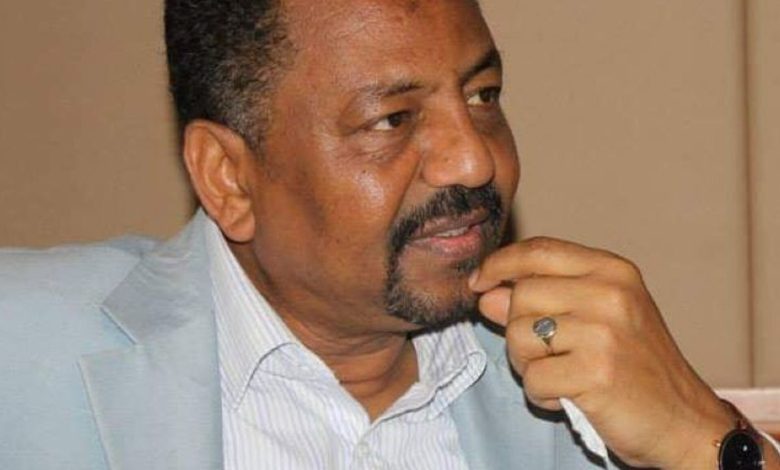
By Ali Askouri
Atbara is currently witnessing a remarkable economic and urban renaissance progressing at a rapid pace that is impossible to miss.
I had been away from the city for less than a year, and upon my return, I was so taken aback that I thought I was visiting a different city.
Atbara enjoys a strategic location at the crossroads of several national roads: the Port Sudan–Khartoum road, the Abu Hamed–Atbara road, the Merowe–Al-Dammer road, along with other dirt roads leading from Kassala and Gedaref.
This provides the city with a location every city would envy for its potential to drive prosperity and progress.
Before discussing the reasons behind the current renaissance, we must refresh our memory with some events from the recent past.
Atbara was the first city targeted by the former regime (the Inqaz government) for destruction and the displacement of railway workers—most of whom made up the city’s population. Tens of thousands of workers and employees were laid off for no reason and evicted from their homes to wander the streets, falling into poverty and hunger for years. Tragically, the individual responsible for this injustice was from the same state, and despite the fall of the regime, he has never uttered a single word of apology to the citizens he unjustly displaced.
Like many of the regime’s extremists, he believed he was acting in the name of God. The Inqaz regime and Islamists in general held the belief that Atbara was a leftist stronghold, and that destroying it would crush the political left and its base. They acted as if communists and leftists had no right to work or live in their own country! Thus, the regime unleashed its agents to destroy the lives of Atbara’s people and cut off their livelihoods, before turning on the railway itself, completing its destruction as we see today. The repression didn’t stop there—many of the city’s youth were arrested and tortured in an effort to humiliate them and drive them away.
I passed through the city in mid-1991 and was shocked by the scale of devastation. I thought a massive earthquake must have struck, one the government had covered up. I fell into deep depression from the ruin, poverty, despair, and hopelessness everywhere. Without a doubt, the regime had dealt a death blow to the city.
Years passed, and yet it was from this very city—targeted for death—that the spark of the Inqaz regime’s downfall was ignited. That is the divine irony: while the regime tried to destroy Atbara, it was Atbara that delivered the final blow to a crumbling system. Some of its henchmen used to boast they would “hand over the country to the Prophet Jesus (peace be upon him),” and here He came early to their reckoning.
While the regime exhausted its efforts to destroy the city, divine will revived it and lifted the injustice off its people. After the displacement of workers and the destruction of the railway, God compensated Atbara with the discovery of gold in its surroundings. Life returned. The city became a destination for hundreds of thousands of miners bringing gold to its markets. Its veins were nourished, its branches sprouted, and its trees bloomed and bore fruit. Such is divine justice—God replaced the railway with gold, and let the regime and its oppressors drink from the sea.
Artisanal miners and mining companies pumped vast amounts of money into the city’s markets, reviving life, raising new high-rises and luxurious homes. Wherever you go in the city, you’re struck by the booming urban development. It’s a remarkable phenomenon, testifying to our people’s ability to rebuild and develop. Towering buildings and modern malls rise everywhere, with new shops opening at an accelerating pace.
Another factor contributing to the city’s rapid growth is the relocation of countless businesses and companies to the area. Along the road from Al-Dammer to Atbara, hundreds of factories are rising, with construction and production proceeding at a steady pace. What was once a road with only two cement factories to the west has now become a full-fledged industrial zone—and new factory warehouses keep rising every day, praise be to God.
The population has also grown—from around 75,000 to approximately two million (my estimate). The true number is likely even higher when including the surrounding villages, which have become crowded with those displaced by war.
This massive population increase has expanded the market due to a surge in consumers, further fueling economic growth and market development.
There is no doubt that the transformations of the past decade—especially in mining and population displacement from the capital—have placed Atbara and Al-Dammer on the path of a major renaissance that could, in coming years, lead to national revival.
However, despite all these achievements, there is a glaring failure in environmental health and waste management. Piles of garbage cover streets, fields, and open spaces—a matter that the municipalities of Atbara and Al-Dammer must address urgently. It’s unacceptable for the streets of these cities to appear in such shocking condition.
It’s also noticeable that the state government is absent from leading this renaissance, and there are no guiding plans. Economic and urban development do not happen randomly. Anyone crossing the bridge and looking at both banks of the Atbara River will feel ashamed at the neglect—the riverbanks are covered in invasive plants like mesquite and wild shrubs. These areas could become a paradise if supported by proper planning and strong will.
The state also urgently needs a new bridge over the Atbara River, east of the current one, dedicated to truck traffic to Khartoum. Crossing the current bridge takes too long and causes severe congestion throughout the day. I believe the ideal location for the new bridge would be near the truck station, connecting to the agricultural areas southeast of Al-Dammer and linking up with the Challenge Road near Qahawi Al-Aliyab, for example. Regardless of its exact location, building a second bridge has become a pressing need to keep trade flowing smoothly.
In conclusion, congratulations to the people of Atbara and Al-Dammer for their tireless efforts in bringing about this economic renaissance. They deserve it after all the suffering inflicted by the Inqaz regime. I’ve also learned that the city of Shendi is on the same path—and both its people and the state government must seize this opportunity and build on it to become the spearhead of Sudan’s hoped-for revival.
May what is happening in Atbara, Al-Dammer, and Shendi serve as an inspiration for other cities to awaken—because the potential for growth exists in all of them.
This land is ours.
Source: Sudanese Echoes