Judiya: A Deep-Rooted Tradition of Peacemaking Gains New Relevance in Sudan
Sudan Events – Agencies
As formal institutions struggle to address ongoing conflicts, rural communities in Sudan are turning to ancient methods of dispute resolution to maintain social order.
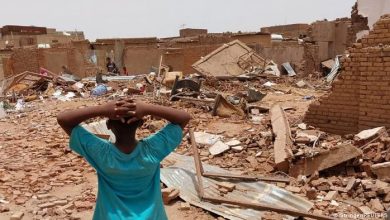
In May 2024, what began as a minor dispute in a market between members of the Salamat and Beni Halba tribes in Kabum, South Darfur, escalated into armed conflict, resulting in burned homes and large-scale displacement.
According to a local witness who requested anonymity, the violence started as a quarrel over livestock in a local market. It quickly spiraled into a tribal confrontation that led to the destruction of the market, widespread looting, and dozens of deaths.
The conflict involved two distinct Arab pastoralist tribes: the Beni Halba, who are primarily cattle herders based in Id al-Fursan, and the Salamat, another Arab pastoralist group of Chadian origin that settled in Central Darfur roughly two decades ago.
A Traditional Path to Peace
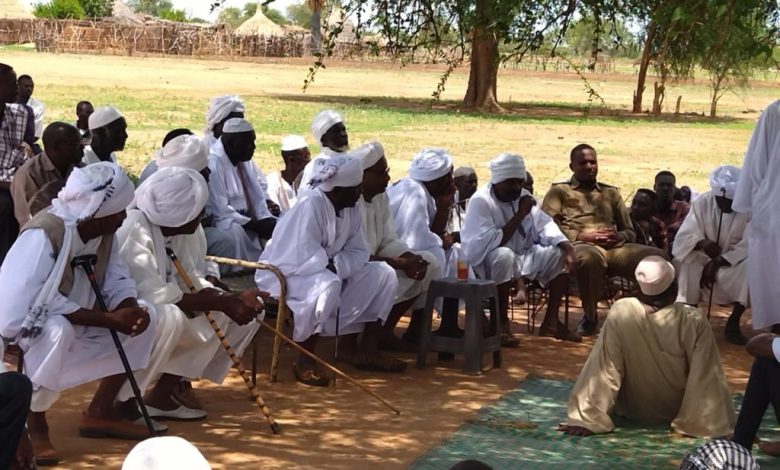
To halt the escalation, village elders employed an age-old custom known as judiya. They brought both parties together, listened to their grievances, and mediated a peace agreement that has held to this day, strengthening intertribal alliances.
Since the war between the Sudanese Armed Forces and the paramilitary Rapid Support Forces erupted in April 2023, this deeply rooted method of conflict resolution has taken on renewed significance. Community members report that such mediations, once held once or twice a year, now occur at least five to six times every two months.
“In a time when the prospect of peace seems distant, returning to alternative means of achieving and building community peace has become inevitable,” said sociologist Yasser Issa in an interview with OkayAfrica.
“Peacebuilding fundamentally depends on addressing the root causes of conflict,” Issa added, “while empowering local communities to manage their disputes without resorting to violence.” He emphasized that the process is long-term and requires significant time and effort. With over seven million people displaced and a weakened formal justice system, communities are increasingly turning to judiya to maintain order and prevent local disputes from escalating into widespread violence.
What Is Judiya?
Following the deadly clash between the two tribes, village elders and community leaders held a reconciliation session under a large lalob tree in the town’s main market — a traditional gathering space for such mediations. In some instances, these sessions take place in neighborhood mosques. During the meetings, both parties pledged to return stolen items and signed a peace agreement that imposed strict penalties for violations.
“With the outbreak of war, the process of building and establishing peace in Sudan has become more complicated, given the country’s long history of war, conflict, and political and tribal strife,” said lawyer Mohamed Hassan in an interview with OkayAfrica. “This is where social initiatives and peacebuilding mechanisms like judiya have stepped in to fill the gap.”
Rooted in the Arabic concept of generous hospitality, judiya emphasizes forgiveness and prioritizes communal harmony over narrow personal interests.
“Judiya is particularly popular in marginalized communities, which tend to exhibit organic solidarity, unlike central societies that lean toward mechanical solidarity,” said Hassan. This system plays a vital role in community mediation, especially in rural areas suffering from weak formal institutions and the near-total absence of judicial frameworks.
The goal is to achieve consensus among conflicting parties. “Community elders ensure the restoration of relationships and prevent further escalation,” Hassan explained. “The outcomes are binding and accepted by all parties.”
The Judiya Process
Judiya councils are typically led by elders from a village known for its wisdom, honesty, neutrality, and extensive experience in resolving similar disputes. Sessions begin with Quranic verses and prophetic sayings encouraging reconciliation, forgiveness, and the resolution of conflicts while preserving justice for all involved.
“The approach prioritizes finding solutions rather than assigning blame,” said Hassan. Sheikh Ali, a senior member of the Kanembu tribe in western Sudan — an ethnic group originally from Chad — told OkayAfrica that judiya is not merely a reconciliation tool, but part of their cultural identity. “Judiya rulings are widely respected because they stem from local customs, not from written laws that might overlook cultural nuances between communities,” he said.
A Parallel Justice System
“Human societies constantly need mechanisms for social control to maintain balance and uphold justice,” said sociologist Issa. To achieve this, societies must create systems of adjudication that govern individuals and groups. In Sudan, judiya functions alongside the formal justice system.
Issa noted that this form of community-based adjudication has resolved tribal disputes for centuries — compensating victims, correcting injustices, and reaching settlements.