To the Prime Minister: Self-Administration… A Ticking Time Bomb in Urgent Need of a Solution
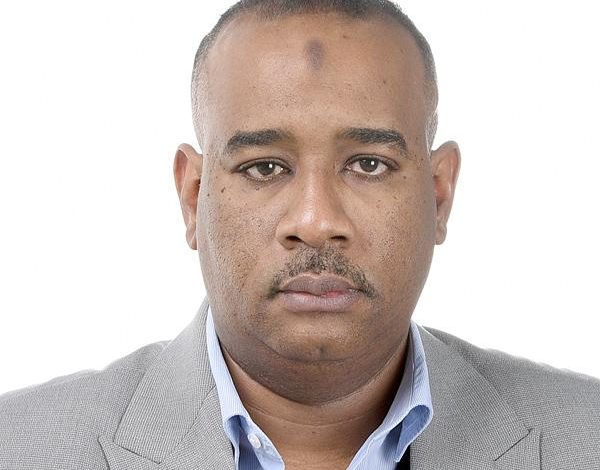
Muhanad Awad Mahmoud
Since Sudanese citizens were forced to confront unprecedented and harsh conditions, various forms of “self-administration” have emerged across neighborhoods, towns, and villages as a natural response to fill the void left by the complex crisis. As always, the Sudanese people have demonstrated a remarkable ability to organize their own lives in times of hardship. Community committees and youth initiatives have stepped in to manage markets, monitor prices, secure neighborhoods, distribute services, and help resolve conflicts.
In cities like El-Obeid and others in North Kordofan, these committees have taken charge of distributing essential goods, regulating commercial activities, and ensuring local security. In some villages in Al-Jazirah, communities have revived traditional systems—like elders’ councils or the hawakeer system—to manage public affairs. Even in certain neighborhoods of Khartoum where the situation has temporarily stabilized, residents have formed local security committees to maintain internal order and protect property.
While these roles reveal a deeply admirable human spirit that we all take pride in, they also risk evolving—from a temporary necessity into the seeds of parallel entities that may be difficult to dismantle later—if not managed wisely within a clear legal and institutional framework. Without proper integration into the state structure, such informal systems could be exploited by organized groups or special interest factions seeking to manipulate communities for narrow agendas.
One of the clearest regional cautionary tales is post-Gaddafi Libya. The “revolutionary committees” once used by the regime to control society morphed, after the state’s collapse, into local power groups that spiraled out of control. Instead of organizing civil life, they became entities that fostered tribal and regional allegiances, governed neighborhoods through de facto rule, and evolved into fronts for armed conflicts and foreign interventions—deepening national fragmentation. This clearly illustrates the danger of leaving self-administration structures without a unifying framework.
What makes this issue even more sensitive is that such informal bodies become easy targets for security infiltration. Extremist elements, political groups, criminal gangs, or covert cells may infiltrate these structures, exploiting their community ties to serve external interests. This exponentially increases risks and threatens long-term stability.
Conversely, other global experiences show that self-administration can become a powerful asset—if managed within a clear national project. Consider Rwanda, which, after a devastating civil war, succeeded in integrating grassroots initiatives and local committees into the official decentralized government system. It developed a fair model that allowed people to manage their areas without the emergence of parallel entities or isolated enclaves. Local governance thus became a genuine engine of development and a tool for strengthening national unity rather than undermining it.
Thanks to the resilience of our people and the sacrifices of our armed forces, supporting troops, and civilian mobilization, the war’s frontlines have receded, and vast liberated areas now await the return of full state services and institutions. Swift action to restructure these grassroots initiatives and incorporate them into formal governance systems—while involving communities in both planning and execution—will transform this popular energy into a true force for rebuilding and restoring trust between citizens and the state.
Mr. Prime Minister, addressing this issue is no longer a mere administrative concern—it is now a matter of national security. Your patriotic duty today is to act swiftly to defuse this minefield before it becomes an irreversible time bomb. The Sudanese people, who have endured and sacrificed so much, are capable of becoming active partners in building a just, modern state—if they find in their leadership the awareness and vision to seize this historic moment.
Originally published on “Al-Muhaqiq” website