On the Prospects of the Sudanese Prime Minister Assuming the Role of Foreign Minister: A Study of Challenges and Opportunities
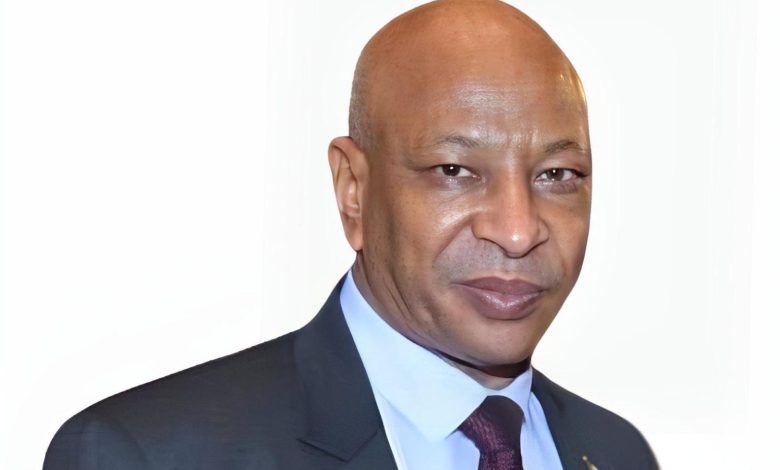
By Ambassador Dr. Muawiya Al-Toum
Sudan is currently navigating a critical juncture in its modern political history, grappling to recover from a devastating war that has crippled state institutions and shaken regional and international confidence. The country remains beset by severe security, economic, social, and diplomatic challenges. Amid ongoing debates over how best to manage the transitional period—and against the backdrop of delays in appointing a foreign minister—emerges a proposal for the transitional Prime Minister to combine leadership of both the executive branch and foreign affairs. This is seen by some as a step toward consolidating Sudan’s decision-making authority both domestically and internationally.
This paper seeks to undertake an analytical exploration of the implications of such a move—scientifically, academically, and professionally—to assess its potential benefits and associated risks. The aim is to provide an objective evaluation of the consequences such a dual role may have for Sudan’s future. This discussion is intentionally framed within the specificity of Sudan’s unique context, rather than through comparisons with other countries like Qatar or Kenya, given the incomparable political dynamics and decision-making contexts.
I. The Current Political and Diplomatic Context
Sudan faces a complex internal, regional, and international environment characterized by:
Deep and multifaceted internal crises, including economic collapse, humanitarian pressures, fragile security, the lingering effects of protracted war, and governance challenges marked by persistent local gaps.
A sharp decline in Sudan’s diplomatic presence and a deterioration of its foreign policy infrastructure, exacerbated by over seven years of inconsistent handling of foreign affairs and heavy-handed external interference.
Intense foreign interventions from regional and international powers—each vying to shape Sudan’s future to align with their own interests, exploiting the current instability.
An urgent need for reconstruction, re-engagement with the global community, and robust diplomacy managed by competent professionals to revive international support—particularly in light of the limited external security assistance currently available.
In this context, concentrating executive and diplomatic powers in the hands of the Prime Minister—an approach only briefly tested during President Nimeiry’s rule—appears as an attempt to reclaim agency over Sudan’s internal and external affairs, albeit one with potentially far-reaching implications.
II. Opportunities in Combining the Two Roles
1. Unified Political and Diplomatic Decision-Making
One major potential advantage is the alignment of domestic priorities with foreign interests. Historically, dissonance between state institutions has led to contradictory foreign positions, weakening Sudan’s stance on key issues such as border disputes, sanctions, debt negotiations, and major global concerns.
2. Swift Crisis Response
Combining the two roles may enable the Prime Minister to respond more decisively to urgent regional and international developments. Sudan faces relentless crises that demand agile leadership—despite the existing power-sharing arrangement between the military, civilians, and armed groups, which has often introduced friction and diluted authority.
3. Enhanced Regional and International Support
The Prime Minister’s international stature may offer greater leverage in negotiating with global leaders, securing political and financial aid for reconstruction, attracting investment, and signing key agreements. Nonetheless, the authority granted in a transitional setting remains limited and circumscribed by the political equations underpinning the cabinet formation.
4. Restoration of Sudan’s International Image
Given Sudan’s severely tarnished image, such a move could signal to the world that the country’s leadership is placing high priority on foreign policy and is committed to repositioning Sudan as a regional actor—despite its suspended African Union membership and dwindling Arab support amid an imposed war.
III. Challenges and Risks of the Dual Role
1. Overburdening Leadership and Fragmenting Priorities
Leading a post-conflict state is an exhaustive task, demanding the Prime Minister’s full focus. Adding the foreign ministry’s portfolio may strain performance across both fronts—especially as foreign policy requires constant fieldwork and international travel—while legal and constitutional constraints define the transitional period’s objectives and the limits of executive power within a complex partnership framework.
2. Erosion of Diplomatic Institutionalism
Sudan’s diplomatic service is rooted in a rich legacy of professional expertise and institutional knowledge. Marginalizing the Ministry of Foreign Affairs through such consolidation may be perceived as a continued erosion of its historical role, potentially demoralizing career diplomats and undermining the Ministry’s credibility as a key national institution. This risks sidelining collective institutional memory and experience in favor of narrow, short-term calculations.
3. Weak Handling of Technical Files
Foreign policy issues—such as border conflicts, trade agreements, multilateral diplomacy, and engagement with international financial institutions—require specialized teams and focused expertise. The Prime Minister, already preoccupied with internal crises, power-sharing coordination, and security-sector oversight, may be ill-equipped to manage these complex dossiers effectively.
4. Negative Signals to the International Community
Although the Prime Minister does not appear to seek additional powers for their own sake, some international actors may interpret this consolidation as authoritarian overreach—raising concerns about democratic backsliding, good governance, and the future of civilian rule in Sudan’s fragile political landscape.
IV. Possible Scenarios
Success Scenario
If the Prime Minister possesses strong diplomatic capabilities, is granted comprehensive authority, and is backed by robust support institutions, the dual role could:
Rebuild international trust in Sudan.
Accelerate reconstruction and rehabilitation efforts.
Counter regional and external interference more decisively.
x Failure Scenario
On the other hand, this approach—especially under current extraordinary and volatile conditions—could lead to:
Dispersed efforts and internal rivalry over decision-making.
New diplomatic isolation and growing international distrust.
Weakening of internal cohesion and institutions in favor of personalized governance, jeopardizing the transition process.
V. Recommendations
1 Consider adopting the dual role as a temporary measure not exceeding six months—pending consensus on appointing a qualified foreign minister or reinstating a previously nominated candidate to lead this sensitive and technical domain.
2 Appoint Ministers of State or a Senior Diplomatic Advisor to support the Prime Minister in routine foreign policy matters, ensuring administrative continuity under the Ministry’s hierarchy headed by its Undersecretary.
3 Establish a National Security and Foreign Policy Council to coordinate efforts among the Sovereignty Council, the Prime Minister’s Office, the Foreign Ministry, and relevant security agencies.
4 Invest in revitalizing Sudan’s diplomatic talent pool and rebuilding trust between political leadership and professional diplomats.
5 Engage political and civil society stakeholders in shaping foreign policy to ensure national consensus, reinforce legitimacy, and mobilize grassroots support.
Conclusion
This contribution is a personal intellectual effort, driven by no vested interest, but by a desire to engage constructively with a pivotal national issue. It is imperative that all stakeholders—former ministers, diplomats, academics, media professionals, and security leaders—offer their insights on this matter, should it become reality, so that it may be fortified by collective national wisdom grounded in expertise and experience.
While the idea of the Prime Minister concurrently serving as Foreign Minister may seem attractive as a stopgap measure, the associated risks demand that it be approached as a temporary solution. Sudan’s transitional success hinges on the political leadership’s ability to balance centralized decision-making with the empowerment of robust institutions and the rebuilding of public and international trust.
Foreign policy, after all, is a mirror of domestic policy—it reflects the degree of internal success, coherence, and stability. Prioritizing the day-to-day needs and suffering of Sudanese citizens must remain paramount as the nation charts a path forward from the ashes of conflict.
And Allah is the bestower of guidance and success.