Kiryandongo Camp and the Hidden Truth
Sudan Events – Agencies
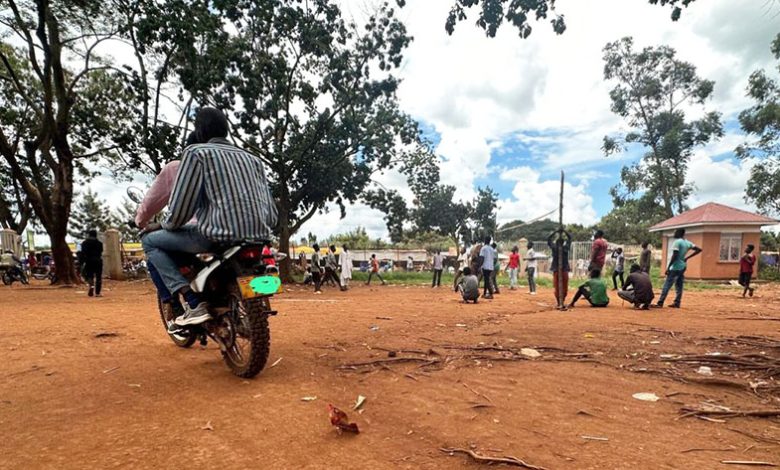
According to reports, the violence that erupted on the night of Thursday, July 11—coinciding with the 14th anniversary of South Sudan’s independence—left dozens of Sudanese refugees injured in the southern section of the settlement (Kelser L East). The attack was reportedly carried out by an organized group belonging to the Nuer ethnic group, which holds demographic dominance in the area. The true dimensions of the attack remain unclear, especially in the absence of any declared tensions among the refugee communities.
The situation remains volatile and could evolve in several directions depending on the nature of the violence and the reactions it provokes. These possibilities include a retaliatory response by Sudanese refugees—especially as narratives laced with ethnic profiling begin to circulate, fueling the kind of rhetoric that has historically driven civil wars. Other risks include unintended escalations, the Ugandan government’s response and its relationship with the Nuer community, or even the outbreak of broader ethnic conflict rooted in the historical identities of Sudanese and South Sudanese populations.
The fact that the violence broke out without any clear or stated cause makes its future trajectory uncertain. Until the true facts of the incident—or developments surrounding it—come to light, it’s important to consider several critical questions and assumptions:
Is there a party deliberately seeking to create unrest and turmoil within the refugee communities in Kiryandongo District?
Is someone exploiting the fragile conditions within Uganda’s refugee communities to send political messages?
Is there an agenda to stigmatize a particular ethnic group for political ends?
One central factor that must be considered in analyzing any potential or premeditated large-scale disorder is the politically strained relationship between the Nuer community and the Ugandan government. This tension stems from Uganda’s military involvement in South Sudan’s civil war, where Ugandan Defense Forces intervened on behalf of President Salva Kiir’s government. Many observers believe this intervention contributed to the failure of peace negotiations, especially given the opposition’s condition that Ugandan troops withdraw from South Sudan. These forces have been accused of committing war crimes against the Nuer in Nasir, Upper Nile State.
Based on the first assumption, one must also consider the political context in Uganda, particularly the upcoming presidential and parliamentary elections scheduled for later this month. The current tensions between the Nuer community and the Ugandan government could be manipulated to destabilize the situation. This volatile environment may provide an opportunity for various actors—inside and outside Uganda—to escalate tensions for political purposes.
Another theory suggests that the ethnic nature of the power struggle in South Sudan might be playing out here. The ruling Dinka elite could be seeking to politically weaken the Nuer by dragging them into internal conflicts and isolating them socially. This would serve to embroil the Nuer—especially those in long-term exile in northern Uganda—in direct confrontation with the host state.
A further possibility is that the issue has nothing to do with the Nuer community at all. Instead, the perpetrators may be rogue organized gangs used by actors engaged in political struggles within Uganda. For example, the Acholi ethnic group—original inhabitants of the land on which the settlement sits—may be involved. The Acholi were displaced in the past, and Sudanese refugees have since settled in the area, which has witnessed commercial growth and urban expansion. These developments may have triggered fears among the Acholi, prompting them to act to halt further settlement.
If any of these scenarios are deliberate—and if the situation continues to brew within refugee communities, particularly among Sudanese refugees who may lean toward retaliation—the area could soon plunge into widespread violence and disruption. Such unrest could bring life in the region to a standstill. It is impossible to predict the exact magnitude of what might unfold, but it could very well amount to acts of ethnic cleansing unless the Ugandan government takes a firm and decisive stance.
Reported by local citizens