In a move that reveals ongoing crises within the newly formed civilian alliance, the Sudan People’s Liberation Movement – Revolutionary Democratic Current (SPLM-RDC) announced the suspension of its participation in the top executive bodies of the “Sumood” coalition due to a dispute over the formation of a parallel government in cooperation with the Rapid Support Forces (RSF).
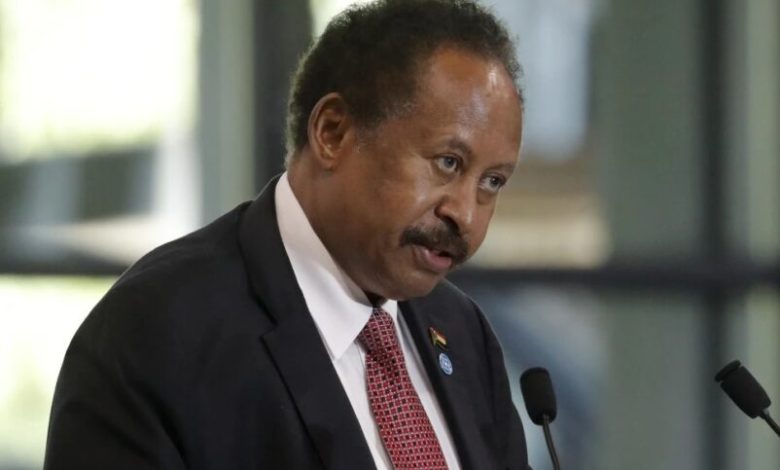
Sudan Tribune has learned that the Democratic Current sent a letter to the leadership of the new coalition, headed by Abdalla Hamdok, stating that the current crisis is a continuation of the political deadlock that afflicted the former “Taqaddum” coalition and has now fully carried over into “Sumood.”
The Revolutionary Current, led by Yasir Arman, called for resolving the pending organizational issues based on a clear political vision, accusing the current leadership of narrowing the circle of decision-making.
The Secretary-General of the Revolutionary Current, Radi Duw Al-Bayt Adam, stated that they will limit their participation to the leadership council only, “in order to allow more space for political dialogue,” while the movement will suspend its membership in the executive bodies and specialized committees of the “Sumood” coalition.
Adam called for the adoption of a new political vision that prioritizes civilian protection as an entry point for resolving the current crisis, and for the creation of an “organic alliance” of independent civilian forces as a prerequisite for reaching a sustainable solution.
He also stressed the need to shift the priorities in dealing with the crisis by focusing on the humanitarian catastrophe and the protection of civilians as a mandatory and non-negotiable entry point, before engaging in any political process.
He added that this approach requires mobilizing a broader front of regional and international solidarity and aligning with the interests of populations affected by the conflict.
Adam warned that “prioritizing the political process over the humanitarian catastrophe and civilian protection prolongs civilian suffering and does not stop the war.”
The Secretary-General criticized the leadership’s failure to overcome past mistakes, noting that the momentum generated by the Addis Ababa founding conference (of the former Taqaddum coalition) was wasted without being capitalized on, and that the new coalition is following the same path of “political bargaining” instead of building a genuine “organic alliance.”