Khartoum’s Water Crisis: A Post-War Challenge for Residents
Report by: Mohamed Nawar
Khartoum – Every morning, Amina Suleiman Johar sets off from the Al-Diyum Al-Sharqiya neighborhood in southern Khartoum, pushing a handcart known locally as a “dardaga”, to fetch water from a nearby well. She hauls heavy loads of water back home, after the war disabled all traditional water supply lines and networks.
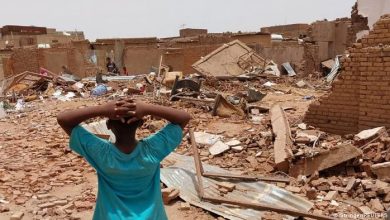
Since the outbreak of war in April 2023, Amina’s neighborhood fell under Rapid Support Forces (RSF) control—until May 20 of this year, when the Sudanese Armed Forces (SAF) declared the full liberation of the capital. Like much of Khartoum, the area endured systematic destruction of electricity and water services.
The RSF dismantled pumping stations and destroyed their equipment in what appeared to be an attempt to force residents to flee. Amina, like many others, also experienced the chaos firsthand—her home and property were not spared from looting. Still, she tells Al Jazeera Net that she chose to stay, resisting threats and enduring hardship.
Her daily water-fetching journey reflects a broader suffering. Beyond the water shortage, she says, “Connectivity remains a major issue for those who stayed. The lack of water and electricity deters people from returning.”
With audible sorrow, Amina adds, “We endured immense suffering before the army arrived and expelled the RSF. We were subjected to terror and humiliation.” She notes that security is now stable, but the absence of many families hinders the neighborhood’s return to normalcy and delays the restoration of services.
Post-War Challenges
In addition to the absence of water and electricity services, residents in southern Khartoum face numerous challenges from the war’s aftermath. One of the most troubling: public spaces in residential areas have been turned into temporary cemeteries. The RSF had reportedly barred residents from using official burial grounds such as Rumaila, Farouk, or Al-Sahafa cemeteries.
Mohamed Babiker Quddus, a resident of Al-Diyum, points to one example: “The Maigouma neighborhood’s football field became a burial site. It used to be a hub for sports and youth activity.” He called on prosecutors, judicial authorities, and forensic teams to exhume the remains and relocate them to proper cemeteries.
Quddus also discussed war-related debris mixed with accumulated trash, which residents now resort to burning. Despite hardships, he tells Al Jazeera Net, “Living conditions—while still difficult—have improved with the reopening of some markets and commercial activities.” However, poor or nonexistent mobile networks continue to affect access to banking services and financial apps.
Quddus expresses cautious optimism, noting improved security and the disappearance of overt threats—but also highlighting the halt in job opportunities and the suspension of salaries.
Community and Official Efforts
In neighborhoods closer to the heart of the capital—such as Al-Shajara and Rumaila—as well as farther south in Kalaklat, there’s a visible increase in movement and commercial activity, despite ongoing problems with water, electricity, and telecom networks.
In areas like Abu Adam, Al-Azouzab, Al-Dabbasin, and Wad Ajeeb, residents have turned to grassroots initiatives and community donations to install solar power systems that help pump water.
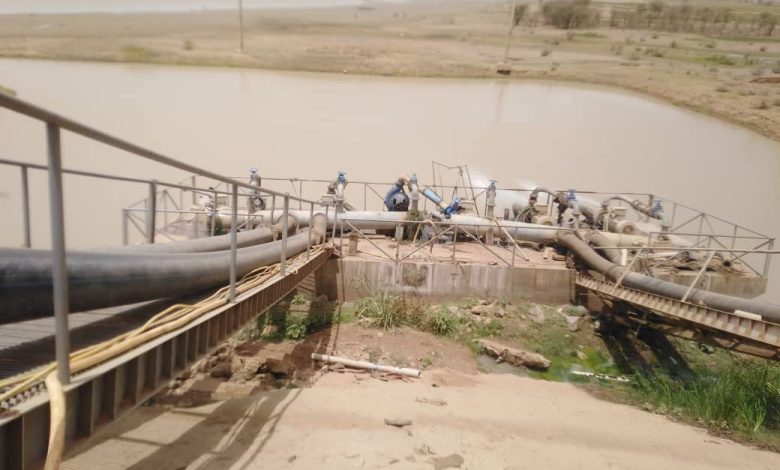
Khartoum state has partially resumed water supply through some networks, despite extensive damage to most stations. The general manager of the Khartoum State Water Corporation, Engineer Mohamed Ali Al-Ajab, told Al Jazeera Net that challenges extend beyond destruction to include a lack of electricity, particularly as Nile water levels continue to drop, hindering emergency water treatment efforts.
Al-Ajab said current efforts focus on restoring five stations to service. Among them, Al-Shajara station recently resumed operations but had to be shut down again due to repeated sabotage of its main pipelines.
The Bayt Al-Mal station, which supplies old Omdurman neighborhoods, is now operating at 60% of its full capacity. Meanwhile, Al-Jarif East station, located on the eastern outskirts of Khartoum, is nearing full operational status.
In Bahri (North Khartoum), partial pumping has resumed, and preparations are underway to restart the auxiliary pump at the storage reservoir station.
As for Jebel Aulia, Al-Ajab explained that its main station originally operated via three pipelines—two of which were completely destroyed. Service has been restored through the third line, which can now supply Jebel Aulia as well as parts of Kalaklat and the Central Reserve Forces base in southern Khartoum.
Source: Al Jazeera Net