Volker’s Statements: Testimony, Regret, or a Rewriting of the War Narrative?
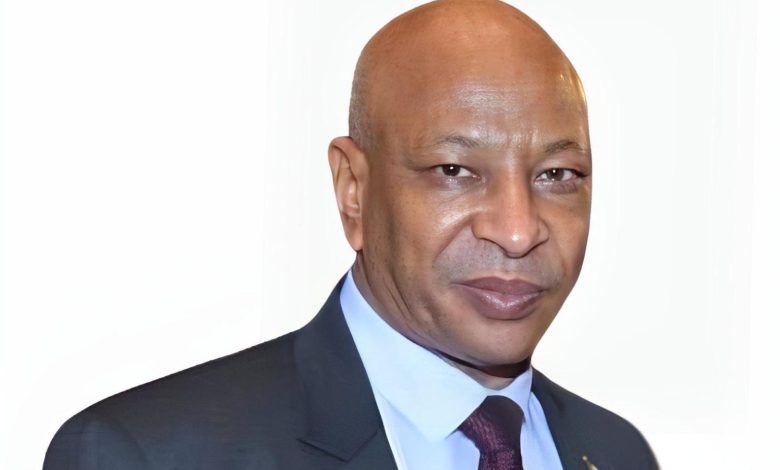
Ambassador Dr. Muawia Al-Bukhari
Introduction:
Two years after the outbreak of the war that tore Sudan apart and cast its shadow over the region and the world, Volker Perthes—the former head of the UN mission “UNITAMS” who was forced to resign after Sudan declared him persona non grata—came forward with a series of controversial statements. What he said was not merely a cold analysis of the conflict’s trajectory; rather, it seemed like a belated confession, or perhaps the testimony of a witness to the tragedy of a nation he was tasked with helping through a fragile democratic transition.
But the central question remains: Is Volker speaking as a neutral observer offering a historical account? Or is he a former official seeking to deflect blame for his failures by laying the burden on local actors? Or is he simply rephrasing the international narrative of the war—one he once shaped by promoting the notion of “equivalence” and attempting to delegitimize the army and its leadership in favor of a framework agreement he sponsored?
This article aims to deconstruct Volker’s statements, read between the lines of his political and moral messaging, and explore their implications for the future of a war imposed on Sudan—with all its complex costs, ongoing consequences, and far-reaching ramifications.
1. Shift in the International Narrative – Army Legitimacy vs. RSF Rebellion
The most notable part of Volker’s statements was his reference to a “relative change in international discourse,” where the Sudanese army is increasingly seen as the legitimate government after regaining control over Khartoum and other states, while the Rapid Support Forces (RSF) are being viewed as a “rebel and terrorist group.”
This shift reflects:
A departure from the cautious and misleadingly balanced approach of major powers over the past two years, who avoided granting legitimacy to either side.
An implicit acknowledgment that, despite structural and political reservations, the army remains the “only remaining institution” capable of running the Sudanese state.
This discourse aligns with emerging regional and international positions, particularly after mounting reports of grave atrocities committed by the RSF in Darfur, Kordofan, Khartoum, and every area it has entered with brutal crimes.
2. Stripping the RSF of Political Legitimacy
Volker’s use of terms like “family militia” and “narrow ethnic-based social base” indicates a clear attempt to strip the RSF of any political legitimacy and portray it as an entity outside the state and incapable of providing an alternative model of governance—contradicting the narrative he promoted while leading the mission.
This characterization sends messages to:
Regional and international powers: Investing politically or militarily in the RSF, its mercenaries, and backers is now a high-risk and doomed endeavor.
Local communities: Casting doubt on the RSF’s ability to represent their interests or ensure their security.
3. Encouraging the Army Toward a Settlement
Volker suggested that a figure like General Abdel Fattah al-Burhan might find a “conditional settlement” a rational option in light of the improbability of a comprehensive victory. Yet he overlooks the army’s actual victories, its resilience, and its ability to break the RSF’s momentum—despite disparities in equipment, international support, and media portrayal.
His remarks seem to aim at:
Pushing the army to use its current position as leverage for negotiation rather than continuing the war—a crafty proposition that events have now surpassed.
Proposing a political settlement that includes major reforms and the dismantling of parallel forces, while preserving the army’s central role. This dream, pursued tirelessly through forums and lobbying, has proven unrealistic—Sudan remains resistant to dismantlement and foreign agendas.
4. Fragility of RSF Alliances
Describing Hemedti’s alliance with Abdelaziz al-Hilu as “inherently temporary,” and noting that other armed groups have their “own goals” and may not stay under Hemedti’s command, aims to:
Undermine the RSF’s image as a unified front.
Sow doubt within its current allies and encourage defections—perhaps reflecting a belief that neither Hemedti nor his brother Abd al-Rahim have a viable future, and that the return of Hamdok and a “civilian state” is no longer feasible amid a growing and unified pro-army movement.
5. Signals About Foreign Powers’ Roles
Volker’s comments about Russia leaning toward the army due to its control over Red Sea ports, while suggesting Libya as a more viable location for a Russian base, reflect a new reading of geopolitical balances. It also supports growing global awareness of Sudan’s geostrategic value—and the country’s right to use this to enhance national security and regional partnerships.
These messages signal:
To Russia: “The Sudanese army is a more reliable partner.”
To regional powers: Red Sea stability depends on supporting the country’s legitimate institutions—and reconsidering investments in an inflated rebel militia built on unrealistic ambitions.
6. Looking Beyond the War – Closing the Door on RSF Legitimacy
Volker’s assertion that the RSF has not provided a model of governance nor shown statecraft—instead committing heinous crimes—implies that future political arrangements will not include the RSF as an autonomous entity. At most, it may be forced to dissolve or integrate under state institutions, aligning with current government policies backed by the people.
Conclusion: Volker’s Messages Between Political Realism and International Pressure
Volker’s recent remarks reflect an understanding that Sudan has entered a new phase characterized by:
A tilt in favor of the army both regionally and internationally.
The exclusion of the RSF as a legitimate governing partner.
A move toward a political settlement that ensures Sudan’s unity—even through difficult compromises with domestic actors, not foreign-aligned groups like the FFC and its parallel government project.
Volker’s delayed admissions are far from innocent; they reveal his shallowness, ignorance, deceit—even lies—as his statements combine testimony, regret, political maneuvering, and a bid to rehabilitate his image after a disgraceful political and ethical failure. The Sudanese scene was more complex than he ever grasped. He now appears like a fox in wise-man’s clothing, trying to reframe a narrative he once tried so hard to impose but which ultimately crumbled.
His fall came the day he was dismissed.
Final Thought:
Between the lines of Volker’s statements lies a bitter realization of the failure of UNITAMS and the Forces of Freedom and Change to bring about genuine civilian protection or facilitate a real transition toward peace. Many in Sudan now wonder: Was Volker part of the solution—or a core part of the problem that fueled war, destruction, and suffering for a proud nation?
What’s certain is this: the war is no longer just a military confrontation—it has become a diplomatic and media battlefield over narrative and legitimacy. And through resilience and sacrifice, the Sudanese state and its people have written the true story, exposing the falsehood of those who “fired the first shot,” and ending the Volker chapter in disgrace.