Khartoum Volunteers Aspire to Move from Food Aid to Project Support

Sudan Events – Agencies
“I felt my soul breaking. Our country, once full of life, had become a heap of destruction. The devastating feeling of helplessness drove me to volunteer as a way to overcome it. We weren’t launching just an initiative—we were simply giving life a reason to continue,” said Imad Al-Din Farah Al-Sheikh, coordinator of the Khartoum Kitchen Initiative, in an interview with Al Jazeera Net.
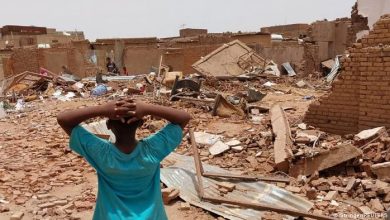
Despite a partial easing of the war’s impact, improved mobility, reopened roads, and the availability of some goods in markets, certain neighborhoods still face severe challenges. This is especially true in the Abu Adam area of southern Khartoum, where residents continue to rely on tekayas—local communal kitchens that prepare basic meals such as lentils and fava beans.
With the collapse of the job market during the conflict, this way of life became a necessity for residents who were under siege. Even after the army secured the area and stability returned, the lack of income made it difficult for many families to sustain themselves—particularly given the relatively high cost of living in those areas.
Mobile Kitchens
The Khartoum Kitchen Initiative oversees a number of mobile kitchens that prepare food at over 50 locations across the Sudanese capital. Around 1,200 meals are distributed per site, covering a wide area from Al-Gaili and Al-Sagai in the north, to Jebel Aulia in the south, to Al-Jumu’iya in the west, as well as neighborhoods in old Omdurman.
According to Imad Al-Din Farah Al-Sheikh, with the gradual improvement in displacement conditions and the return of many residents, the initiative has expanded its efforts to include medicine distribution, IV fluid provision, and renovation of wards at Omdurman Teaching Hospital.
It has also been active in supporting the voluntary return of citizens from Egypt and internally displaced people from the states of Kassala, Gedaref, and Northern State. “Our mission will continue—for the survival of our people and our homeland,” Al-Sheikh stated.
Improving Conditions
A young man in his twenties, Mohamed Salah, supervises a local initiative in his neighborhood. He helps distribute plates and utensils for preparing breakfast meals for targeted families. Sometimes, families send a representative to collect the meals; other times, Salah distributes them himself.
Salah told Al Jazeera Net that he began volunteering in September 2023, when conditions deteriorated in southern Khartoum due to the war. As Rapid Support Forces (RSF) spread and restricted movement, the initiative had to resort to smuggling to secure food supplies for residents.
At the height of the war, they prepared about 20 meals a day. But as the situation improved, the tekaya began preparing nearly 300 meals daily to accommodate the influx of families from White Nile State and other areas now considered safe.
Despite improved security in many parts of Khartoum, food insecurity remains a major challenge, Salah explained. The initiative has also expanded to include healthcare services, especially medication.
On the subject of funding, Salah noted a general improvement due to increased contributions from various sources, including government institutions. This has stabilized aid efforts to meet the growing demand from returnees.
Several factors have enabled this progress: greater security, renewed hope, and the lifting of siege conditions. Volunteer groups have begun to reorganize priorities as the situation slightly improves in Omdurman and Khartoum, where large numbers still seek daily meals.
Evolving Initiatives
Mohamed Al-Fateh Majzoub stated that his initiative, which originally focused on feeding people in shelters in old Omdurman, Karari, and parts of Khartoum and Bahri, is now evolving its support.
He explained that instead of just daily meals, they are now distributing food baskets containing essentials like sugar, flour, and oil. These are selectively given to needy families, including those dealing with chronic illnesses.
Majzoub added that the initiative is exploring small-scale income-generating projects in safe, working-class neighborhoods. These micro-projects aim to help residents normalize their lives amid ongoing economic and service challenges.
However, this ambition to move from direct feeding to sustainable small projects requires substantial support, which currently appears lacking, according to Majzoub.
He noted that previous support for food initiatives depended on donations from philanthropists and contributions through banking apps—support that may not be feasible for more complex, long-term ventures. Still, the idea remains alive.