Khartoum Struggles to Revive Vital Hospitals Amid Major Challenges

Sudan Events – Agencies
The Sudanese Ministry of Health is striving to bring vital referral hospitals in central Khartoum back to life, given the critical services they provide—services unavailable in other public hospitals. Restoring these facilities to operation represents a major challenge that requires massive financial resources far beyond the state’s current capabilities.
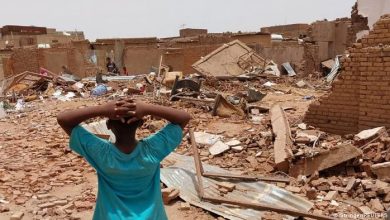
According to preliminary estimates by the Ministry of Health, the damage sustained by the health sector since the outbreak of war in April 2023 amounts to approximately $11 billion.
The war has dealt a devastating blow to Sudan’s healthcare system, causing more than 70% of its institutions to go out of service, according to World Health Organization (WHO) estimates.
A Systematic Attack
Khartoum Teaching Hospital, established in 1904 and home to several heritage buildings, saw some of its historic structures completely destroyed and now slated for demolition. These include the South Wing Complex and the Jordanian Laboratory, the latter of which had been a key source of revenue, according to the hospital’s administrative and financial director, Jaafar Omar Al-Bashir.
Speaking to Al Jazeera Net, Al-Bashir said the attack on the hospital was systematic, involving the looting of:
All equipment from the Surgical Complex, which housed 10 operating rooms
70 intensive care beds with full accessories
15 anesthesia machines, out of 17 newly acquired shortly before the war
Around 50% of physiotherapy and radiology equipment, most pediatric and endoscopic surgical tools, and nearly all laboratory devices
Critical components of the CT scanner and MRI machine
Al-Bashir noted that it was fortunate for patients that Sudan’s top histopathology lab survived the destruction and theft—offering unique services unavailable elsewhere in Khartoum’s public hospitals.
He added that the hospital will soon partially resume operations, focusing on advanced specialties not provided in other public institutions, such as endoscopic surgeries, physiotherapy and rehabilitation, histopathology services, and blood bank operations.
Engineers are currently working to restore looted equipment and reactivate the hospital’s private water well, which could also supply nearby hospitals.
One of the biggest challenges now, he says, is finding a power generator to address the major electricity issues crippling central Khartoum.
Severe Damage
The situation is even more dire at the Al-Shaab Hospital for Cardiac and Thoracic Diseases, located just a wall away from Khartoum Hospital. It lost all three cardiac catheterization machines, each valued at nearly $700 million. According to hospital director Dr. Othman Ismail, at least one machine must be restored for the hospital to resume operations.
Speaking to Al Jazeera Net, Dr. Ismail said the hospital suffered extensive damage:
10 wards were partially or fully destroyed
Administrative offices and the emergency department building were also damaged
The open-heart surgery complex was completely looted, and all laboratory devices were stolen—except one, which was already out of order.
Laughing, he remarked: “I don’t know how they figured out the machine didn’t work—seems some technical experts were working with the militias.” All pharmacies were also ransacked and destroyed.
Warnings
Dr. Ismail said the hospital administration has begun cleanup operations, including removal of rubble and repairing the water tank and pipelines. He added that Khartoum State and the Ministry of Health have pledged to restore the first floor of the emergency wing—but called that effort insufficient.
“There is an urgent need to restart intensive care units, laboratories, and repair damaged wards,” he said, noting that renovation efforts are nearly complete. But without at least one catheterization machine, the hospital can’t reopen.
He stressed the hospital’s strategic importance, being the only 24-hour cardiac emergency center in the capital.
Dr. Ismail warned of dire consequences if collective efforts—both public and private—fail to materialize. He said the hospital has reached out to international organizations and Sudanese doctors abroad, including many who previously worked there. There is also a grassroots volunteer initiative on social media aimed at supporting the hospital and bringing it back to life.
He emphasized that time is critical in treating heart conditions. Any delays can lead to chronic, lifelong diseases, placing financial burdens on both families and the state. He called on Sudanese society as a whole to join efforts to rehabilitate the hospital, describing it as a national responsibility.
A National Challenge
The war has dealt a massive blow to the healthcare system in Khartoum State, which houses 30 public hospitals, dozens of private hospitals, and more than 100 government-run health centers.
One of the biggest challenges facing the transitional government after regaining control of Khartoum from the Rapid Support Forces (RSF) will be to revive these medical institutions and thereby encourage citizens to return to the capital.
Source: Al Jazeera