How Has Gold Become the Lifeline of Sudan’s War Economy?
Sudan Events – Agencies
As the war in Sudan drags on, its destruction is increasingly measured in troy ounces and metric tons. Before the conflict erupted, the country officially produced 87 tons of gold annually—a figure that plummeted to just two tons during the first five months of fighting.
However, this collapse conceals a far graver reality: an estimated 100 kilograms of gold vanish daily across Sudan’s borders—nearly 60 tons since April 2023. This illicit flow is not a coincidental leak but a deliberately engineered financial structure that sustains a seemingly unstoppable war machine.
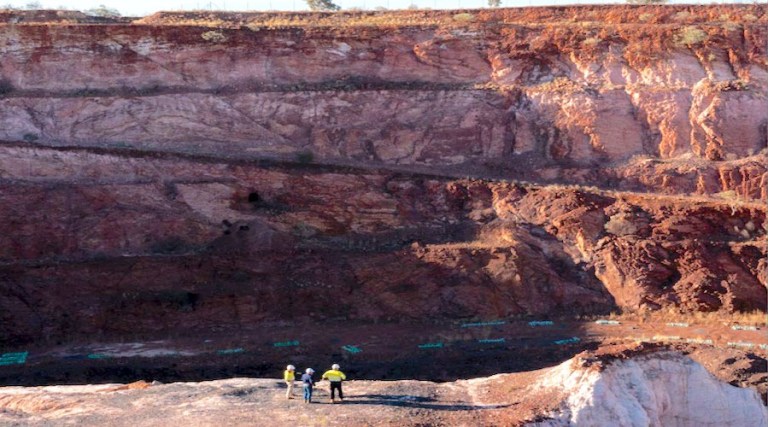
Consider the mechanics of this devastating economy. Miners—often working under dangerous conditions and the coercive control of armed groups—extract raw gold. Every gram pulled from artisanal mines in Darfur or industrial concessions along the Nile is converted into imported artillery, foreign drones, and militia salaries.
Control over mining sites—especially those in specific geographic areas—is fiercely contested and as strategically significant as the control of any major city. The Sudanese Armed Forces (SAF), which hold sway over key production areas, levy taxes and fees, funneling revenues through quasi-state structures. Their rival, the Rapid Support Forces (RSF), operate extensive parallel networks, leveraging cross-border connections to transport and monetize their share.
A substantial portion of the gold exits Sudan through neighboring countries, often under murky arrangements involving government actors—or at the very least, their complacency. The final destinations are global markets, via a major international hub that acts as a financial clearinghouse for both sides. There, conflict gold is refined, legitimized, and sold, its origins obscured. The resulting proceeds are recycled—often via complex financial routes or by purchasing essential war materials. Weapons, fuel, and even fighters’ food supplies are procured abroad with this money, then shipped—sometimes through the same neighboring states—and distributed to the front lines.
This cross-border flow transforms Sudanese gold into tangible tools of death and displacement within the country itself. With official gold exports from SAF-controlled territory generating $1.6 billion in 2024 alone, and more than 60% of production from major mining states smuggled out, gold has become the lubricant for a destructive “economy” that has displaced nearly 9 million people.
Moreover, the gold’s journey through free-trade zones in neighboring countries and foreign refineries illustrates how regional trade policies actively incentivize plunder. Customs exemptions and tax breaks have turned cross-border smuggling from a marginal activity into a core revenue strategy for both warring parties, plunging Sudan into a downward spiral where mineral wealth funds state collapse.
The deeper tragedy lies in the complicity of powerful external actors and the enabling environment they’ve created. Major regional powers—driven by short-term economic gains and competing strategic agendas—have become indispensable patrons.
One such country, serving as a crucial partner to the SAF, facilitates vast flows of illicit gold through its territory. Reports indicate that 80–90% of Sudanese gold bypasses official channels, draining state revenue while funding SAF’s daily war expenses—amounting to $1 million. Enabled by weak oversight and political complicity, this smuggling route directly undermines Sudanese sovereignty.
Meanwhile, a second foreign actor operates as the financial engine for the RSF. By providing market access and liquidity, this patron transforms RSF-controlled gold into direct capital. Its gold refineries absorbed more than 46 tons of Sudanese gold in 2023 alone, valued at an estimated $2.8 billion at current prices, embedding conflict commodities into global markets. This is not passive trade—it is active war financing. Without this ongoing cash conversion, the RSF’s regional losses last year would likely have caused a financial collapse.
These dual pipelines create a lopsided equilibrium. Gold generates over $1 billion annually for the warring factions, ensuring that military spending devours the resources urgently needed by the 25 million Sudanese in humanitarian need.
While the SAF and RSF use gold revenue to import drones, ammunition, and fuel, Sudan’s healthcare system has nearly collapsed—by about 70%. Civilian deaths rise as a direct result of an economically sustained war.
Yet international responses and sanctions remain largely stagnant in the face of this conflict-ravaged gold structure. Targeting isolated entities—like the seven companies sanctioned by the U.S. Treasury Department in June 2024—ignores the complex, transnational system fueling the war. This system operates via three integrated channels: smuggling corridors through Chad and Libya; sophisticated financial clearinghouses; and state-facilitated transit routes in neighboring countries, where 80–90% of gold escapes formal scrutiny.
In short, sanctions against individual leaders or shell companies are little more than political theater. The resilience of the gold trade lies in its networked adaptability—routes shift within weeks, shell companies are rebranded, and regional banking systems enable near-instant gold-to-cash conversions.
When the U.S. sanctioned SAF-linked companies in 2024, RSF-aligned networks simply rerouted exports via South Sudan and the Central African Republic, showcasing the ecosystem’s immunity to piecemeal pressure.
Unless policymakers dismantle this entire structure—by compelling regional trade hubs to close loopholes in beneficial ownership at gold exchanges and penalizing refineries laundering conflict minerals—the war will persist.
The language of strategic patience and alliance preservation rings hollow compared to the entrenched, billion-dollar illicit gold system fueling Sudan’s civil war—and the massive humanitarian crisis it has created.
More than just a missed opportunity, this is an active choice—one that allows bloodstained commerce to flourish in exchange for diplomatic convenience and regional ambiguity. So far, downstream financial institutions and refineries have barely flinched. There has been no broad divestment, no collapse in buyer confidence, no multilateral embargo. Regulatory bodies have failed—not for lack of capacity, but due to a lack of will, constrained by politics rather than logistics.
The international community must now confront the entire supply chain—from mines controlled by armed groups, to cross-border smuggling routes, to offshore markets and financiers laundering the proceeds and converting them into weapons—and impose coordinated, high-impact costs on all parties, especially foreign beneficiaries of the chaos.
Otherwise, Sudan’s gold will keep flowing—and the war will keep burning. The very mineral wealth that could rebuild the nation remains a curse, fueling a conflict measured not in grams, but in graves.
• Hafed Al-Ghwell is a Senior Fellow and Executive Director of the North Africa Initiative at the Foreign Policy Institute of Johns Hopkins University’s School of Advanced International Studies in Washington, D.C.