Will Political Fragmentation Hamper the “Quad” Peace Initiative in Sudan?
By Al-Noor Ahmed Al-Noor – Khartoum
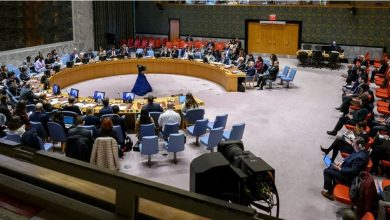
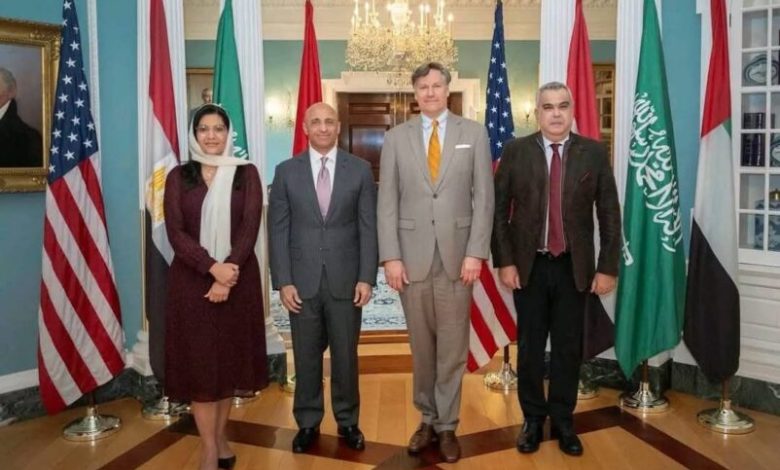
One week ahead of a planned meeting in Washington of the Quartet on the Sudan crisis (comprising the U.S., Saudi Arabia, Egypt, and the UAE) to approve a peace plan, Sudanese political factions appear increasingly divided—despite the Quartet’s initiative emerging as the only active effort to halt the ongoing war.
Observers believe that a Trump-style imposition of peace could stop the fighting between the Sudanese Armed Forces and the Rapid Support Forces (RSF), ongoing since mid-April 2023. However, they emphasize that lasting peace must be forged by Sudanese themselves, through national consensus that addresses the root causes of the crisis and sets a clear post-war political vision.
Failed Initiatives and a New Push
The Quartet’s momentum began in early June after the Jeddah platform—sponsored by Saudi Arabia and the U.S.—stalled at the end of 2023, following the signing of two documents that lacked enforcement mechanisms and thus remained unimplemented.
Efforts by the Intergovernmental Authority on Development (IGAD) also collapsed after its failure to bring together Sovereign Council President and army chief Abdel Fattah al-Burhan and his former deputy and RSF commander Mohamed Hamdan Dagalo (Hemedti) for a summit in Djibouti in January 2024.
During his visit to Doha four days ago, U.S. Presidential Envoy for the Middle East and Africa, Masad Boulos, reiterated that Sudan’s conflict cannot be resolved militarily and that the only path to peace is through comprehensive dialogue and negotiation.
Speaking to Al Jazeera following meetings with Qatari officials, Boulos said the U.S.—backed by President Trump and Secretary of State Marco Rubio—is playing a key role with Quartet partners and in cooperation with Qatar and the UK. He added, “A peaceful and positive resolution to the conflict in Sudan is near.”
The Quartet’s Proposed Scenario
Journalist and Al-Ahdath newspaper editor-in-chief Adel Al-Baz told Al Jazeera Net that the Quartet is leaning toward adopting a roadmap developed by the Washington Institute for Near East Policy, which produces strategic research for U.S. policymakers.
He explained that a report issued by the institute on July 2 proposes merging the Jeddah platform and Quartet efforts into a unified mechanism combining local legitimacy and international pressure.
The report outlines four main recommendations:
1. Joint Political Declaration
The Quartet, African Union, and IGAD would jointly declare the Jeddah platform as the sole legitimate umbrella for resolving the conflict.
2. Unified Administrative Structure
This would include an executive secretariat in Jeddah composed of the Quartet, the UN, the AU, and representatives of Sudanese civil society.
3. Binding Legal Legitimacy
The Jeddah Declaration would be transformed into a binding political agreement through a UN Security Council resolution, with UN envoy to Sudan Ramtane Lamamra playing a coordinating role.
4. Inclusion of Civil Society
Genuine participation from tribal representatives, minorities, and civil organizations to prevent militarization or foreign capture of the political process.
Al-Baz argues that implementing this plan requires full alignment among Quartet members, along with Qatar and the UK, to enforce a binding settlement under strict international oversight—including threats of comprehensive (financial, military, and political) sanctions and prosecution at international courts for violators. He also suggests linking the settlement to a reconstruction program backed by international guarantees and promises of debt relief, as occurred with the Dayton Agreement for Bosnia in 1994.
However, the project faces key challenges, notably diverging positions among Quartet members and allies. Enforcing a ceasefire based on current battlefield realities could effectively divide Sudan. Moreover, reintroducing the RSF into the political and military scene would be widely rejected by the public. “The world should leave Sudan to sort itself out,” Al-Baz concludes.
Political Divergences
While some political coalitions are placing their hopes in the Quartet’s efforts to bring peace, others see it as negative foreign interference.
Khalid Omar Yousif, a leader in the Democratic Civil Forces coalition “Sumood” (Resilience), called the Quartet initiative a “historic opportunity” to achieve peace. He warned against vested interests trying to prolong the humanitarian catastrophe now stretching into its third year.
In a social media post, Yousif said this effort aims to build international coordination among influential regional and global actors, potentially uniting pressure to end the conflict. Still, he emphasized that external influence alone is insufficient—just and lasting peace must be rooted in Sudanese will.
On the other hand, National Consensus Coalition leader and Umma Party head Mubarak Al-Fadil Al-Mahdi expressed confidence in the success of the Washington meeting in stopping the war.
Posting on X (formerly Twitter), Al-Mahdi said he expects a binding ceasefire resolution to emerge from the meeting—one that neither warring party could reject. He added that a political settlement document would be discussed, with both Burhan and Hemedti invited to sign it, followed by arrangements for Sudan’s political future.
By contrast, Tijani Sissi, head of the National Movement Forces Coalition, warned that “a new framework is being cooked up under the guise of a new Quartet,” which he believes is inconsistent with Sudan’s interests and undermines the victories achieved by its people.
Sissi asked on X: “Whose interests are served by complicating Sudan’s crisis and prolonging the war?”
Sudanese Dialogue or Foreign Imposition?
Mohamed Sid Ahmed Al-Jakoumi, Secretary-General of the National Forces Coordination, criticized the Quartet for sidelining Sudan’s government and ignoring the popular will.
Speaking to Al Jazeera Net, Al-Jakoumi described such closed-door meetings as blatant interference in domestic affairs that deepens the conflict. He vowed to resist any externally imposed solutions.
Meanwhile, Dr. Manzoul Al-Asal, former director of the Peace Studies Center at the University of Khartoum, believes the Quartet’s new initiative may be the most serious—and possibly final—attempt to halt the war. He anticipates international pressure on both the government and the RSF, particularly the former, due to growing public frustration over its intransigence.
However, Al-Asal told Al Jazeera Net that externally imposed solutions are unlikely to resolve Sudan’s political crisis, even if they halt hostilities. Sustainable peace must be built through dialogue among Sudanese factions—those backing the army and those aligned with the RSF.
He added that zero-sum stances, such as insisting on eliminating the RSF or excluding Islamists, will not bring stability or peace.