Can Sudanese Overcome Social Fractures and Ethnic Polarization?
By Al-Noor Ahmed Al-Noor
More than 27 months after the outbreak of fighting in their country, Sudanese people—both officially and popularly—have begun proposing initiatives and mechanisms to heal wounds, mend the social fabric, and promote peaceful coexistence, after the war and its repercussions caused deep fractures in the structure of society, along with the spread of hate speech and ethnic polarization.
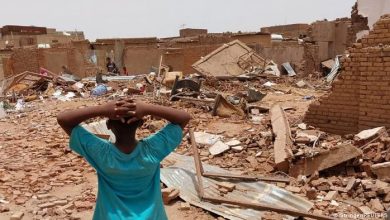
Since the outbreak of war in mid-April 2023, Sudan’s multi-ethnic and multi-cultural society—once known for tolerance and peaceful coexistence—has suffered severe scars. The developments of the war, especially crimes and violations in Khartoum and central Sudan, and the fact that most fighters in the Rapid Support Forces (RSF) belong to social groups from western Sudan, led many citizens to blame these communities for what transpired.
War’s Fallout
Voices of war-affected individuals grew louder on social media, assigning blame to certain communities. In response, platforms affiliated with the RSF reacted sharply, further fueling social polarization and divisive rhetoric.
Meanwhile, the RSF claimed it was defending politically and socially marginalized groups in western Sudan, accusing communities in the northern and central regions of monopolizing power and wealth since Sudan’s independence nearly 70 years ago.
The RSF exploited wartime conditions, such as the cancellation of secondary school exams in western states, lack of currency exchange, halted banking services, and suspended operations of official documentation offices (e.g., passports and national IDs) in these areas—alleging these were deliberate acts of retaliation against citizens in RSF-controlled regions.
Verbal clashes and disputes on social media platforms escalated into hate speech, deepening ethnic divisions, heightening social tensions, and leading to the displacement of communities from regions they had inhabited for centuries, out of fear of revenge.
Peace Initiatives
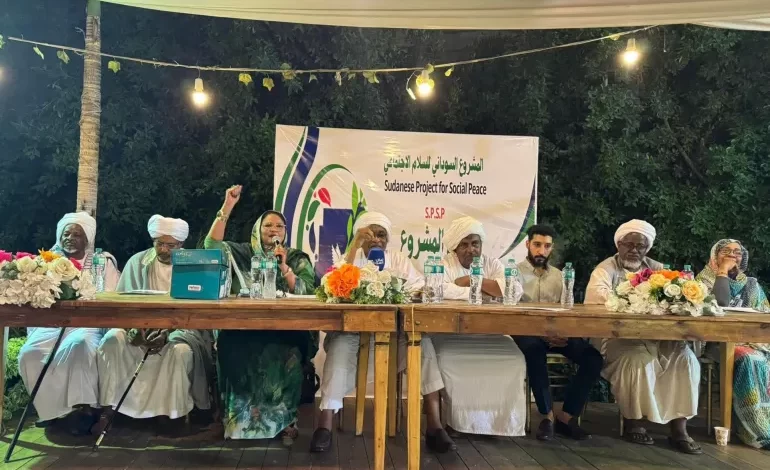
Last Wednesday, hundreds of Sudanese community and tribal leaders launched the “Sudanese Social Peace Project”, in a large gathering representing all states of Sudan.
According to a document reviewed by Al Jazeera Net, the project aims to restore and strengthen peaceful coexistence and social harmony among Sudanese communities, reform the social environment, address harmful behaviors born from the war, and revive acceptance and tolerance.
The document calls for curbing hate speech, calls for division, and lingering resentment caused by war. It emphasizes rejecting blind loyalty and denial of truth in favor of acknowledging wrongdoing and seeking justice through truth and apology.
To implement the project, the document outlines several mechanisms:
Formation of community committees to foster dialogue and communication.
Facilitation of reconciliation among socially conflicted groups.
Educational and awareness programs for youth, women, and children.
Activation of educational institutions to promote social harmony.
Open to All
Osman Mohamed Yousif Kibir, CEO of the Social Peace Project and former governor of North Darfur, said the initiative began in May 2024 with a small group from the Darfur and Kordofan regions before expanding to include representatives from all Sudanese states.
Kibir told Al Jazeera Net the project is built on sound foundations starting with acknowledging the problem, aiming for effective solutions free from tribal, regional, or partisan biases that have torn the social fabric.
He stressed that the project is non-political and non-competitive, “open to all Sudanese without exclusion,” and is rooted in society—not elites or politicians. It will be implemented entirely within Sudan and is neither temporary nor limited in scope. He welcomed the Prime Minister’s committee on this matter as a complementary step toward joint action.
Kibir noted key challenges include a general lack of trust, external interference fueling the conflict, and securing funding for the project.
High Council for Social Peace
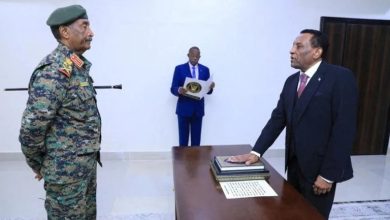
Prime Minister Kamal Idris issued a decision establishing the “High Council for Social Peace”, chaired by Al-Noor Al-Sheikh, with Alya Hassan Abuna as Secretary-General. The council will be completed to ensure representation of all relevant groups promoting social peace.
According to its founding resolution, the council’s goals include enhancing peace, reconciliation, social cohesion, peaceful coexistence, and entrenching a culture of peace while contributing to national strategies for social and cultural peace.
Its tasks include:
Promoting concepts of tolerance, reconciliation, and acceptance of others.
Conducting public awareness campaigns on the importance of social peace and national unity.
Researching the root causes of conflicts and proposing solutions.
Building communication networks and providing technical support for peace initiatives.
Continuing Efforts
Idris has also begun meetings to address the social fallout from the war. On Thursday, he met with Abdulrahman Hassan, Secretary-General of the Revolutionary Awakening Council, to discuss social conditions in Darfur. Idris pledged to combat hate speech and promote peaceful coexistence.
Hassan said Musa Hilal, head of the Awakening Council, is working to address social issues in Darfur. Hilal had previously led the Border Guard Forces and was accused by Western entities of leading the “Janjaweed” militia during the era of former President Omar al-Bashir, which led to sanctions against him.
A Major Challenge
According to Ali Daqash, former agriculture minister of South Kordofan and peace studies researcher, the war and its brutal practices—especially the deviation of RSF fighters from traditional Sudanese ethics—pose major obstacles to future peaceful coexistence.
Speaking to Al Jazeera Net, Daqash stated that the hatred spawned by the war will be difficult to overcome without tremendous effort. Hate speech has damaged inter-communal relationships so severely that restoring Sudanese social unity is now the most difficult challenge.
He urged people not to blame any specific political or tribal group for the conflict. He also noted that most civil society organizations currently focus on psychological support rather than addressing the deeper social crisis caused by the war. He called for integrating the efforts of the High Council for Social Peace with the broader social peace project to avoid starting from scratch.
Source: Al Jazeera