The Government of Hope: What Are Its Grand Strategic Tasks?(1 – 2)
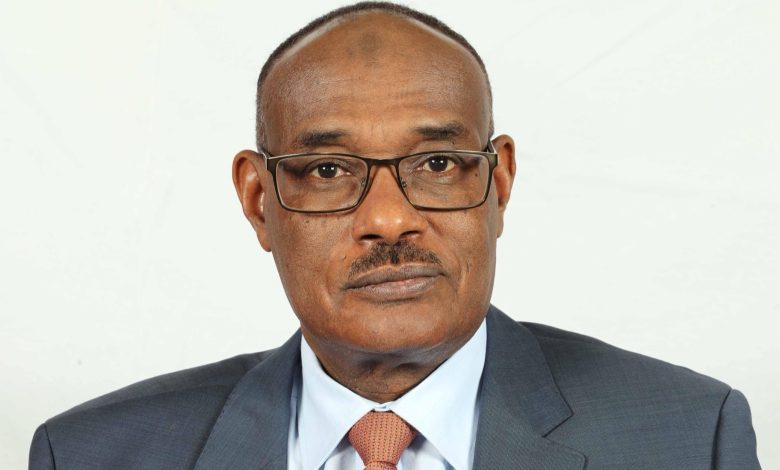
Dr. Al-Dirdiri Mohamed Ahmed
Who could forget that February 2025 meeting between Donald Trump and Ukrainian President Volodymyr Zelensky at the White House? That encounter left a mark in the global memory because it was a live, on-air negotiation between the leader of the world’s most powerful nation and the head of a European country that had been the victim of brutal aggression—an aggression that compelled the United States to spend nearly $300 billion in support, and forced Europe to contribute around $200 billion.
But more importantly, it represented a turning point in the modern history of international relations. After that moment, it became clear to many that the cornerstone of the contemporary world order was no longer “preventing aggression”—as enshrined in Article 4(2) of the UN Charter and interpreted in UN General Assembly Resolution 3314 (1974). Instead, the new cornerstone was having the cards. Since that historic meeting, not a single head of state or government operates today without being in constant search of their own “cards.”
For Sudan, finding such “cards” must be the first and foremost concern of Prime Minister-designate Dr. Kamal Idris and his cabinet-in-formation. Sudan currently has no cards to play. This first part of a two-part article will explore the significance of political “cards” in today’s world and how a country like Sudan might manufacture them.
In that meeting, Trump bluntly told Zelensky:
“You are not in a good position. You don’t have the cards right now. With us, you will start to have the cards.”
When Zelensky replied, “I don’t play cards,” Trump insisted:
“You do play cards. You are playing cards… Your country is in big trouble. You won’t win this. You only have a slim chance of survival—thanks to us.”
He concluded ominously:
“It is going to be hard to do business like this.”
Before Trump assumed office in January 2016, the post–Cold War international order was built on respect for international law and shared global values. The world operated under what was known as the rules-based international order—with norms centered on international law, multilateral cooperation (through institutions like the UN and WTO), and principles of democracy and human rights.
The 1990s and early 2000s were marked by an idealistic phase, in which law, values, and institutions replaced raw power as the foundation of global politics. These ideals were championed by major thinkers—some of whose ideas are still debated today. Francis Fukuyama’s The End of History (1992) predicted the triumph of liberal democracy and the fading of ideological conflict. Joseph Nye developed the concept of “soft power” and emphasized multilateral diplomacy. Anne-Marie Slaughter promoted strengthening the liberal international order through transnational networks of governance and cooperation. John Ikenberry wrote extensively about the need for the U.S. to lead the global system—arguing only it could uphold such a rules-based architecture.
But with Trump’s presidency and the rise of “America First,” the United States veered away from those normative principles. It elevated national dominance over international cooperation, rejected traditional alliances like NATO unless they delivered direct material benefits, and adopted a new foreign policy approach rooted in transactionalism. Power and interest came to trump law.
Zelensky could not rely on American support simply because Russia had violated the principle of “non-aggression.” He had to show he held cards.
By taking this path, the U.S. opened the door for other global powers to follow suit—namely Russia, China, India, Brazil, Israel, and Turkey. Strongman leaders like Putin, Xi Jinping, Modi, Bolsonaro (likely to return just as Trump did), Netanyahu, and Erdoğan gained influence. The new dominant worldview was shaped by realists like John Mearsheimer, who argues that great powers act based on interests, not values.
This realist resurgence revived older theories from Barry Posen (2014), who advocates “strategic restraint” in U.S. foreign policy, and classics by Randall Schweller (1998) and Kenneth Waltz (1979).
The practical result? A global system less concerned with principles and more focused on power and leverage—on having the cards. Multilateral cooperation on human rights collapsed. The U.S. no longer made human rights a central foreign policy priority. Trump infamously dismissed concerns over Jamal Khashoggi’s murder and praised Mohammad bin Salman. America withdrew from the Human Rights Council, the Paris Climate Accord, the WHO, and the Iran nuclear deal. Its “solution” to the Middle East crisis came in the form of the Abraham Accords—blunt, transactional deals normalizing ties between Israel and Arab states, with no regard for Palestinian rights.
American foreign policy began to revolve around “strong allies” like Mohammad bin Salman, Mohammed bin Zayed, and Netanyahu. Prominent global voices sounded the alarm. Angela Merkel warned in 2019 that “the old certainties of the post-WWII order no longer hold.” Gideon Rachman of the Financial Times called the current world order “strongmen vs. the rules.” The Economist repeatedly described global politics since 2018 as a kind of “geopolitical thuggery.”
That’s why Sudan’s Prime Minister and Foreign Minister must prepare for the possibility that—sooner or later—they’ll be sitting across from Trump in the White House, in Zelensky’s very seat. When that moment comes, they must not find themselves empty-handed—without cards to play.
Sudan is not an exception when it comes to building such “cards.” Regional powers around us have all forged strategic cards they actively maintain and deploy when needed.
Egypt’s most powerful card is its enduring peace with Israel. Another is the Suez Canal—used strategically as a bargaining chip, even though its geopolitical significance is rooted in geography. Through effective diplomatic marketing, Egypt made it a card. Add to that Egypt’s cultural, religious, and media influence, anchored by Al-Azhar, and its massive economic and investment market—all of which are diplomatically harnessed.
Saudi Arabia’s most valuable card is oil—it’s the second-largest producer after the U.S., with 10 million barrels a year. This has made it the de facto leader of OPEC. Another is its spiritual leadership of the Muslim world, being home to Islam’s holiest sites. It has also wielded regional influence—through its war in Yemen, rapprochement with Iran, and the Jeddah Platform on Sudan. Saudi Arabia supports its diplomatic agenda with media channels like Al Arabiya and Al Hadath, visionary programs aimed at youth, and future-focused policies centered on the post-oil world and artificial intelligence.
The UAE’s most important card is its aggressive opposition to Islamists and traditionalist movements across the region. It also actively engages in proxy wars—in Yemen, Libya, Syria, and Sudan. It positions itself as the “Sparta” of the Middle East and North Africa. Geographically, it controls a strategic chokepoint at the entrance to the Strait of Hormuz, through which 20% of the world’s oil and gas flow. It plays both East and West, maintaining close ties with China and Russia while keeping traditional Western alliances. It leverages its financial, commercial, and media clout skillfully. Examples include Expo 2020, Sky News Arabia, and ventures into space exploration and digital innovation.
Qatar’s most critical card is the Al-Udeid military base—the largest of its kind in the Middle East and a cornerstone of Western security in the region. Recently, Qatar masterfully used this card to help avert an escalating war between the U.S., Israel, and Iran—one that directly threatened Qatar itself. It is also the world’s top exporter of liquefied natural gas and used this advantage to sign long-term energy deals with Europe after the Ukraine war, positioning itself as a stable, sustainable supplier.
Diplomatically, Qatar presents itself as the “Switzerland” of the Middle East and Africa, in contrast to the UAE’s Sparta. It has mediated between Hamas and Israel, between the U.S. and the Taliban, and most recently between Congo and Rwanda. It is active in behind-the-scenes diplomacy in Ukraine, Lebanon, Libya, Chad—and Sudan too. One of its diplomatic cards is maintaining independent positions from fellow Gulf states, including relationships with Iran, Turkey, Hamas, and Islamists. Qatar has also distanced itself from Gulf wars, including Yemen. On the media front, Al Jazeera is its crown jewel—arguably the largest news network in the Global South, shaping international opinion on issues like the Gaza war. Qatar has also used its massive financial investments—like Canary Wharf, Harrods, global banking, European football clubs, and hosting the World Cup—as powerful soft-power cards.
One must not think that creating “cards” is a luxury only for the wealthy or powerful. Every country can manufacture cards if it understands its assets and how to deploy them strategically.