The Siege of El Fasher: When Animal Feed Becomes Human Food
Sudan Events – Agencies
In the heart of North Darfur State (western Sudan), the city of El Fasher is experiencing one of the worst humanitarian crises the country has seen since the outbreak of war. The city is hurtling toward a certain famine under a suffocating siege imposed by the Rapid Support Forces (RSF), with all charitable kitchens—locally known as “takayas”—completely shut down, and no effective international response in sight.
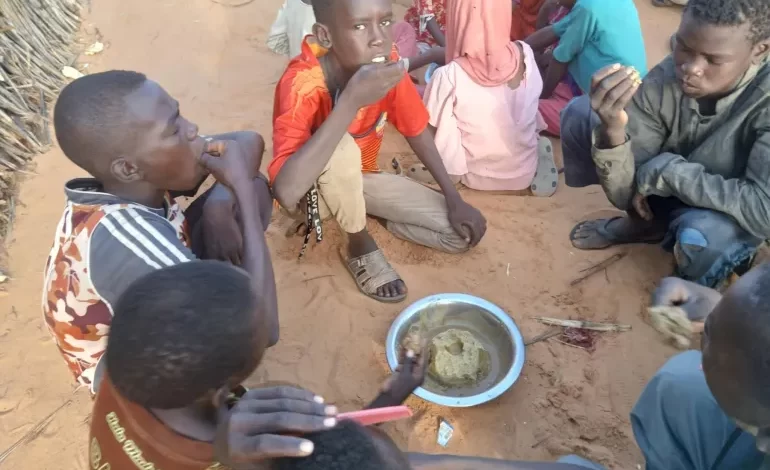
The residents of El Fasher no longer ask about tomorrow; instead, they cling to whatever keeps them alive until nightfall. Access to food, water, and medicine has reached unprecedented lows. Markets have ceased operating, and most health centers have shut down due to a lack of supplies. The streets bear witness to the misery: families roam in search of scraps to stave off hunger.
Speaking to Al Jazeera Net, the acting governor of North Darfur, Hafiz Bakhit, stated, “Living conditions in El Fasher are collapsing almost entirely—to the point that some residents have resorted to eating ‘Ambaz’, a type of animal feed, which reflects the depth of this disaster.”
Bakhit stressed the urgent need to break the siege on the city, praising the resilience of its people, the armed forces, and the popular resistance in confronting the deteriorating situation.
The Crisis Origin
The crisis in El Fasher began in April when the RSF imposed a tight blockade on the city, preventing the entry of aid convoys and food supplies. Several trucks were looted, and main roads were blocked, isolating El Fasher from the rest of Sudan.
Systematic Blockade
Ahmed Adam, a food trader, told Al Jazeera Net that RSF forces have prohibited any trucks or goods from entering the city. He added, “The situation is catastrophic. Even basic medicines are banned. We’ve faced arrests and gunfire while trying to bring in supplies. The city is being strangled systematically, threatening everyone’s lives.”
Takayas, the communal kitchens that once served thousands of meals daily to the poor and displaced, have completely shut down due to the lack of basic supplies.
Relief worker Mohamed Al-Rifai, who previously oversaw Takiyat Al-Khair, told Al Jazeera Net: “We used to cook for more than 4,000 people daily, sometimes more depending on donations. Now, it’s entirely stopped. People are scavenging through trash for food—and often finding nothing.”
He added, “There are no IV solutions or medical gauze available. Most doctors and volunteers have left the city, leaving families in total need with no support.”
Child Malnutrition Crisis
Khadija Musa, director of the Ministry of Health in North Darfur, confirmed the existence of severe malnutrition cases among children, pregnant women, nursing mothers, and the elderly. She stated that the current situation and ongoing siege are contributing to the worsening of these conditions.
Despite staff and supply shortages, she said the ministry is trying to intervene through nutrition centers.
However, a medical source at the Saudi Hospital—the only functioning one in El Fasher—told Al Jazeera Net that the situation is “spinning out of control.” He noted a sharp rise in severely malnourished children and a dire shortage of therapeutic supplies.
“We are not treating patients—we’re just watching death approach in slow motion. Mothers bring children weighing less than 4 kilograms. Some have completely stopped growing; others are too weak to cry. We are utterly helpless.”
Psychological Toll
Hunger isn’t just ravaging bodies—it’s corroding mental health as well. Social consultant Mohamed Suleiman Atem told Al Jazeera Net that children and women are suffering from severe psychological disorders due to hunger, including isolation, talking to themselves, anxiety, and fear of the future.
He remarked, “The war in El Fasher creates strange paradoxes. Despite the tragedy, families gather around the rare communal meals—but the takayas, once a vital social outlet, have stopped, compounding the suffering.”
Media Silence
Despite the scale of the catastrophe, El Fasher remains largely absent from media coverage. Western press has published no major reports, the city is missing from global news headlines, and local journalism suffers from limited resources and a shortage of staff.
Mohamed Suleiman Estek, director of the El Fasher Press Services Center, told Al Jazeera Net: “We write, document, and speak, but no one amplifies our voice. It’s as if the world refuses to see us. We need someone to tell our story to the world,” pointing to challenges in accessing information and equipment shortages that have deepened the city’s media isolation.
International Silence
Despite repeated appeals from local activists and civil society leaders, the United Nations and major humanitarian organizations have yet to announce any urgent intervention plan to break the siege or open humanitarian corridors.
Human rights activist Salma Fathi told Al Jazeera Net: “What’s happening has gone beyond warnings. We are trapped in a cage called hunger. We wonder if our lives are worth less than other crises that receive immediate international aid.” She added, “The people here need food and medicine. Every moment of delay means more lives lost.”
Residents and activists recount heartbreaking stories of children and women suffering from malnutrition after going days without food. Moving between hospitals and shelters has become a daily routine.
Mohamed Hassan Mohamed, a member of the media office for the El Fasher Resistance Committees Coordination, told Al Jazeera Net: “Some people have nothing to eat. Children and women are malnourished because takayas—on which families relied—have stopped. The situation is deteriorating daily. Death is knocking on the doors.”
He emphasized the need for urgent intervention to break the siege and provide aid, stressing: “Every minute of delay means more victims. The world must act now—before it’s too late.”
Source: Al Jazeera