Sudan Situation Log (No. 86): From the Six Mountains, Umbadda, and Tawila

Sudan Events – Agencies
The Six Mountains: Clashes Between Popular Resistance and the RSF Over a Strategic Road
Armed clashes erupted on Sunday, July 13, between the Rapid Support Forces (RSF) and a group of young fighters from the Six Mountains Resistance in Habila locality, South Kordofan. The confrontation took place on the road linking Kartala and Rahad Abu Dakana in North Kordofan, near the Salamat area, resulting in the death of eight RSF members and one resistance fighter, in addition to several injuries, according to a resistance member who spoke to Atar.
Following the successful passage of three commercial convoys along this route, an RSF unit arrived from the Debeiker area and stationed itself in Salamat, located between Kartala and Rahad. The unit consisted of two pickup trucks and several motorcycles, and mounted an artillery piece atop a mountain overlooking the road, aiming to intercept and loot goods.
A member of the resistance explained that since the withdrawal of the Sudanese Armed Forces from Kartala on January 26, 2024, after the RSF entered Habila, the youth of the Six Mountains—Kartala, Karoro, Kafir, Kadru, Dabatna, and Kaladji—took over road protection duties themselves as part of what’s known as the “Resistance Force,” as the area had become devoid of both army and RSF forces.
The term “Six Mountains” refers to a group of mountains located east of Habila locality in South Kordofan, within the Ajang ethnic group’s region. Kartala and the surrounding villages are known for rain-fed agriculture, fertile soil, and the production of crops such as various types of sorghum, sesame, and millet, as well as a significant amount of livestock.
Local residents and youth succeeded in reopening a shortcut road linking Kartala directly to Rahad, which takes only about three hours to traverse. This is in contrast to the longer wartime route that passes through Dallami, Um Barmbita, and Abu Karshola before reaching Rahad, a journey that takes two full days.
The Rahad route is vital to the Six Mountains’ economy, as residents rely on the Rahad market to sell their crops and livestock. It is currently the main source of consumer goods for the area—such as sugar, cooking oil, salt, soap, and onions. Fuel supplies, including diesel and gasoline, come from Dallami via the army stationed there. Conversely, Dallami also relies on Kartala for certain goods transported by traders from Rahad. The Rahad market is thus a critical outlet for agricultural products from the Six Mountains.
Meanwhile, residents of the Six Mountains are preparing for the rainy season and the upcoming agricultural cycle, although rainfall has been delayed this year. Efforts are currently underway to secure fuel for operating farming machinery in preparation for planting.
Omdurman’s Umbadda: Deteriorating Security Conditions
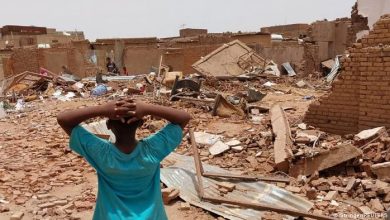
Khartoum State– Despite the cessation of active fighting in Khartoum between the RSF and the Sudanese Armed Forces, residents of Umbadda locality continue to endure difficult living conditions, including power outages, water shortages, and a surge in armed robberies both day and night.
The locality, which remained under RSF control between May 2023 and April 2025, lacks basic services. Yusuf, a resident of Block 6, told *Atar*: “People have started returning to their homes, only to find that essential services such as water and electricity are unavailable.”
He noted that the biggest concern for returning residents is the rampant looting and armed robberies carried out in broad daylight by men on motorcycles, armed with guns and dressed in military uniforms. “They stop every citizen and rob them of all their belongings. If someone resists handing over their phone or wallet, they shoot them dead or in the legs. It’s a common and ongoing practice now,” Yusuf said.
Ibrahim, a resident of Block 38 in Umbadda, added: “Anyone who returns home by 3 p.m. cannot leave again until the next morning. Movement completely stops at night, and it’s impossible to step outside after dark.”
Looting continues in Umbadda despite the return of police operations from their headquarters on Radmiya Street and the reopening of the Libya Market police station, which was previously run by the RSF during their control of the area.
According to merchants in the Libya and Abu Zaid markets, commercial activity has resumed at no more than 50%.
Tawila lies about 65 kilometers west of El Fasher and has become a refuge for those fleeing RSF violence in the city and surrounding rural areas. Since April, around 327,000 people have been displaced to Tawila, most of them from Zamzam Camp, bringing the total number of displaced persons in the area to 560,000.
Tawila is considered a neutral zone and falls under the control of the Sudan Liberation Army (SLA) – Abdel Wahid al-Nur faction.
Quoted from Atar