Colombian Mercenaries Training Child Soldiers in Sudan
By Santiago Rodríguez Álvarez – La Silla Vacía
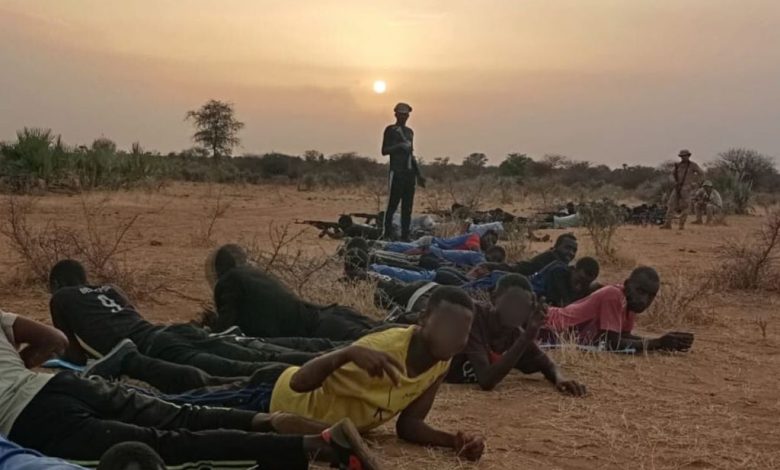
“We are training children to be killed,” says “César.” In the photograph he took—published by La Silla Vacía—two young boys lie on the Sudanese savanna, smiling at the camera and flashing peace signs.
They are visibly under the age of 18. Around them, other men lie prone on the ground, some aiming AK-47 rifles. In the background, two men in beige military uniforms—Colombian mercenaries like the photographer—oversee training for these Sudanese recruits to fight in one of the world’s most brutal wars.
La Silla Vacía obtained the image from “César,” the alias used by the former Colombian soldier who spent four months in Sudan as a mercenary. He requested anonymity for fear of reprisals and confirmed that the two Sudanese boys in the photograph had been trained by him and other Colombians.
“They sent me as an instructor in training camps only—camps with 1,000 to 3,000 Sudanese recruits. Among them were children as young as 10, 11, and 12. Yes, there were men in their twenties and thirties, but there were many children—many,” he recounts.
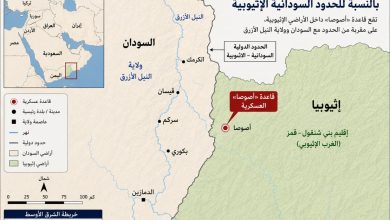
The camp where César witnessed these events—documented in photos and videos he shared with the newspaper—was located south of Nyala, the capital of South Darfur and a military stronghold of the Rapid Support Forces (RSF). The RSF ignited the ongoing civil war in Sudan in 2023 and recruited these boys.
The RSF has been accused of committing the war’s worst atrocities, including ethnic cleansing in Darfur and the forced recruitment of children, as documented by international organizations and media outlets. The conflict has claimed between 20,000 and 150,000 lives and triggered the world’s largest humanitarian crisis, with 20 million people facing hunger and some 12 million forcibly displaced.
As La Silla Vacía has reported, more than 300 former Colombian soldiers—some deceived—have traveled to Sudan since last year to fight for the RSF in a cross-border mercenary operation. They call themselves the “Desert Wolves.”
The operation is led by retired Colombian army colonel Álvaro Quijano, in partnership with a UAE-based security firm, Global Security Services Group (GSSG). The company is owned by Emirati national Mohammed Hamdan Al-Zaabi, who has ties to networks in African countries allied with the UAE, where he provides similar “training services.”
Despite media reports and statements of disapproval from Colombian President Gustavo Petro, the operation continues—and now Colombian mercenaries stand accused of committing a war crime: the recruitment and training of children for combat.
Nyala: RSF Stronghold Where Children Are Trained
César arrived in Nyala earlier this year and left only a few weeks ago. He was not deceived into going to Sudan—he knew he would be fighting alongside the RSF. What he did not expect was to be tasked with training children, something he admits he always considered “ugly” but did anyway as long as he was being paid.
“All my colleagues there would say: ‘Poor kids.’ Because they are killed immediately on the front line,” says César. He rationalized it with cold pragmatism: “They have to be trained; unfortunately, that’s war.”
César had been a soldier since leaving school in Colombia. He served in the Colombian army for several years before joining the Ukrainian army as a mercenary in its war against Russia, seeing combat on multiple fronts. After witnessing many Colombian comrades killed, he decided to leave. A contact then told him about “job opportunities” in Africa as a mercenary, with Sudan supposedly “lighter” than the Ukrainian front.
“I Googled the RSF. I knew what was going on, but it was nothing unusual for me. I needed work,” he says, adding that many ex-Colombian soldiers left Ukraine’s war for what they saw as a “less intense” front in Sudan.
His Mission in Sudan: Training and Guard Duty
César’s main assignment was securing the Nyala airstrip.
“If the Sudanese army takes the runway, everyone there will be in danger,” he explains. The strip is the mercenaries’ gateway in and out of Sudan, via Bossaso port in Somalia—controlled by the UAE—through which weapons and supplies arrive.
In one video César filmed, a plane lands at the Nyala runway. Geolocation analysis confirmed it as Nyala airport, with mountain backdrops matching satellite images.
The base also plays an offensive role: large, advanced drones are launched from there for reconnaissance and airstrikes on cities like El Fasher, Khartoum, and Port Sudan. In another video, taken after Sudanese army shelling, a Chinese CH-95 or FH-95 drone can be seen, with Nyala’s mountains in the background.
Before serving at the airport, César was posted to one of four Colombian-run training camps, about 30 kilometers south of Nyala near the village of Bulbul Tembiscu, according to a location he saved on Google Maps.
Training lasted four to five weeks, from 8 a.m. to 4 p.m., Saturday to Thursday (Friday off). Each camp hosted 1,000 to 3,000 Sudanese trainees and 50 to 70 Colombian mercenary instructors.
“We trained them in what we know from Colombia: guerrilla warfare—handling weapons, assault rifles, machine guns, Dragunov sniper rifles, RPG launchers. We taught them to shoot and dismantle weapons. Then they were sent to the front,” César says.
A War Crime and Human Rights Alarm
Jean-Baptiste Gallopin, a researcher at Human Rights Watch who monitors the war in Sudan, notes that recruiting children under 15 is a war crime under international humanitarian law. Both Colombia and Sudan have signed the Optional Protocol to the Convention on the Rights of the Child on the involvement of children in armed conflict, which prohibits the recruitment of anyone under 18.
“Colombia is a member of the International Criminal Court and should be prepared to prosecute any Colombian involved in recruiting, supporting, or facilitating the recruitment of children,” Gallopin told La Silla Vacía.
U.S. researcher Justin Lynch, director of the Conflict Insights Group, says: “I’m not surprised there are child soldiers being trained by mercenaries. The RSF has recently intensified forced recruitment of children due to manpower shortages and even threatened to attack villages that do not send men or boys to join.”
César partly agrees, saying casualties have risen sharply for both sides: “Every day there are 100, 200, 300 dead. People there don’t know how to fight—they fire randomly and expose themselves completely.” He says the training camps were created to address poor combat skills among local recruits and their rapid deaths in battle.
Who Is Behind the Operation?
The Colombian mercenaries and the RSF are not acting alone. They are part of a chain involving the Colombian company A4SI, which recruits on behalf of the Emirati firm GSSG, in support of RSF leader Mohamed Hamdan Dagalo (“Hemedti”).
Hemedti was one of the generals behind Sudan’s 2021 coup and became the country’s second-in-command before turning against his ally Abdel Fattah al-Burhan in 2023 and launching the war against him.
César says he never met Hemedti, but everyone in the RSF spoke of him with “awe” and required his photo to be displayed on their WhatsApp profiles.
Crucially, he says, “Everything is paid for by the Emirates.” A New York Times report alleged the UAE sent drones and weapons disguised as humanitarian aid, backed by Sheikh Mansour bin Zayed, owner of Manchester City Football Club.
Documents also show that GSSG owner Al-Zaabi has strong ties in Africa, including to Uganda, where he was photographed with the country’s army chief.
According to César, the mercenaries trained at a base near Abu Dhabi to operate Turkish Bayraktar drones. Phones with cameras were banned, and devices were regularly inspected in Bossaso.
The Colonel and the “Phoenix” Story
The mastermind of the operation is retired Colombian colonel Álvaro Quijano, who resides in the UAE and runs the operation, according to mercenary testimony, though his wife Claudia Oliveros officially owns A4SI.
César says unpaid wages—or arbitrary deductions—led him to quit. Sometimes large sums were withheld from the agreed $2,600 monthly pay, and those who complained were threatened with dismissal and being billed for travel costs.
Restrictions tightened recently, including bans on bringing in phones with cameras and withholding contract copies. The company’s name was changed to “Phoenix,” and another Panama-registered firm, Global Staffing S.A., was used.
“A lot of people want to leave, but they have no money. Everyone knows this is not decent or legal work,” César says. “But others keep coming into Sudan to replace those who leave… and the training of children for war goes on.”