Feeble Standards..!!
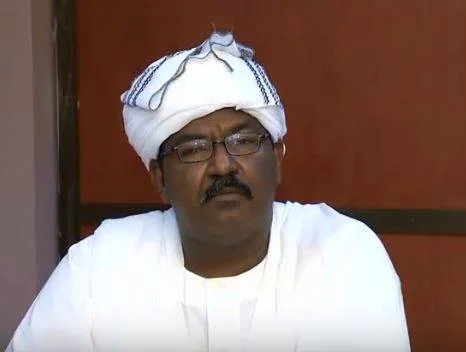
Al-Tahir Satti
It is only natural that Prime Minister Kamal Idris should begin his foreign visits with a trip to Egypt—not merely because of the historical ties, shared destiny, and other well-established facts, but because of Cairo’s steadfast support for our people’s cause. Egypt deserves to be the first destination for any Sudanese official, not just the prime minister.
Before the war, while some countries were sowing discord among political forces in Khartoum, Egypt was working to shield our nation from the flames of sedition—war.
You may recall that in February 2023, just two months before the outbreak of war—while Volker and his “Quartet” were fanning the embers of conflict—Egypt, seeking to avert the coming conflagration, invited all political forces (except the National Congress Party) to an inclusive Sudanese dialogue. I was invited to cover it and witnessed the genuine turnout of national figures and political forces answering Egypt’s call—except for the “activists” of the time and the revolution’s opportunists, who rejected it outright.
It was a serious initiative. With the country on the brink of war, many rallied to defuse the tensions of the Framework Agreement. But the activists—now clients of Abu Dhabi—rejected it. At the time, they were allied with Hemedti in the infamous Framework Agreement, which even the late signatory later admitted had caused the war. Egypt’s position was clear: protect our people and our country from the perils of that divisive accord.
Those were Egypt’s stances before the war. After it broke out, Cairo continued its efforts to end it through the “Neighbouring Countries Initiative,” which the militia rejected before even hearing its content. Egypt then opened its border crossings to shelter those fleeing the Janjaweed’s crimes, and it stood firmly in regional and international forums in defense of Sudan’s unity, institutional legitimacy, and other national principles. It is therefore perfectly logical for the Prime Minister to choose Egypt for his first foreign visit.
However, the Sudanese delegation—both in form and substance—fell far short of expectations. The Prime Minister was accompanied only by: Khalid Al-Ayser, Minister of Culture, Information and Tourism; Omar Siddiq, Minister of State at the Ministry of Foreign Affairs; and Badr Al-Din Al-Jaafari and Nizar Abdullah from the Prime Minister’s Office. That’s all. One full minister, a minister of state, and a couple of aides—a so-called “high-level” delegation in diplomatic protocol, but in reality a paltry, underwhelming one.
The two sides discussed important issues: reconstruction, Red Sea security, Nile water, railway link projects, electrical grid interconnection, cooperation in rehabilitating Sudan’s health sector, and collaboration in higher education. All these matters were clearly on the agenda, yet the Prime Minister—or whoever advises him—failed to assemble a delegation worthy of the two countries and the weight of these issues.
Imagine: the talks covered economic, service, and security matters, as well as reconstruction—yet there was not a single minister from the economic sector, despite their abundance in the cabinet; not a single service-sector minister, despite their numbers; and no official connected to the Red Sea or Nile water portfolios, though they are many. Their absence was not an act of rebellion—it was simply that the Prime Minister does not grasp the value of having them in such a delegation.
And perhaps you saw it: when President Sisi met the two delegations, the Egyptian Prime Minister was flanked by senior members of his government, led by the Foreign Minister, lined up beside him in a way that reflected the stature of the Egyptian state. By contrast, Sudan’s Prime Minister was accompanied by a Minister of State for Foreign Affairs and a Minister of Culture, Information, and Tourism, with the rest of the seats filled by Sudan’s ambassador to Cairo and aides from Kamal Idris’s office.
Minister of State Omar Siddiq did not meet formally with Egypt’s Foreign Minister, Badr Abdel Aaty, because his rank is equivalent only to an undersecretary or assistant foreign minister in Egypt. As for Khalid Al-Ayser, the Minister of Information—incidentally, Egypt has no Ministry of Information, and its top media authority is the National Media Authority, chaired by Ahmed Al-Moslemani—he has been largely silent since being stripped of the role of government spokesperson. No replacement was appointed, not for lack of capable candidates, but perhaps because the Prime Minister wants a mute government. It seems their lethargy is not enough; they must be voiceless too.
Thus, the Information Minister did not address the Arab media, despite being perfectly able to arrange a major press conference for the Prime Minister. The situation is disheartening: the leader of a nation whose people and army are engaged in a desperate battle for survival visits Cairo—the beating heart of the Arab media—and yet makes no effort to speak to Arab journalists about the war, its consequences, and its crimes. He met only with Sudanese journalists already residing with him in hotels and flats in Port Sudan. Even Egypt’s media, sympathetic to Sudan’s cause, was bypassed by Kamal Idris’s protocol.
A few weeks ago, Serbian Prime Minister Goran Matković visited Cairo accompanied by a large contingent of ministers and experts—a delegation not as meagre as that of a patient’s entourage or a casual tourist group of old friends, as in Kamal Idris’s case. On the sidelines of his official visit, Matković went to Cairo University and delivered a historic lecture that made headlines.
By contrast, Sudan’s Prime Minister, on the sidelines of his visit, went to “Hadith Al-Madina Café”—perhaps to check the quality of the coffee and shisha served to Sudanese expatriates in Cairo. And why not? For the scope of one’s actions is always limited by the scope of one’s imagination.