French Writer: Starvation a Weapon of War in Sudan, as in Gaza
Sudan Events – Agencies
French writer Maïlys de la Dée, in a report published by Jeune Afrique magazine, said Sudan’s unprecedented food crisis has worsened since the beginning of this year, stressing that the warring parties are using starvation as a weapon to achieve their goals—just as Israel is doing in the Gaza Strip.
She explained that civilians have been paying a heavy price since the conflict erupted in April 2023 between the Rapid Support Forces (RSF), led by Mohamed Hamdan Dagalo “Hemedti,” and the Sudanese Armed Forces (SAF), led by Abdel Fattah al-Burhan. The war has forced millions of Sudanese to flee, moving from one camp to another.
According to the writer, both sides have adopted a scorched-earth policy to seize control of cities, and they have turned to starvation as a weapon of war—mirroring the situation in Gaza.
UN Secretary-General António Guterres said at the UN Food Security Summit hosted by Ethiopia on July 28 that “conflicts are aggravating famine in Gaza, Sudan, and elsewhere, and the use of hunger as a weapon of war should never be accepted.”
World’s Worst Food Crisis
The report quoted Rob Vos, Director of Markets, Trade and Institutions at the International Food Policy Research Institute, as saying: “The situation has deteriorated to the point where Sudan is now facing the world’s most severe food crisis, with over 20 million people suffering from acute food insecurity.”
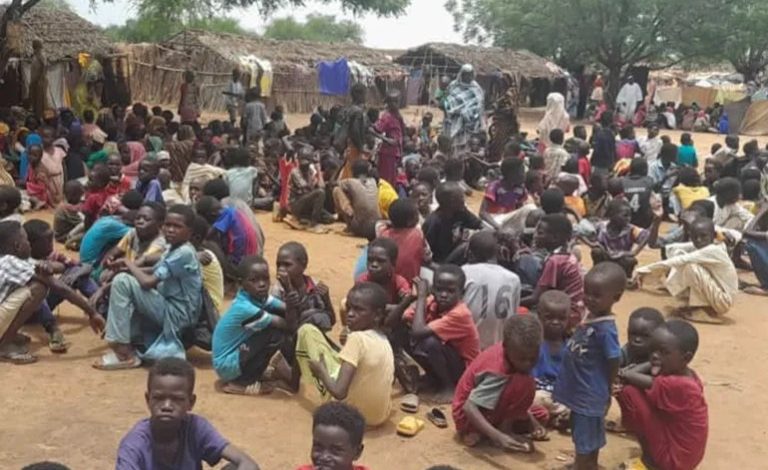
With the economy at a standstill and more than 10 million people displaced, Sudanese are now entirely dependent on humanitarian aid to meet their food needs. But international organizations face severe difficulties accessing remote and isolated areas.
Justine Bequimel, Regional Director of Solidarités International, noted: “Previously, there were major trade routes between Darfur and Chad, but since the outbreak of the conflict, traders now pass only through a single border crossing. Deliveries take weeks, and with longer routes and delays, the cost of food convoys has soared to extreme levels.”
Phase 5 Famine
Under the Integrated Food Security Phase Classification (IPC), a Phase 5 famine declaration in a given area means at least 20% of households face extreme food shortages, 30% of children suffer acute malnutrition, and more than two adults or four children per 10,000 people die each day due to famine or the combination of malnutrition and disease. According to the report, this is the reality in the areas seeing the fiercest fighting in Sudan today.
Bequimel condemned the situation: “By imposing a permanent siege, as in the city of El-Fasher, and cutting off all transport routes for food delivery, we are effectively holding the population hostage. These are indirect methods of killing people.” She added: “No one is allowed in or out, while fighters controlling the checkpoints act with extreme violence on roads leading to the city.”
Animal Feed as Food
The writer said the World Food Programme has been unable to deliver any humanitarian aid convoys to El-Fasher since the start of the siege. Prices of staple foods have skyrocketed, with wheat in the city costing 460% above the national average.
According to testimonies from NGOs and activists shared on social media, many families have been forced to eat animal feed. Similar famine conditions have been recorded since April 2024 in parts of North and South Darfur, West and South Kordofan, the Al-Jazirah region, and the outskirts of the capital, Khartoum.
Blocking Aid
The writer argued that both parties to the Sudanese conflict bear direct responsibility for the acute food crisis. She cited one example: an RSF attack on a 15-truck humanitarian convoy belonging to the WFP and UNICEF on June 2.
Rob Vos explained: “Infrastructure in many areas has been destroyed, making it extremely difficult to reach those in urgent need of food. Even when convoys get through, the lack of water and energy supplies prevents beneficiaries from cooking the food they receive.”
According to UNICEF, more than 40,000 children in North Darfur received treatment for severe acute malnutrition in the first five months of this year—double the number treated during the same period in 2023.
On June 27, UN Secretary-General António Guterres announced he had contacted the two warring leaders in an attempt to secure a ceasefire. Al-Burhan responded with approval, but Guterres said he received no reply from Hemedti.
Source: Jeune Afrique