Washington: Saving the Militia… Strangling the State
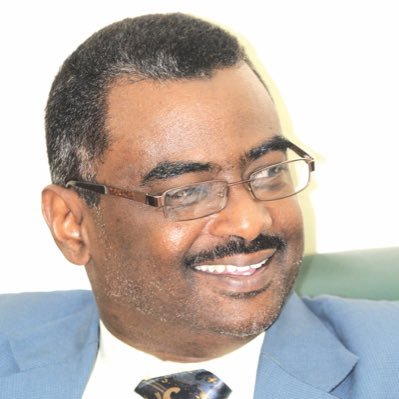
By Dr. Yasser Mahjoub Al-Hussein
In a significant political development, Sudan’s Sovereignty Council Chairman, Gen. Abdel Fattah al-Burhan, met last Monday in Geneva with Massad Boulos, advisor to former U.S. President Donald Trump. The meeting, which lasted nearly three hours, came through complex regional arrangements involving countries with good ties to Sudan. Observers considered the encounter—held just days after the failure of the U.S.-led Quartet committee meeting with regional partners—the latest American attempt to resuscitate the Rapid Support Forces (RSF) militia before its total collapse.
Multiple sources confirmed that Burhan carried with him security files documenting regional involvement in arming and financing the militia, including the opening of neighboring countries’ airports to transport supplies into Darfur and Kordofan. He reportedly stressed his categorical rejection of any future political role for the RSF—a position that sharply diverges from Washington’s apparent preference to keep the group within Sudan’s political equation.
Through Trump’s advisor, Washington condemned the RSF’s crimes and its declaration of a parallel government in Nyala, calling it a threat to national unity. Yet the underlying message was unmistakable: stop the war now, but ensure the RSF’s survival as a political actor. This is the poisoned carrot Washington seeks to feed the Sudanese people—verbal denunciation of atrocities, coupled with practical protection for the militia’s existence.
The pressing question is: why did Washington act only now? Why remain silent through two years of atrocities, displacement, and sieges, only to rush suddenly to the negotiating table? The answer is straightforward: Sudan’s army is advancing rapidly, Al-Fashir is on the verge of liberation, and the RSF is collapsing at an accelerating pace, grasping at any straw to avoid inevitable defeat.
Logistical details further reveal the nature of the moment: Turkish involvement in arrangements, a presidential aircraft from a mediating state flying Burhan to Geneva—all signaling that the meeting went far beyond a simple “ceasefire” discussion. Instead, it was part of a broader regional–international political engineering effort to salvage the militia through backroom deals.
Suspicion deepened due to the secrecy surrounding the meeting, even within Sudanese circles. Political figures—both pro- and anti-government—have since demanded full transparency and disclosure of what transpired.
This scene is not new in Washington’s Sudan policy. Since the 1990s, the U.S. has pursued the weakening of central Khartoum—whether through economic sanctions, backing rebel movements, or driving the 2011 partition of the country. The goal was never “democracy” or “human rights,” but rather ensuring that no strong, unified state in the heart of Africa could rise with the backing of a cohesive army and develop into an independent regional power.
Today, Washington is recycling the same strategy with a new instrument: the RSF militia. Keeping the RSF as part of the political equation means shackling Khartoum to an imbalanced power structure that blocks any serious national project to build a strong central state.
Even raising the idea of integrating the RSF into the political process now delivers a psychological blow to the war effort—particularly as the army fights to break the siege of Al-Fashir. A ceasefire at this moment would not be peace, but rather an interruption of national victory and a gift of time for the killers to regroup.
For Washington, the Geneva meeting may represent a last-ditch attempt to save the militia. For Sudan, it must serve as a wake-up call. Military victories should be translated into decisive political outcomes that safeguard sovereignty—not squandered in international bargains that reproduce destruction. The real target is not only the army but also the popularity of its commander, whose firm stance against the terrorist militia has won public support. Undermining his credibility ultimately weakens the army’s standing.
The message must be crystal clear: those who accept the RSF’s return to politics accept Sudan’s submission to foreign tutelage. Those who refuse must see the struggle through to the end—for a half-victory is nothing but a postponed defeat.