Colombian Mercenaries in Darfur: Foreign Flames in a Proxy War

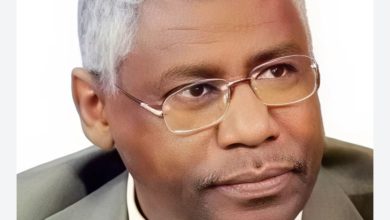
By Sabah al-Makki
Sudan’s war is no longer an internal affair, as some insist, but a full-fledged foreign invasion. Footage retrieved from the phone of a slain Colombian mercenary in Darfur reveals the stark reality: foreign fighters battling alongside the Rapid Support Forces (RSF), under Emirati supervision, financing, and arms supply. It is a new chapter in the globalization of blood, where Sudan’s soil becomes a testing ground for mercenaries imported from across the oceans.
From Bogotá to Abu Dhabi… to Darfur
The Colombians’ relationship with the UAE is not new. For years, private security firms in Abu Dhabi have recruited hundreds of demobilized Colombian soldiers, lured by lucrative salaries to deploy their combat experience in other people’s wars. They were spotted in Yemen, Libya, and Somalia. Now they are in El-Fasher, Darfur’s last government stronghold.
These men are not mere hired guns but strategic tools in what researcher Andreas Krieg has called the UAE’s “dogs of war”—mercenaries used to project Emirati influence far beyond its borders.
A leaked Spanish-language operations document from El-Fasher, dated December 2024, details orders for the Colombian “Desert Wolves Battalion.” It outlines the chain of command, types of munitions, and shockingly, the planned use of white phosphorus—an internationally restricted weapon in populated areas. For mercenaries with no legal status to incorporate such weapons into operational plans amounts to a textbook war crime.
Proxy Warfare, Emirati Strategy
This is hardly the first time wars have been outsourced to mercenaries. A 2022 report by the Foreign Policy Research Institute describes how the UAE transformed from a small state reliant on U.S. protection into an assertive power projecting force through “imported human ammunition.” In Yemen, it deployed hundreds of Colombians to the frontlines. In Libya, it financed parallel armed units. In Somalia, it embedded mercenaries in Bosaso under the guise of a “coast guard.” Sudan is merely the newest stop on this trajectory.
Why Colombians? They are cheaper than Western contractors, seasoned in guerrilla and urban warfare after decades of battling the FARC, and politically disposable. Using them allows Abu Dhabi plausible deniability: the war appears local, even as it is waged by a transcontinental network.
The Architect of the Network
The name of retired Colombian colonel Álvaro Quijano stands out as a central coordinator. According to Colombian investigative reports, Quijano funneled hundreds of ex-soldiers under fictitious security contracts from Bogotá to Abu Dhabi, then on to Libya and Darfur. He operates through front security firms in Colombia and the UAE, allegedly backed by influential Emirati figures such as Mohammed Hamdan al-Zaabi. Testimonies from families of slain mercenaries describe mass recruitment, passport confiscation, and threats that forced fighters to remain in Sudan.
From Foreign Incursion to International Crime
The evidence is overwhelming:
Video recordings in Spanish from inside Sudanese battlefields.
Secret operations orders for the “Desert Wolves” signed in El-Fasher.
Explicit instructions to deploy white phosphorus in populated zones.
A logistical trail running Bogotá–Abu Dhabi–Libya–Darfur.
Accounts of child soldiers being trained by mercenaries near Nyala.
This is no civil war. It is the anatomy of a foreign invasion. The UAE—acting as financier, supplier, and operator—faces responsibility not only for war crimes and crimes against humanity but potentially for genocide.
El-Fasher: Gateway to Sudanese Sovereignty
El-Fasher today is more than a battlefield; it is the frontline of Sudanese sovereignty. The city has withstood more than 225 RSF-led assaults, during which the siege stripped away any illusions: “foreign hands” are no metaphor—they translate directly into Sudanese blood.
Global silence in the face of mercenaries in Darfur cannot be read as neutrality, but as complicity. What is unfolding is not merely a test of Sudan’s resilience, but a moral test for the international community: either confront this mercenary invasion with accountability and justice, or be recorded by history as having allowed Sudanese blood to be traded as currency in the global market of hired guns.
Conclusion
Sudan’s war exposes the essence of proxy conflicts: small states weaponizing wealth and mercenaries to redraw regional maps at the expense of others’ lives. El-Fasher is the mirror reflecting this reality. The war is not an internal struggle, but a foreign-led invasion orchestrated from Abu Dhabi. It is time to expose these transnational networks and call them by their names: the “Desert Wolves” are not a battalion but a paid instrument of extermination, unleashed by the UAE and executed on Sudanese soil.