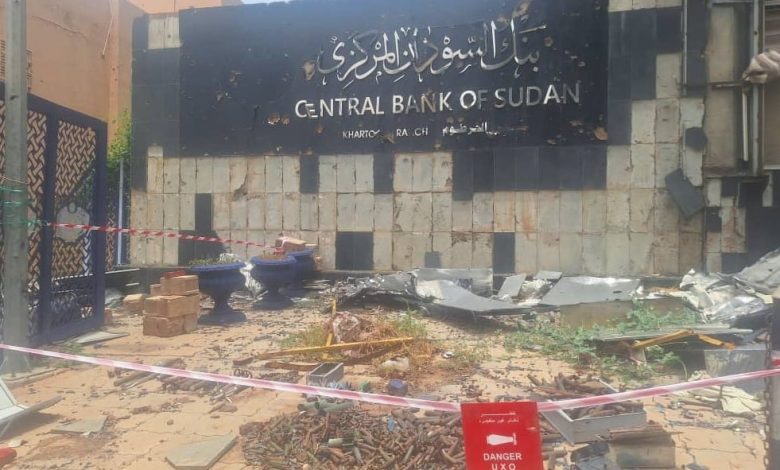
The government has deployed the limited number of mine-clearance and explosive ordnance disposal (EOD) teams from South Kordofan and Jebel Awlia to begin clearing operations in Al-Mogran and central Khartoum, in preparation for the eventual resumption of civilian life in the capital.
An official from the National Mine Action Center said that all high-rise towers in Al-Mogran—home to company headquarters and hotels—are considered suspect and require extensive surveying for unexploded ordnance.
EOD teams have marked safe and hazardous zones in Al-Mogran to prevent vehicles and pedestrians from entering danger areas. Initial clearance efforts focused on essential service facilities, such as the Al-Mogran water station, to allow repair teams to restore operations.
Jumaa Ibrahim Abu Anja, head of the national demining organization JASMAR, said the area stretching from Zain telecom tower to the White Nile Bridge has been classified as a “confirmed hazardous zone” due to fierce battles that left behind landmines, rockets, and unexploded shells.
He told Sudan Tribune that the area under clearance covers 40,000 square meters, with operations that began on August 9 and are scheduled to continue until September 11, though the timeline may be extended. So far, teams have removed 20 anti-personnel mines and two anti-vehicle mines.
At Al-Shaheed Mosque in Al-Mogran, demining units are working to remove dozens of RPG shells embedded in the mosque’s walls and gardens—damage that testifies to the intensity of fighting that devastated one of Khartoum’s largest mosques.
Elsewhere in central Khartoum, near the army’s General Command and the RSF’s former headquarters, other clearance teams are working amid massive destruction. According to Marwan Mohamed, a supervisor, his team is currently clearing the UN’s FAO offices and other organizations’ premises to prepare the area for civilians’ return.
Equipped with protective vests and detection devices, the teams have spent days entering damaged towers and hauling out heavy artillery shells and ammunition, transferring them to a designated hazard site before moving them to an explosives disposal ground.
Currently, only five clearance teams are available to respond to household reports across Khartoum State—from the city center to Jebel Awlia, Omdurman, Umbadda, Bahri, and as far north as Jili, in addition to areas east of the Nile. A separate non-technical survey team receives reports, while two awareness teams operate in Omdurman and Bahri.
EOD workers warn that mishandling unexploded ordnance by civilians has led to deadly accidents, causing numerous casualties.
Regarding other conflict-affected states, staff at the National Mine Action Center said preparations are underway for a large-scale operation to deploy clearance teams to Al-Jazira state in central Sudan.