Can UNESCO’s Education Initiative Save the Future of Millions of Sudanese Students?
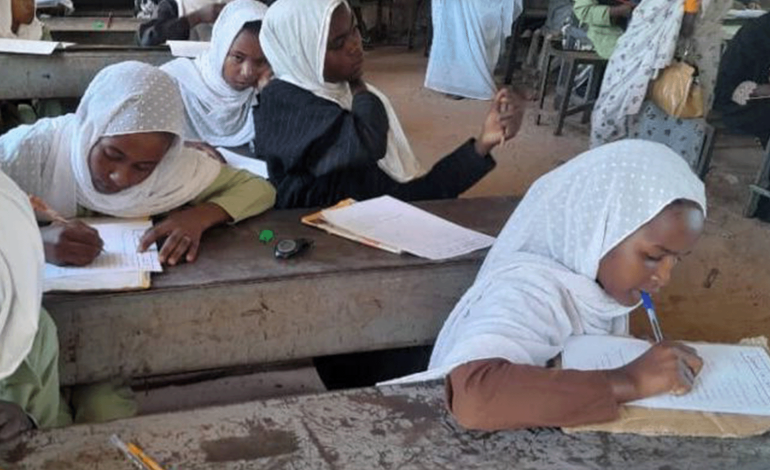
Sudan Events – Agencies
After more than two years of war that have threatened the future of millions of children by depriving them of access to classrooms, the United Nations Educational, Scientific and Cultural Organization (UNESCO) has launched a glimmer of hope through the “Transitional Education Plan for Sudan,” backed by a budget of $400 million.
According to UNESCO data, out of 17 million school-age children in Sudan, only 3 million have returned to school, while 14 million remain out of the classroom. Six million were already out of school before the war erupted, and an additional 8 million have been unable to return since the conflict began.
The UN Children’s Fund (UNICEF) previously reported that around 10,400 schools in conflict-affected areas have shut down, warning that the loss of income associated with this disruption could cost the war-affected generation an estimated $26 billion over their lifetime.
Education as a Lifeline
The launch ceremony for the Transitional Education Plan, held on Thursday, brought together dozens of local and international organizations as well as donor agencies. The plan includes monitoring and evaluation mechanisms through biannual reviews, a communication strategy, advocacy and resource mobilization programs, in addition to new initiatives spanning three to five years.
It aims to reintegrate nearly 80% of the 17 million Sudanese children and youth who have dropped out of school due to the war by creating safe learning environments, improving the quality of curricula, and strengthening the country’s educational infrastructure.
At the ceremony, UNESCO’s Assistant Director-General for Education, Stefania Giannini, stressed that education is “a lifesaving intervention during crises,” as it protects children from violence and provides stability.
The transitional plan lays out a roadmap for rebuilding education and society in Sudan, with priority given to girls, displaced populations, and other vulnerable groups. However, UNESCO noted a funding gap of $272 million that must urgently be filled by donors.
Ayman Badri, head of UNESCO’s education office in Khartoum, said the plan was the product of tireless collaboration among partners, donors, UN agencies, civil society, local authorities, teachers, and parents. He reaffirmed UNESCO’s commitment to implementing the plan and sustaining the necessary support, calling on Sudanese citizens to champion education as a cornerstone of the country’s future.
Meanwhile, the Global Education Cluster warned that Sudan risks losing an entire generation, noting that prolonged absence from school reduces children’s chances of returning and undermines their academic, social, and emotional development. Thousands of teachers, it added, are working without pay and require urgent support.
Recovery Scenarios
The plan outlines three potential scenarios for rescuing Sudan’s education sector:
1. Stability: Reopening 80% of schools, targeting 10.5 million children and youth—7.5 million through formal education and 3 million through non-formal education.
2. Status Quo: Reopening 20% of schools, reaching 7.5 million students—1.9 million through formal channels and 5.6 million through non-formal, at a total cost of $579 million.
3. Deterioration: Reopening just 10% of schools, targeting 7 million children and youth—1 million through formal education and 6 million through non-formal.
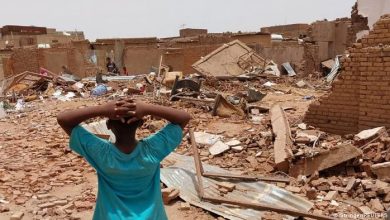
A senior official at the Ministry of Education, speaking on condition of anonymity, told Al Jazeera Net that education has begun to recover in “safe and liberated” states following the expulsion of Rapid Support Forces (RSF) from Khartoum, Al-Jazira, and Sennar, despite the widespread destruction of schools, some of which were used as military bases by the “rebel forces.”
He said that schooling has resumed across secure states, where students have already sat for secondary school certificate exams twice since the war began, with university admissions results expected soon. Exams for the intermediate stage were also completed two weeks ago.
The official blamed the RSF for disrupting education in Darfur and parts of Kordofan, expressing hope that donors will fulfill their pledges under the new plan to help revive Sudan’s education sector.
A Sector in Collapse
The Sudanese Teachers’ Committee, however, urged that UNESCO’s budget be utilized in a way that ensures fair benefit across all states, while stressing the need for comprehensive plans that cover every region, address teachers’ economic conditions, develop curricula, and protect the education system from collapse.
Committee spokesperson Sami Al-Baqir told Al Jazeera Net that Sudan’s education system has suffered a “massive breakdown” due to the war, fragmented between areas under army control and those under RSF. Education has completely halted in seven states, particularly in Darfur and parts of Kordofan, leaving the sector unstable and without a clear vision.
According to Al-Baqir, teachers’ salaries have either been suspended entirely in some states since the war began, or left unpaid for 14 months in most states. Where salaries are still issued, their value has collapsed due to hyperinflation—“the starting monthly wage of a teacher is worth only around $3, while a first-grade teacher with 30 years of service earns the equivalent of $19 a month.”
He warned that many teachers have been displaced, forced into refuge, or driven out of the profession altogether due to low pay. Schools have suffered varying degrees of destruction, with large numbers of students dropping out—“some becoming fuel for the war.” Many children of school-entry age, some as old as nine, have yet to attend school at all. In the absence of adequate funding, some states have resorted to imposing fees on students.
Al-Baqir emphasized that UNESCO’s initiative can only succeed if the war ends and justice is restored, alongside addressing teachers’ rights and economic conditions. He called for creative solutions such as collective housing for students and the design of curricula tailored to the realities of the current crisis.
Source: Al Jazeera