How El Fasher Became a Symbol of International Neglect Toward Sudan
Sudan Events – Agencies
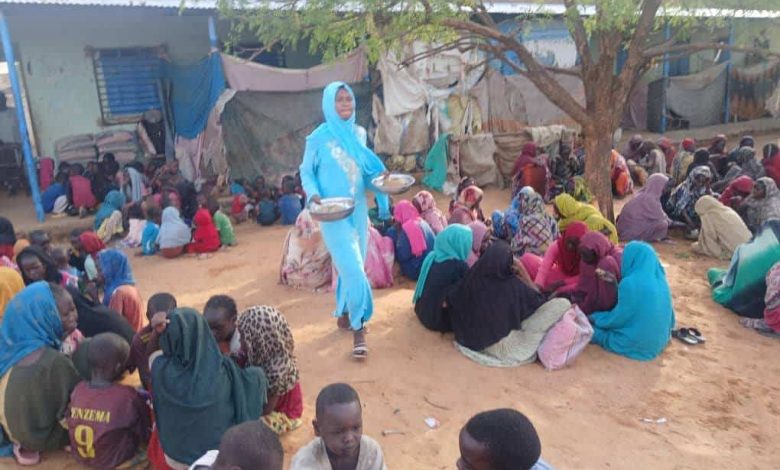
El Fasher, the capital of North Darfur State, is witnessing a genuine humanitarian catastrophe amid fierce battles between the Sudanese army and the Rapid Support Forces (RSF). Dozens of civilians have been killed over the past ten days, while residents suffer under a crippling siege and deliberate starvation in the face of a troubling international silence. The United Nations has confirmed that at least 89 people were killed during clashes in the past ten days.
In parallel with these grim figures, the World Health Organization has warned of a cholera outbreak across all 18 Sudanese states, with nearly 50,000 cases recorded and close to 1,100 deaths.
Against this backdrop, writer and political analyst Diaa al-Din Bilal reveals the extent of the suffering in El Fasher, noting that the city has been subjected to 243 continuous attacks by the RSF “militia.”
Bilal stresses that the group enforces hunger as a systematic weapon, imposing starvation on civilians. Those attempting to flee El Fasher, he says, are often killed or slaughtered by the same forces that claim to have opened safe corridors.
This tragic situation, Bilal argues, is deeply rooted in Sudanese memory: the steadfast resistance in El Fasher today is driven by the haunting recollection of events in El Geneina at the outbreak of war, when the RSF carried out what he calls a genocidal campaign against unarmed Massalit civilians, killing more than 15,000 people. These memories, he says, fuel the determination of defenders to hold out despite dire conditions.
Strategic Stakes
Political writer and researcher Mohamed Tourshin highlights why the RSF is determined to seize El Fasher, stressing its strategic significance. He argues that the group sees control of the city as a way to restore morale after losing Khartoum as well as Gezira and Blue Nile states.
Tourshin further explains that controlling El Fasher would effectively mean controlling all of Darfur, opening broader routes for military and logistical support — and mercenaries — from eastern Libya. Such a position, he adds, would also enable the RSF to threaten northern states and other areas of northern and eastern Sudan.
On the humanitarian front, Bilal paints an even bleaker picture, recalling that the RSF at one point spread across nearly 75% of Sudanese territory. Wherever it gained ground, he says, disaster followed — looting, theft, destruction of infrastructure. In areas still under its control, he adds, the situation is even worse: wholesale confiscation of citizens’ property and ethnic-based killings, as seen in Nyala and Zalingei.
Bilal directs sharp criticism at the international community, accusing it of treating Sudan’s deepening humanitarian tragedy as little more than a rhetorical occasion. Condemnations, he says, remain abstract, failing to identify or pressure the party responsible. This, he argues, exposes an implicit complicity — whether with the perpetrators themselves or with the regional powers backing them.
The U.S. Angle
From Washington, former National Security Council Africa director Cameron Hudson warns that conditions in El Fasher are catastrophic and not receiving the global focus they urgently deserve.
Hudson points to a clear double standard: Sudan’s plight, he argues, does not draw the same attention as crises in Gaza or Ukraine, even though famine in Sudan is spreading on a massive scale.
He calls for immediate, practical steps — prioritizing El Fasher, delivering humanitarian aid, and preventing attacks on relief supplies or civilians. The international community, he says, must speak with one voice and act collectively to save Sudanese lives.
On potential U.S. involvement, Hudson notes Washington’s readiness to engage diplomatically, with American envoys shuttling across the region to revive talks. But he insists on the need to double efforts and scale up aid deliveries, urging President Donald Trump to become more directly and effectively involved in brokering a comprehensive ceasefire.
For his part, Tourshin argues that the success of any U.S. initiative depends on Washington’s seriousness and willingness to wield its considerable leverage over regional actors. He adds that ensuring a lasting solution requires excluding the RSF from any political, military, security, or economic role — as was the case before April 15, 2023 — to prevent a repetition of the current tragedy.
Source: Al Jazeera