Will Sudan’s New Government Succeed in Halting the Pound’s Decline and Curbing Gold Smuggling?
Sudan Events – Agencies
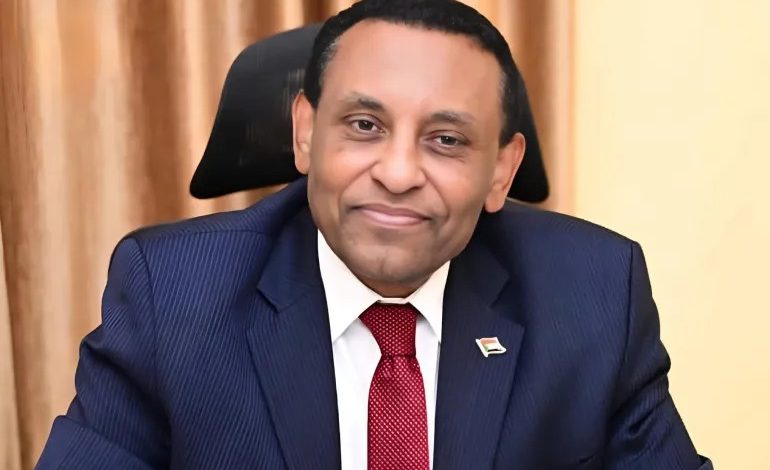
The emergency economic measures announced by Sudanese Prime Minister Kamal Idris to stem the decline of the national currency and curb gold smuggling have been met with conditional approval across various sectors. While economic experts stress the need for a strong enforcement mechanism with broad powers, a former senior official dismissed the measures as “disastrous”—particularly the state’s monopoly over gold exports—and doubted they would produce any results.
Prime Minister’s Decisions
The new decisions include:
Establishing an Economic Emergency Committee chaired by the Prime Minister.
Banning imports unless they fully comply with banking and commercial regulations, and prohibiting entry of goods that fail to meet approved standards and specifications.
Strengthening anti-smuggling forces and equipping them with the necessary tools to perform effectively.
Enforcing anti-smuggling laws, making the possession or storage of undocumented gold a crime regardless of location.
Monitoring domestically produced gold closely until export to ensure it does not leave through illicit channels.
Restricting the purchase and marketing of gold to a single government body, which will also provide importers with the necessary foreign currency.
Creating a national digital platform to track imports and exports from ports of departure to Sudanese entry points.
Reviewing Cabinet Decision No. 154 on car imports and cracking down on unregulated entry (“via pallets”) at ports and crossings.
Re-examining state-level emergency orders that impose unlawful fees in violation of federal governance laws, to ease citizens’ burdens.
Revisiting export policies to remove obstacles and ensure the smooth flow of goods.
Conditional Support
The Khartoum State Gold Traders’ Chamber welcomed the Prime Minister’s measures—particularly the state monopoly on gold exports. Chamber head Khalid al-Khanjar Tibidi told Al Jazeera Net the move was “a crucial step for the state to control gold, now the sole major resource after the war.” He stressed, however, that success depends on allowing traders access to official purchase outlets, and on buying gold at both the highest market rate and the global price to shut down smuggling completely.
In contrast, Abdulmonem al-Siddiq, head of the Gold Exporters’ Division, called the monopoly decision “catastrophic” and warned it would “destroy what remains of Sudan’s fragile economy, repeating the failed policies of the former regime with predictable consequences.”
“I don’t understand the insistence on repeating failed experiments,” he said, adding that monopolizing gold exports for a select group would only fuel corruption. “Our previous experiences with such policies led only to resource waste through smuggling and rampant corruption.”
Mohamed Taher Omar, Director-General of the Sudanese Mineral Resources Company, admitted in a previous statement to Al Jazeera Net that only 52% of gold exports go through official channels, while 48% bypass state control—highlighting the scale of the smuggling challenge.
Implementation Challenges
Professor Kamal Ahmed Yousif, Dean of Postgraduate Studies at Nilein University, described the decisions as positive but stressed the need for an empowered mechanism to enforce them amid ongoing “institutional rivalries” in the new government.
He argued that stricter banking procedures in trade could help stabilize foreign currency flows, while anti-smuggling efforts would remain only partially effective. He also noted that gold revenues require a broader approach—from regulated extraction with international partners to halting artisanal mining and tightening export controls through state-run mining companies.
According to the Ministry of Minerals, traditional gold mining is spread across 14 of Sudan’s 18 states, employing over two million people and producing about 80% of the country’s output, compared to 20% from licensed companies.
Revenue and Export Concerns
Yousif emphasized the importance of monitoring all imports—not just cars—as well as tightening oversight of export revenues. He added that reversing the pound’s decline requires immediate investment in agriculture, factory rehabilitation, lowering taxes, encouraging local investors, enacting investment-friendly laws, and reducing customs dollar rates.
“Disastrous” Measures
Mubarak Ardol, former head of the Sudanese Mineral Resources Company, criticized the Prime Minister’s decisions as “disastrous,” particularly the state monopoly on gold exports, which he said would stifle “free and fair competition” and weaken the private sector.
He argued that the government had previously tested—and failed with—such policies, just as it failed with its attempt to fix the exchange rate. “The state should not intervene in trade under any circumstances,” Ardol insisted.
Instead, he suggested public-private partnerships where both sides could benefit. He pointed out that in 2020, when a private company was given exclusive rights to gold exports, problems mounted until the government shifted to full economic liberalization—an approach that allowed the Central Bank to generate foreign currency surpluses and hold multiple auctions.
Ardol warned that gold production belongs to private producers, and the state cannot simply compel them to sell at its dictated price. He predicted the new decisions would actually reduce official revenue streams.
He also criticized the exclusion of the private sector from the Economic Emergency Committee, arguing that the pound’s decline and gold smuggling stem largely from flawed legislation that urgently needs review.