A Smart Maneuver to Outwit the RSF and Secure Gains for Sudan
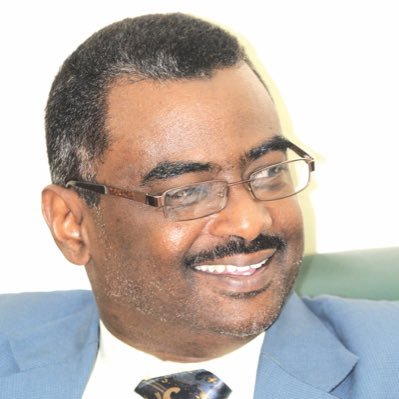
By Dr. Yasser Mahjoub Al-Hussein
Nearly three years into the Sudanese army’s war against the Rapid Support Forces (RSF), the country continues to face political monopolization of its crisis by the United States and its regional allies. The protracted nature of the conflict is tied to solutions being subordinated to the interests of these powers—interests that clash with Sudan’s sovereignty and independent decision-making.
With foreign interventions escalating and the RSF committing atrocities against civilians, bold initiatives are urgently needed to break the deadlock and restore Sudan’s position at the center of the international agenda.
Among the emerging proposals is the idea that Sudan’s Prime Minister should spearhead a broad diplomatic campaign to convene a special session of the United Nations General Assembly (UNGA) dedicated to Sudan.
Such a step would be far more than a ceremonial gesture; it could mark a strategic turning point, returning initiative to Sudan while forcing the world to reckon with its responsibility toward a people suffering from a proxy war, blatant external interference, and the involvement of foreign mercenaries—from Colombia to West Africa.
This idea can be approached through three main lenses:
1. The potential of the UN General Assembly.
2. The diplomatic requirements for such a move.
3. The political and media value it could generate.
Is There a Strategic Alternative to the Security Council?
Since the war erupted, the UN Security Council has failed to take decisive steps to halt the bloodshed—or even issue a unified statement condemning the atrocities. The reason is no mystery: deep divisions among major powers and the paralyzing use of veto power have rendered the Council hostage to global rivalries.
This reinforces the case for pursuing the General Assembly route. The U.S. approach to Sudan has remained trapped in the same framework that originally ignited the conflict.
The latest proposal, relayed to the head of the Sovereignty Council by an adviser to former U.S. President Donald Trump during a meeting in Zurich, was little more than a revised version of the original Framework Agreement. That deal had fractured relations between the army and the RSF and pushed the country into today’s confrontation. The essence of the U.S. vision remains unchanged: empower the Forces of Freedom and Change (FFC), marginalize other political currents, and recycle the RSF under the guise of “army restructuring.”
For many Sudanese, this trajectory is not a genuine solution but rather a reproduction of the crisis—cementing the existence of a parallel army that threatens the state itself.
Thus, moving the case to the General Assembly becomes a strategic necessity. It would not only bypass the paralysis of the Security Council but also challenge Washington’s narrow approach, broadening diplomacy toward a more balanced and just vision.
Through this mechanism, Sudan’s case could be presented in full: foreign interference in the war, RSF crimes against civilians, the devastating socio-economic fallout, and even a national vision for the post-war phase.
Unlike the Security Council, the General Assembly is not constrained by the veto. Resolutions may pass by a simple majority—or by two-thirds in special circumstances. While not legally binding, they carry immense political, moral, and media weight, as seen in major crises such as the 1956 Suez invasion, the Korean War, and the Palestinian question.
Diplomatic Requirements for Success
Procedurally, calling for a special or emergency session of the General Assembly requires the backing of at least one-third of member states (64 countries). While this may appear daunting, it is feasible if Sudan leverages its membership in major blocs:
Arab League: 22 states providing a core base of support.
African Union: 55 members—securing even a majority here would suffice.
Organization of Islamic Cooperation (OIC): 57 members, many sympathetic to Sudan.
Group of 77 + China: 134 members, the largest negotiating bloc at the UN.
Non-Aligned Movement: 120 members, many of whom oppose foreign meddling and defend state sovereignty.
Sudan need not persuade every member; mobilizing one or two blocs would secure the required quorum. A vigorous campaign led personally by the Prime Minister could make this realistic—even straightforward.
Coordination with the Sovereignty Council is equally vital. Foreign policy in Sudan lies at the intersection of governmental and sovereign domains. Thus, including the Sovereignty Council in the principle of the initiative would bolster success, preventing internal rivalries from undermining it.
Moreover, Prime Minister Dr. Kamal Idris—nominated by General Abdel Fattah al-Burhan—adds strength to such a move, given his expertise and international connections. Success would therefore be collective, reflecting a united Sudanese voice rather than fragmented appeals.
But success depends not just on numbers. It also requires crafting a cohesive narrative that transcends global divisions. Sudan must speak in the language of shared interests: regional security, counterterrorism, protection of trade routes, and averting humanitarian disasters that could trigger new refugee flows destabilizing the world.
Placing Sudan at the heart of this equation would allow it to forge new alliances and expand international sympathy—particularly if coupled with a coherent vision for economic recovery and reconstruction. The world is not moved by complaints alone; it demands practical plans to invest in politically and economically.
Political and Media Value of Sudan’s Voice at the UNGA
The General Assembly is not merely a meeting hall; it is a global stage watched by media outlets across continents. Every speech is translated simultaneously into six official languages—Arabic, English, French, Spanish, Russian, and Chinese—projecting Sudan’s message instantly to the world.
This unparalleled media momentum is itself a major political gain. A special session would return Sudan to the heart of the international agenda, from which it has been overshadowed by crises such as Ukraine and Gaza.
A Sudanese address could rest on three pillars:
1. Exposing realities—documenting crimes against civilians and exposing foreign interventions fueling the war.
2. Presenting a national vision—a concrete program for economic and social recovery and reconstruction, with clearly defined needs.
3. Appealing for solidarity—mobilizing political and humanitarian support to end the war and aid the Sudanese people.
Such an initiative could yield several key gains:
Break the international deadlock by bypassing Security Council paralysis.
Reframe Sudan’s narrative, allowing the country to define itself rather than being defined by external reports.
Exert political pressure on RSF backers through public, documented condemnation.
Open channels for new alliances invested in Sudan’s future stability.
Beyond procedure, the Prime Minister’s personal appearance at the podium would send a powerful message: Sudan is not a helpless victim awaiting imposed solutions, but a sovereign state determined to shape its destiny with political courage.
A Strategic Necessity, Not a Diplomatic Luxury
The initiative to convene a UNGA special session is not a luxury; it is a strategic imperative.
For it to succeed, Sudanese diplomacy must shift from passive recipient to proactive driver. This demands internal coordination that leaves no room for division, and a well-planned diplomatic mobilization that maximizes regional and international alliances.
This is a historic opportunity to redefine Sudan—not as a forgotten victim of proxy wars, but as a sovereign nation charting its own course.
When Sudan’s voice rises from the UN rostrum, broadcast simultaneously in six world languages, it will carry weight far beyond scattered statements or timid moves.
It is a chance to transform Sudan’s tragedy from a neglected crisis into a living cause that compels global action—returning to Sudan the initiative in shaping its future.