Hamdok’s Alliances and the Craft of Neutrality in Beautifying Funerals
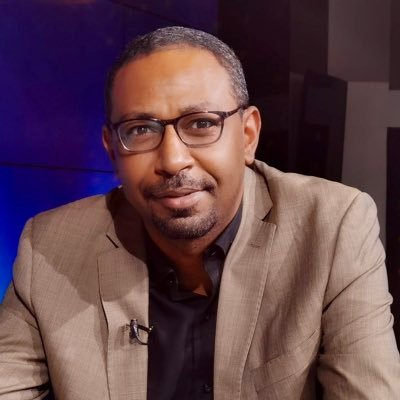
By Dr. Amjad Farid Al-Tayeb
“Knowledge is never innocent. It is saturated with power, always used either to reinforce or to resist domination.”
– Edward Said, Orientalism
In today’s collapsing Sudan, Said’s insight feels more urgent than ever. Words are no longer mere vessels of meaning, but weapons in a struggle for existence itself: mobilized to justify sieges, normalize massacres, or construct false sanctity around alliances stained with blood. Here, duplicitous discourse becomes more dangerous than bullets, for it lays the ethical and symbolic groundwork for crimes committed in the name of “neutrality” or “political realism.”
Since war erupted in April 2023 between the Sudanese army and the Rapid Support Forces (RSF), civilian political forces have descended into confusion—fighting bitterly over representation and legitimacy. Out of this confusion emerged the Taqaddum/Ṣumud alliance, fronted by former Prime Minister Abdalla Hamdok, who has lived in the UAE since resigning in January 2022. The coalition presents itself as the conscience of the revolution, cloaked in rhetoric of neutrality. Yet a closer look reveals a glaring bias toward the RSF, objectively helping to reproduce the very conditions of war it claims to transcend.
Hegemony Through Political Discourse
As Gramsci taught, hegemony is not imposed by force alone—it also redefines meaning, offering alternative interpretations that make bias appear like neutrality. From this perspective, the Addis Ababa Declaration (January 2024), signed by Hamdok and RSF commander Mohamed Hamdan Dagalo “Hemedti,” was less about “ending the war and protecting civilians” than about granting political legitimacy to RSF-controlled civilian administrations. It paved the way for the Ta’sis coalition, an offshoot of Hamdok’s alliance, which openly supported forming an RSF-backed government—elevating the militia from “armed group” to “political leadership.”
The Addis Memorandum was no passing event; it was a founding moment of a new hegemonic order. Through it, the RSF—long accused of war crimes—was recast as a legitimate political actor. The press conference following the Hamdok–Hemedti signing was a living metaphor: Hamdok seated beside a warlord delivering incitement, even as RSF fighters looted, raped, and killed civilians in Gezira State.
By rearticulating political discourse, the Ṣumud alliance assumed the role of what Gramsci called the “non-organic intellectual”—serving external capital (notably Emirati petrodollars) and militia violence rather than the interests of society. This opportunism transformed perpetrators into “partners,” while attacking and stigmatizing dissenting voices through smear campaigns, hate speech, and disinformation.
Manufactured Consensus
Chomsky has long argued that propaganda works by “manufacturing consent.” Taqaddum/Ṣumud’s calls to “protect civilians” through a no-fly zone exemplify this: demonizing government airstrikes while deliberately downplaying the RSF’s ground massacres, looting, mass rapes, and ethnic cleansing. In some cases, coalition figures went further—justifying RSF occupations of homes and hospitals in Khartoum, or whitewashing the UAE’s direct role in fueling the conflict.
In May 2023, the Civil Front to Stop the War (then part of Taqaddum) even issued a statement falsely attributing RSF rapes to the army—later retracting under public pressure. This was no accident but part of a systematic pattern: exaggerate army abuses, obscure RSF atrocities, and thereby recast the militia as a legitimate actor.
Independent data exposes this distortion. ACLED reported in November 2024 that 77% of civilian abuses were committed by the RSF. The INSIGHTS Center in July 2025 found the figure even higher—88% of civilian killings attributable to the RSF. Such overwhelming evidence can only be denied through a deliberate false consciousness—what Ṣumud markets as “neutrality.”
Internal Orientalism and the Islamist Scarecrow
Edward Said showed how dominant discourses invent a negative “Other” to justify violence. In Sudan, Ṣumud deploys Islamists in this role. Instead of confronting RSF-led massacres in Darfur, Khartoum, and Gezira, the alliance distracts by casting Islamists as the ultimate evil. This exploits public resentment against Omar al-Bashir’s regime but ignores that RSF atrocities today mirror those very crimes. Indeed, the RSF itself is a legacy of Islamist rule.
In this “internal Orientalism,” anyone not aligned with Ṣumud is branded “Islamist” or “warmonger.” Thus, independent dissent is excluded, and the political struggle shifts from issues of justice and accountability to semantic wars over identity—policed by a coalition claiming sole ownership of “revolution” and “peace.”
The Banality of Political Evil
Hannah Arendt’s concept of the “banality of evil” resonates here. Ṣumud’s calls for a no-fly zone—fully aware it would hand military advantage to a genocidal militia—illustrate a bureaucratic pursuit of political survival devoid of ethical judgment. When the same Western or Emirati funds both RSF warfare and the alliance’s “peace workshops,” the contradiction becomes grotesque. What for displaced Sudanese is existential suffering, for Hamdok’s allies becomes a bullet point in a donor report.
Organized Stupidity of Political Decay
The result is what might be called an organized stupidity of political decline. Neutrality becomes a mask for complicity, enabling efforts to partition Sudan by legitimizing an RSF “government.”
Ṣumud does not offer a pathway to end the war. It reproduces it—under different words. Its “neutrality” is not ethical principle but a strategic bias dressed in false objectivity, serving foreign patrons who seek to reshape Sudan’s balance of power.
What Sudan needs is not counterfeit neutrality, but moral courage: a politics centered on victims rather than elites, accountability rather than impunity, civilian agency rather than militia coercion. Following Gramsci, this requires organic intellectuals tied to real social struggles; with Said, a critique of discourse itself; with Chomsky, resistance to propaganda; with Arendt, a recovery of ethical judgment amid the banality of evil.
Ṣumud markets itself as the “redeemed faction,” but in practice it repackages catastrophe with a civilian face and biased discourse. Unless Sudanese politics break from this path, the country will remain hostage between the army’s hammer and the anvil of “false neutrality” that legitimizes armed blackmail. Only a politics centered on victims—not their killers—can chart a different future. Otherwise, Ṣumud will be remembered as yet another name for the banality of evil drowning Sudan.