El-Fasher: 1,000 Displaced, Dozens Killed and Injured Amid Ongoing Shelling and Attacks
Sudan Events – Agencies
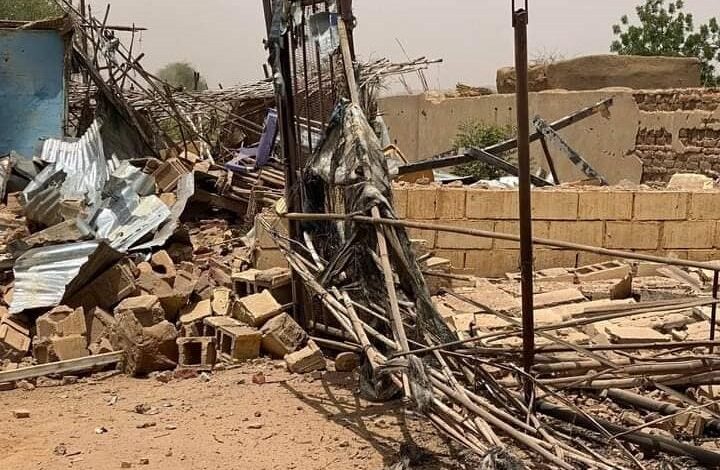
The Rapid Support Forces (RSF) renewed artillery shelling across the city of El-Fasher on Sunday morning.
Abu Shouk Camp’s Emergency Room reported that eight people were killed in the bombardment, while sources close to the Joint Armed Movements Force said the army and allied units launched an attack on RSF positions in the southern axis.
According to the Sudanese Doctors’ Union, seven people were killed and 71 injured on Saturday following RSF shelling of the city.
Radio Dabanga was unable to obtain an immediate comment from the RSF, which has consistently denied targeting civilians.
Heavy Fighting
Residents told Radio Dabanga that El-Fasher witnessed heavy battles on Saturday, with artillery and drone strikes near military headquarters and government offices.
Sources in the Joint Armed Movements Force said they had repelled the attacks and targeted RSF gatherings in the Awlad Al-Reef neighborhood with a strategic drone strike.
Displacement
The International Organization for Migration reported that 1,050 people were displaced in El-Fasher on Friday due to the escalating conflict. Civilians fled from the neighborhoods of Al-Wadi, Makarka, and Awlad Al-Reef toward the southeast.
Meanwhile, the RSF released a video showing several individuals it claimed were army soldiers surrendering. Radio Dabanga could not obtain confirmation from the army or independent sources.
Enforced Disappearances
The Abu Shouk Emergency Room announced via Facebook that several civilians have gone missing in recent days, publishing photos and information about the missing persons.
The committee said it had signed a cooperation agreement with the Center for Victims of Enforced Disappearance (Mafqoud), aimed at supporting families in documenting and reporting cases, coordinating field investigations, and appealing to international bodies for urgent intervention to protect civilians.
Both groups stressed that enforced disappearance is not only a crime against individuals but a deep wound for families and society. They urged Sudanese citizens to cooperate in reporting cases and called on the international community to step up documentation, pressure, and fact-finding efforts.
Protest in London
Separately, Sudanese demonstrators gathered in front of the Colombian Embassy in London on Saturday to protest the reported participation of Colombian nationals in attacks on El-Fasher.
Addressing the rally, Darfur regional governor Minni Arko Minnawi urged the implementation of U.N. Security Council resolutions to lift the siege on El-Fasher and allow humanitarian aid to pass through.
Dire Humanitarian Conditions
The Abu Shouk Emergency Room said children in the camp were surviving on little more than vegetable broth, while disease was ravaging displaced families, leaving many emaciated. It reported that large numbers of civilians have died due to hunger, illness, and shelling.
Residents inside El-Fasher described a catastrophic deterioration in living conditions. Some households have resorted to growing small plots of vegetables for survival.
Food Shortages
Basic staples such as sorghum, millet, wheat, flour, and rice are almost entirely unavailable. When they do appear, prices are prohibitive: a sack of millet sells for 4.5 million SDG in cash (8–10 million via bank transfer), sorghum for 4 million, and a 25-kg sack of flour for 2 million SDG.
Civilians reported that a suffocating blockade is preventing food from entering the city, with aid convoys routinely looted or burned.
Health Crisis
Residents said nearly all hospitals and private clinics in El-Fasher have been bombed out of service, leaving only a handful of facilities operating in dire conditions. The remaining clinics are overwhelmed with casualties and lack medicines, gauze, and lifesaving supplies.
Wounded patients are reportedly left untreated due to severe shortages of equipment and medical staff. Health insurance buildings, hospital wards, and even solar-powered storage units for medicine have been destroyed.
Water and Services Collapse
Water infrastructure has been devastated, including stations, wells, and reservoirs. “Even wells dug by aid organizations in neighborhoods have been bombed,” one resident said.
Children and women fetching water have been targeted, with many killed or injured. The city’s electricity plants were also destroyed early in the war and remain completely out of service.
Security and Civilian Targeting
Residents described systematic targeting of civilians, homes, markets, livestock, and vehicles, including ambulances. “Any movement is considered a target,” one said.
Women attempting to smuggle in small quantities of sugar or food were reportedly shot and left to bleed to death. The blockade continues to strangle the city.