Sudan’s Militia War: A Graveyard for Humanity and a Crematorium for Values
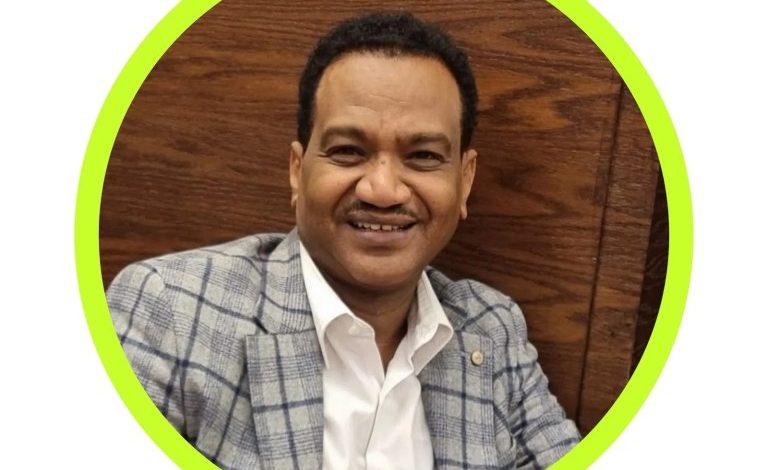
By Dr. Osama Mohamed Abdelrahim
Wars, at their core, are not merely struggles over land and resources, nor are they simply battles decided by bullets and artillery. They are profound tests of the moral frameworks that govern the behavior of states and armed groups, and of the principles that safeguard human dignity. While some wars have elevated the sanctity of human life as the ultimate aim of conflict, the war in Sudan has laid bare a profound moral and civilizational crisis embodied in the actions of the Rapid Support Forces (RSF) militia and their backers.
In this war, humanity itself has collapsed within the militia’s conduct: dignity has disintegrated, and the Sudanese individual has been reduced to a statistic in death tolls, a figure in displacement records, or a victim of looting, rape, and humiliation.
The Value of Human Life
Human beings are the cornerstone of civilization, and their dignity is the yardstick of nations’ progress and refinement. In Islamic teaching, life is sacred, enshrined as one of the five fundamental objectives of the Sharia, alongside the protection of faith, intellect, lineage, and property. The Qur’an is unequivocal: “Whoever kills a person—unless in retribution for murder or for spreading corruption in the land—it is as if he has slain all mankind” [Al-Ma’idah: 32].
Philosophical and legal traditions across history, from ancient Greece to the Enlightenment, from the French Revolution to the 1948 Universal Declaration of Human Rights, have consistently affirmed that life and liberty are inviolable. International covenants and the Geneva Conventions have since codified these principles, placing the protection of civilians and the prohibition of extrajudicial killings at the heart of international law.
Yet in Sudan’s war, these universal values have been trampled. RSF practices have revealed a culture fundamentally hostile to the sanctity of life. Killing has become casual, death trivialized, and human beings treated as expendable in the militia’s project of violence and plunder.
A Culture of Death and Killing
The RSF’s practices reflect a culture that trivializes death and normalizes killing for the most trivial of reasons. Their violence is not the by-product of combat necessity but a systematic daily practice: assassinating unarmed civilians, pursuing people based on ethnicity, carrying out field executions without trial, and unleashing indiscriminate terror in towns and villages.
This is not about isolated excesses—it is a worldview where human life carries no intrinsic value. Killing becomes cheap, reduced to a simple pull of the trigger.
Systematic Human Rights Violations
The RSF has transformed Sudan’s conflict from a military confrontation into a theater of systematic atrocities:
1. Mass killings based on identity: Particularly in Darfur, civilians were targeted along ethnic lines in massacres that rise to crimes against humanity.
2. Rape as a weapon of war: Widespread, systematic sexual violence has been documented, aimed not only at victims but at breaking communities.
3. Organized looting: Hospitals, schools, businesses, and homes have been systematically pillaged, turning war into an illicit economic enterprise.
4. Destruction and forced displacement: Entire villages have been burned, with populations forcibly uprooted.
5. Abuse of detainees: Prisoners have faced torture, humiliation, and even summary executions in violation of the Geneva Conventions.
6. Genocide: Reports from Darfur suggest atrocities rising to the level of genocide, where targeted groups have been massacred en masse.
The siege of El Fasher, which has lasted over 500 days, epitomizes these crimes: starvation, shelling, and forced displacement have turned daily life into a torment for civilians trapped between bombardment and siege.
The Meaning of These Atrocities
These crimes go beyond violations of law—they are attacks on Sudan’s moral and social fabric. Killings fracture communities along ethnic lines. Rape tears apart family bonds. Looting destroys economic resilience. Forced displacement empties towns and villages. Together, they represent a project of destructive social re-engineering aimed at dismantling Sudanese society itself.
Law, Religion, and Shared Principles
Both international law and Islamic teachings converge on a simple truth: human life is sacred.
International law: The Geneva Conventions, Additional Protocols, and the Rome Statute criminalize genocide, war crimes, and crimes against humanity.
International humanitarian law: Prohibits targeting civilians and mandates proportionality in the use of force.
Islam: The Qur’an and the Prophet’s teachings forbid killing non-combatants, looting, and destruction, and require humane treatment of prisoners.
Both frameworks denounce what the RSF has done—not only as legal violations but as moral crimes against humanity and civilization.
Parallels with Rwanda and Bosnia
Sudan’s war echoes the horrors of Rwanda’s 1994 genocide, in which 800,000 people were slaughtered in 100 days, and Bosnia’s ethnic cleansing during the Yugoslav wars, epitomized by the Srebrenica massacre. Both cases saw international tribunals established to pursue justice. Sudan’s atrocities, likewise, demand urgent international accountability.
Responsibility for Condemnation
Silence in the face of these crimes amounts to complicity. Responsibility falls on multiple levels:
Local: Sudanese political, religious, and civic leaders must denounce atrocities unequivocally.
Regional: The African Union, IGAD, and Arab League must move beyond generic calls for peace to clear condemnation and mechanisms of accountability.
International: The UN, ICC, and global powers must act under the Responsibility to Protect doctrine, imposing sanctions, prosecuting perpetrators, and protecting civilians.
Moral: Every voice that remains silent shares in the stain of history.
Toward Solutions
Accountability alone is insufficient. Sudan needs a national project to restore human dignity:
1. Public awareness: Campaigns through schools, media, and religious platforms to entrench the sanctity of life.
2. Education: Reforming curricula to promote critical thinking, tolerance, and citizenship.
3. Development: Tackling poverty and inequality to remove the drivers of militia recruitment.
4. Institutional reform: Restructuring the security sector and judiciary to serve citizens, not oppress them.
5. National reconciliation: Truth and reconciliation processes to heal wounds and rebuild trust, drawing lessons from Rwanda and South Africa.
Conclusion
Sudan’s war has become both a graveyard for human beings and a crematorium for values. The RSF and its backers have reduced human dignity to the lowest of considerations. Unless the sanctity of human life is restored as the nation’s highest priority, peace and stability will remain illusions.
The true battle is not only on the frontlines but in the moral reconstruction of Sudan’s collective conscience—recognizing that the human being is the nation’s most sacred asset, and that no political project can justify the burning of values and the slaughter of innocents.