Politicians and Their Illusions: Escaping Reality in Sudan
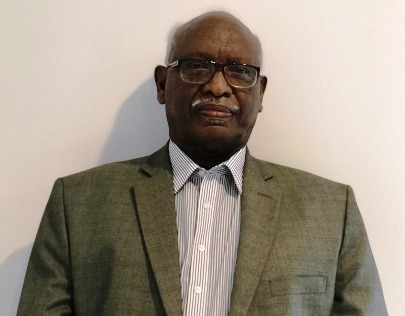
By: Zain Al-Abidin Saleh Abdelrahman
When political thinking drifts away from the realities on the ground, it turns into little more than futility. The fundamental problem of Sudanese politicians lies in their illusions. They construct imaginary worlds within their own minds and present them as absolute truths, insisting that dissenting voices are simply denying reality. Ironically, these very illusions are at the heart of their repeated failures.
The late political scientist Samuel Huntington, in his seminal work Political Order in Changing Societies, wrote about Sudan, noting that modernization and change in the country were historically driven by the military, which ruled for decades. He argued that true modernization requires shifts in traditional social, cultural, and economic beliefs. But the question is: how can transformation occur if the very foundations lack the tools for change? Reality must be acknowledged, even when some try to enshrine outdated ideas as sacred. Human action is inherently dynamic — if internal forces fail to change, external pressures eventually will, especially in today’s interconnected world.
Among the illusions Sudanese politicians must confront are the following:
1. The December 2018 Revolution: This uprising was born in the streets, not within party headquarters. Its sole objective was the fall of the al-Bashir regime — captured in the slogan “Just Fall, That’s All.” After Bashir’s ouster, political leaders signed a constitutional declaration with the military, effectively ending the revolutionary phase. From that moment, legitimacy shifted from “revolutionary” to “constitutional,” and responsibility for the transitional period’s failures lies squarely with those who governed during it.
2. The October 25, 2021 Coup: This military takeover had nothing to do with the revolution itself but stemmed from escalating tensions between civilian and military factions. Any seasoned politician — or even ordinary protesters chanting “Dissolve the militias” and “Army to the barracks” — should have known that provoking the military would invite a response. The coup reflected the civilian leadership’s lack of political experience.
3. The Rise of New Political Actors: Some leaders who emerged after the revolution claim to represent new political forces. In reality, many of them came from “independent” student movements at universities. Their rise to leadership was not due to their own strength but because Islamists and communists used them as tactical pawns in their own ideological battles.
4. The Central Political Divide: Today’s political scene remains dominated by two camps — Islamists, fragmented but active, and communists, who have managed to spread their rhetoric (“revolutionary legitimacy,” “war on remnants of the old regime”) among newer parties and segments of youth.
5. The Real Political Struggle: A durable solution requires Islamists and communists to sit together at the negotiating table, agree on a constitutional conference, and set principles for a permanent constitution. Islamists remain active and confident of their electoral base, while communist leaders are largely absent, relying on others to carry their message. Internal renewal within the communist leadership could be the first step toward resolution.
6. The Traditional Parties: The Umma and Democratic Unionist parties have proven ineffective, both before and during the current conflict. These parties do not aspire to lead; they simply aim to secure symbolic representation, whether under authoritarian rule or democracy, to preserve their interests.
Anyone seeking to solve Sudan’s crisis must begin with these realities. Islamists do not fear dialogue because they trust their electoral weight. Communists, by contrast, fear elections and instead place their hopes in “revolutionary legitimacy” — believing that another mass uprising could topple all rivals and bring them to power. But such dreams are unlikely to materialize.
Sudan’s political future depends not on illusions, but on clear-eyed recognition of these truths.