UN Protection Camps in South Sudan Become Permanent Shelters
Sudan Events – Agencies
On December 15, 2013, South Sudan descended into violence when fighting broke out between forces loyal to President Salva Kiir Mayardit and opposition troops led by his former deputy, Riek Machar. What began as a political power struggle quickly spiraled into an ethnic conflict.
As government soldiers targeted civilians from Machar’s Nuer ethnic group, thousands fled to United Nations compounds in Juba and other states. With the surge in displacement, the UN Mission in South Sudan (UNMISS) converted its bases into Protection of Civilians (PoC) sites — initially conceived as temporary sanctuaries but which soon turned into long-term settlements.
Despite the 2018 peace agreement that reinstated Riek Machar as First Vice President under a power-sharing deal, many displaced civilians have refused to return to their homes. Large numbers reported their houses were seized or occupied by government forces, while lingering mistrust of the fragile peace deal has kept them in the camps.
Though the war officially ended, the memories of the December 2013 atrocities remain vivid, reinforcing fears of renewed conflict and making the UN sites the only perceived safe haven.
According to UN estimates, around 229,000 people still live in UNMISS camps in the capital Juba, even after nearly 100,000 internally displaced people (IDPs) left for other states. Many others crossed borders, seeking refuge in neighboring Uganda, underscoring the protracted nature of displacement more than a decade after the conflict began.
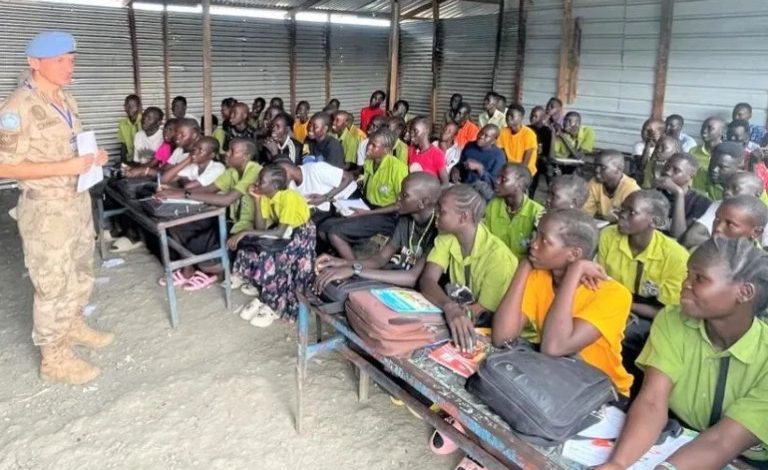
Over time, the PoC sites have evolved into semi-permanent communities, complete with makeshift schools, health centers, and small markets. Although the UN later reclassified them as IDP camps under government oversight, tens of thousands of families remain unwilling to return to their original villages, many of which were destroyed or confiscated. The camps, once meant for emergency protection, have become a permanent reality — a stark symbol of unresolved displacement.
Displacement Becomes Entrenched
Observers warn that the continued reliance on these camps undermines national reconciliation and reconstruction efforts. Their very existence highlights the state’s failure to guarantee security for its citizens, leaving the UN torn between its protective mandate and the risk of entrenching divisions.
Political analyst Simon Gaj told Al Jazeera Net that civilians fled to UN camps as a direct result of the war that erupted in December 2013. While the conflict began as a political dispute within the ruling Sudan People’s Liberation Movement (SPLM), both sides weaponized ethnic divisions, creating deep social fractures and eroding public trust in the government. “The camps became sanctuaries for civilians, protecting them from violence and easing the ethnic and political tensions that fueled the crisis,” he said.
Gaj added: “The PoC sites organized people along community lines, but the peace agreement only addressed power and resource-sharing without tackling the social divisions caused by the war. IDPs still feel unsafe despite the deal. The camps, meanwhile, have provided shelter, food, water, and relative security — things the state has failed to ensure.”
Civil society activist James Lado echoed these concerns, saying the camps reflect a profound lack of trust between displaced people and state institutions. “Even with peace deals signed, many IDPs remain hesitant to return home, fearing weak security guarantees and persistent local disputes over land and resources. For them, the camps remain the only safe option,” he explained.
Lado also noted a new humanitarian and social dimension: “A whole generation has grown up within camp walls. Children have known no life outside, facing economic hardship, health challenges from limited aid, and growing tensions between camp residents and host communities.”
A Protracted IDP Crisis
Journalist Kwajok Lako described the displacement crisis as one of the darkest legacies of South Sudan’s civil war. “At first, people fleeing places like Bentiu, Bor, Malakal, and Juba thought the conflict would be short-lived, and their displacement temporary,” he told Al Jazeera Net. “But more than a decade later, the camps have turned from emergency shelters into permanent settlements, with IDPs unwilling to return to destroyed or seized homes, especially in Upper Nile and Unity states, where ethnic rivalries persist.”
South Sudan’s civil war, triggered by the rift between Kiir and Machar, killed tens of thousands and displaced millions. What began as a political dispute rapidly evolved into an ethnic bloodbath, deepening divisions in a fragile state already grappling with power struggles and competition over oil wealth. To this day, the displacement crisis remains one of the most enduring scars of the young nation’s turbulent history.