The Rapid Support Forces and Four Possible Scenarios in Sudan
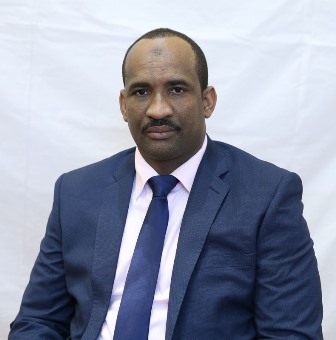
By Yasser Yousif Ibrahim
The political goal behind occupying citizens’ homes was to force the army into accepting the militia’s terms and surrendering to its dictates.
The decision by the Rapid Support Forces (RSF) and their allies in the “Tasis” coalition to form a parallel government in Darfur and parts of Kordofan cannot be underestimated. It represents a grave threat to Sudan’s unity and stability, reviving old fears of another secession in a country already fractured by war. Sudan lost its south in 2011 after decades of conflict, and the specter of further partition now looms again.
This step comes amid a broader weakening of the Sudanese state. Political parties, fractured by internal disputes, are too fragile to lead any initiative that could alter the country’s dangerous trajectory. Meanwhile, the army—the institution tasked with safeguarding Sudan’s territorial integrity—has been at war almost continuously since independence 70 years ago. Internal conspiracies and external meddling now threaten its ability to withstand the burden.
When the current war erupted nearly three years ago, the RSF and its allies sought a lightning coup to seize central power and implement sweeping social changes: dismantling the national army, rewriting laws and curricula, and reshaping Sudanese culture. That plan collapsed in the face of the army’s resilience and popular support. The militia then shifted tactics, embarking on a calculated campaign of looting and occupying homes in an attempt to impoverish the population into submission.
Its leaders cloaked this campaign in divisive rhetoric, claiming to dismantle the so-called “State of ’56” and its supposed monopoly on power and wealth. Yet the reality undermines such claims: on the eve of war, RSF leader Mohamed Hamdan Dagalo “Hemedti” was deputy chairman of the Sovereign Council and among Sudan’s wealthiest men.
The militia’s strategy failed to break the army’s resolve. As the armed forces, backed by citizens, liberated Gezira State, Sennar, and other areas, the RSF recognized its project was collapsing. Hemedti appeared in a video message, declaring a move to “Plan B”—later revealed as a pivot to consolidate control over Darfur, abandoning the dream of ruling Sudan entirely.
Since then, the RSF has escalated its assault on El-Fasher, Darfur’s historic capital, maintaining a siege for more than 500 days in defiance of UN Security Council Resolution 2736. This recalls the trajectory of the Sudan People’s Liberation Movement (SPLM), which initially sought to rule Sudan before focusing on the South and ultimately achieving independence.
Darfur: Statehood Potential and Secession Fears
Darfur covers a quarter of Sudan’s landmass—roughly the size of France—and has a population of six million. Divided into five states, the RSF controls four outright and shares contested control of North Darfur, where it besieges El-Fasher. The region boasts fertile farmland, vast livestock resources, six underground lakes, and unexploited mineral wealth, including iron, copper, uranium, chromium, and granite.
In recent years, large gold reserves were discovered in Jebel Amer, a site seized by the RSF, forming the financial foundation of its rise. Oil surveys by American and French firms further underscored Darfur’s resource wealth—often fueling conflict.
Darfur’s wars have been shaped by ethnic and political divides. The RSF evolved from Arab tribal militias linked to the Janjaweed, while rebel movements like the Sudan Liberation Movement and Justice and Equality Movement drew from non-Arab African communities. International reports have documented atrocities by RSF forces amounting to crimes against humanity and ethnic cleansing. In the current war, these abuses have resurfaced, including the assassination of West Darfur governor Khamis Abakar and massacres against the Masalit community.
Will the International Community Recognize the Militia’s Government?
The RSF’s declared plan to form a government in Darfur and parts of South Kordofan—after allying with Abdelaziz al-Hilu’s movement—has been widely condemned. The UN Security Council rejected the move in August, echoing earlier statements by the African Union. Saudi Arabia and Egypt reaffirmed support for Sudan’s legitimate government and rejected threats to its unity.
Thus, the RSF is unlikely to gain international recognition. Instead, it will attempt to impose facts on the ground, creating parallel institutions and presenting itself as a de facto authority. Its strategy mirrors Libya’s fractured governance model, with strong ties to General Khalifa Haftar. RSF forces have fought to secure border areas with Libya to maintain external supply routes.
If entrenched, the militia may enforce its rule through coercion, deepening ethnic tensions and accelerating the risk of Sudan’s further partition.
Four Possible Scenarios
Against this backdrop, Sudan faces four possible outcomes:
1. Military Victory for the Army
The armed forces and allied groups could recapture RSF-held territory in Darfur, replicating their victories in Gezira and Khartoum. But success requires renewed momentum and overcoming the support the RSF receives from regional backers determined to thwart a national victory.
2. A Political Settlement
Despite army leaders insisting they will only negotiate the militia’s surrender, international and regional pressures may push toward a compromise, as hinted by U.S. diplomatic initiatives and recent meetings in Geneva.
3. A Prolonged Stalemate
Sudan could fall into a Libyan-style deadlock, with rival governments dividing the country and perpetuating a destructive “no war, no peace” status quo. This would erode national institutions and exhaust society.
4. Secession of Darfur Under RSF Rule
The militia could entrench itself as a proxy for foreign powers seeking Sudan’s fragmentation. Israel, for example, has openly articulated a preference for a weak, divided Sudan over a unified and strong one.
Sudan thus stands at a historic crossroads. Preserving its unity requires national wisdom, mobilizing all available resources, and forging alliances with genuine friends of Sudan to uphold the people’s legitimate aspirations.