Completing the National Political Framework: A Decisive Step Toward Containing the Imposed War on Sudan
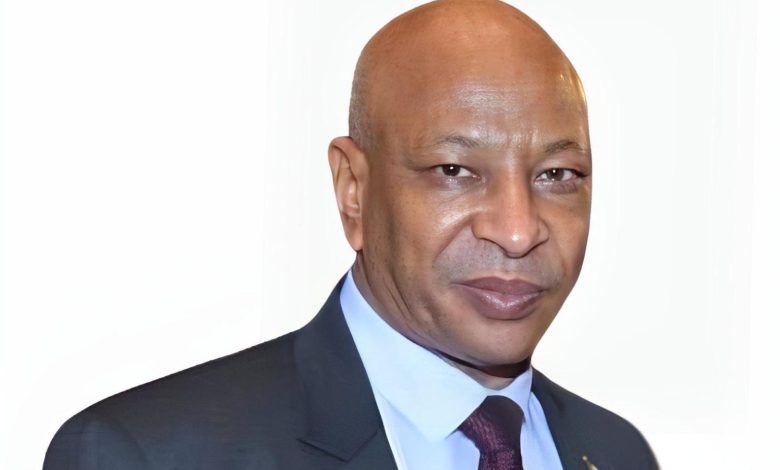
By Ambassador Dr. Moawia El-Bukhari
Introduction
Sudan is undergoing a critical and decisive phase, where domestic dynamics intersect with external calculations. More than six years after the downfall of the Bashir regime in 2019, chaos and failure have largely defined this transitional period. The resulting institutional vacuum has now been compounded by a devastating war imposed on the country, with ongoing repercussions. This conflict threatens not only internal stability but also reflects the weight of regional and international interventions, pressures, and ambitions aimed at weakening the state and draining its resources.
In this context, completing the national political framework has become an urgent necessity. This entails consolidating the civilian executive branch—through the appointment of a prime minister, a council of ministers, and related institutions—while also finalizing the judiciary with the urgent establishment of a Constitutional Court. Safeguarding the state, its institutions, and its citizens requires swift and decisive action, free from delays or hesitation. Only then can Sudan confront its complex challenges, reclaim national initiative, and avoid descending into further chaos and fragmentation. Central to this is ensuring that solutions and projects remain Sudanese-owned, filling institutional gaps that have long paralyzed the country and dragged it decades backward.
1. The Significance of Political Reconstruction
Completing the executive authority is not a formality; it represents the state’s active capacity to manage public affairs at this sensitive juncture. The cabinet must oversee governance, security in its broad sense, public services, and the economy with efficiency—restoring normal life and serving as the backbone for any reform policies. Already, it has begun assuming its duties, a vital step in restoring the state’s executive functionality. Yet its success hinges on clear programs, prioritization of urgent needs, sufficient resources, and effective coordination across institutions to reassure citizens.
Similarly, completing the judiciary reflects the state’s commitment to the rule of law and justice. It lays the foundation for national reconciliation or any sustainable political settlement, signaling Sudan’s intent to build institutions rather than rely on force or division—closing the chapter on a painful past.
2. Addressing Institutional Gaps
Despite progress, the absence of a legislative body since 2019, alongside the suspension of the Political Parties Council, remains a glaring gap in governance. This leaves the executive unchecked and limits the state’s ability to represent the people’s will or balance political forces. Legislation and oversight are indispensable for holding government accountable and shielding the state from internal or external exploitation, while organized party life is crucial to embody popular will and ensure political stability until elections resume.
Reviving these institutions is essential because:
It organizes party activity and ensures fair competition, enhancing national legitimacy.
It establishes a legislature capable of enacting laws and monitoring government transparently, strengthening the rule of law.
It enables the drafting of a fair electoral law reflecting geographic and social diversity, ensuring broad national participation.
These measures are not political luxuries but strategic imperatives to protect the state and enable civilian governance.
Equally important is resolving the question of governors: civilian governors should oversee stable regions to reinforce good governance, while military appointments remain limited to areas facing acute security threats. This balance helps stabilize the country, silences critics, and prevents state vulnerability.
3. Confronting Hostile Forces
Meanwhile, armed factions—chief among them the rebel Rapid Support Forces (RSF) and the “Ta’sis” alliance—are pursuing political legitimacy with foreign backing. Their agenda invites external projects that aim to fragment Sudan rather than rehabilitate or rebuild it. Such efforts will persist as long as external patrons sustain them.
Failure to counter these forces risks perpetuating chaos. But completing national institutions swiftly denies them any foothold, strengthens Sudan’s sovereign legitimacy, and underscores that reconstruction requires strong, cohesive, and nationally-driven leadership—not destructive actors.
4. Political Reconstruction as a Tool for Containing War
An effective civilian government, supported by an independent judiciary, forms the first line of defense against rebellion, disorder, and impunity. It opens space for civil society and national forces to act within a legal and organized framework. Historically, Sudan’s adversaries have exploited weak institutions and absent rule of law to undermine sovereignty. Today, fortifying the rule of law and institutions is a strategic necessity—transforming Sudan into a sovereign, credible state capable of negotiation and decision-making, shielded by a strong constitutional order.
5. State Cohesion and National Unity
A functioning sovereign state—with robust executive, legislative, and party institutions—is the foundation for confronting internal and external challenges. Weak, fragmented states attract interference; strong, independent states earn respect. Sudan’s modern history shows that fragmentation invited foreign meddling, while unity, as seen in the early years of independence or moments of national consensus, gave the country strength and agency.
Thus, building national cohesion through a social contract of compromise and fairness is the real guarantee for overcoming this crisis. A new Sudan, grounded in unity and institutional resilience, can protect its sovereignty, block hostile exploitation, and emerge as a stable and influential regional actor.
Conclusion
Completing Sudan’s political reconstruction is not a symbolic gesture but a strategic step toward a state of law and institutions. A functional government, active legislature, and legally operating parties provide the state with the capacity to govern effectively, safeguard sovereignty, and diminish the influence of hostile forces and their foreign backers.
The true strength of Sudan lies in its unity and institutions. Through them, the country can secure its people’s interests, command regional and international respect, and shut the door on blackmail or predatory external projects.