The Arc of Chaos: How Africa Became the Battlefield of a New Global War
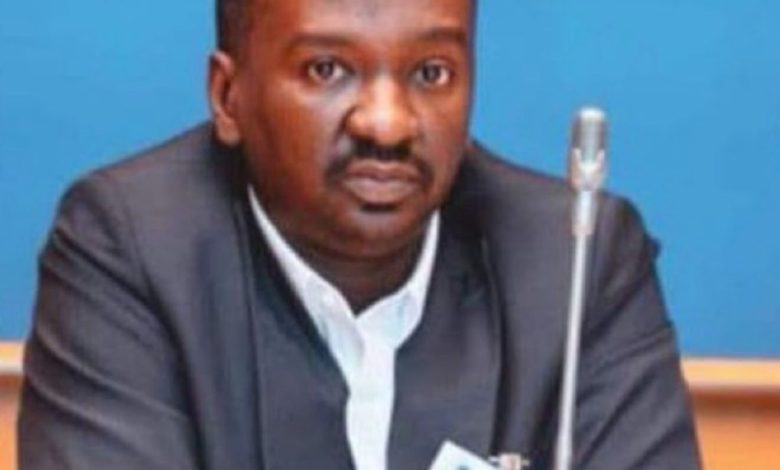
By Dr. Abdelnasir Salim Hamid
In El Fasher, bread is no longer bought with money but with allegiance, and hunger has become stronger than any weapon. One displaced man told me over the phone: “We don’t count the days… we count who is still alive after each night of siege.” Another acquaintance confided with sorrow: “We no longer dream of victory or defeat, we only dream of one night of sleep without gunfire.” A mother sold her wedding ring to buy a sack of flour, only to return and find her child dead outside a hospital with no medicine.
In Khartoum, the Sudanese army reclaimed the capital after months of fighting against the Rapid Support Forces (RSF) and cross-border mercenaries, but what it regained was a city half in ruins and half displaced. I walked through some neighborhoods after the state regained control and felt Khartoum to be a city half alive, half under ashes. Between the besieged El Fasher and the reclaimed Khartoum, Sudan emerges as one face of the so-called Arc of Chaos—a strip stretching from the Atlantic westward through Mali, Niger, and Chad, all the way to the Red Sea and the Horn of Africa.
This arc is no longer a geographical description. It has become an open stage where local conflicts intersect with the interests of global powers. Here, the new tools of war are being tested: drones that stripped armies of their monopoly over the skies, mercenaries who now function as shadow armies, natural resources that fund wars instead of development, and maritime corridors that have turned into chess pieces in the game of global influence. As the International Institute for Strategic Studies reported in 2024: “Africa is no longer just a theater of local conflicts, but a global laboratory where the rules of future warfare are being written.”
In the cities, the daily tragedy is laid bare. Khartoum has regained its breath under state control, yet its empty markets and charred buildings reveal the fragility of capitals in the face of urban warfare. El Fasher presents an even darker picture: a city besieged for months, cut off from food and medicine, with snipers at every corner. One resident told me: “We are living through a new Sarajevo… except the world has not come to save us.” The comparison is no exaggeration. Sarajevo’s siege lasted 44 months and killed more than ten thousand people, while the same scenario unfolds in El Fasher with no international intervention. The starkest difference: Sarajevo was in the heart of Europe, under the gaze of Western cameras, while El Fasher lies deep in Africa, far from the spotlight.
In Ouagadougou and Niamey, armed groups don’t need to control capitals. A single bombing in a marketplace or an ambush on a main road is enough to sow doubt about the state’s ability to protect. In Mogadishu, every street can turn into a frontline as Al-Shabaab fighters melt into the civilian population. Across the Sahara, militants move swiftly in pickup trucks and on motorbikes, relying on tribal networks that know every sand trail. I was in Bamako years ago, and noticed that discussions of security always began with a simple question: Will the convoy arrive safely, or vanish into the desert? One Malian soldier summed it up: “We fight in the desert as if we fight ghosts—we only see them when they strike, and then they disappear.” The scene echoes Afghanistan, where guerrilla warfare lasted for decades without decisive victory.
Along the coasts, the international dimension of the arc comes into focus. Sudan relies on Port Sudan as its last lifeline to the sea, its lungs and source of power. In Djibouti, American, Chinese, French, Japanese, and Gulf military bases sit side by side on a narrow coastal strip. One diplomat described it as “the military Hong Kong of global powers.” The Gulf of Guinea remains vulnerable to piracy—attacks declined slightly in 2022 but resurged in 2023. And the Red Sea, for Africa, has become what the South China Sea is to Asia: a vital international trade route transformed into a militarized zone. The difference is that the South China Sea is under constant surveillance by Washington and Tokyo, while the Red Sea has been left open to unchecked competition.
In the skies, the balance has shifted with drones as the new weapon of war. According to satellite images published by Reuters in early 2025, the RSF operates Chinese CH-95 drones from a base in Nyala, Darfur, capable of reconnaissance and strikes within a range of over 200 kilometers. Amnesty International has documented the RSF’s use of Chinese-made Norinco GB-50A precision munitions in attacks on both military sites and civilian neighborhoods—clear violations of Sudan’s arms embargo. Alongside these systems, the RSF deploys small commercial drones from Chinese companies such as DJI, modified locally to perform reconnaissance and drop improvised explosives on nearby targets. A 2025 report by Military Africa noted that these drones were used to strike airports and supply lines, reflecting the RSF’s growing expertise in aerial warfare.
But war is not fought in the skies alone. In Nigeria, cyberattacks have crippled banking systems. In Kenya and Ethiopia, telecom networks have suffered electronic strikes. In Sudan, another battle rages on social media: thousands of anonymous accounts spread rumors and manipulate the morale of civilians and fighters alike. Here, war is no longer just rifles and bullets, but also code and narrative.
Resources, meanwhile, remain the hidden driver. Sudan produces between 80 and 100 tons of gold annually, half of which is smuggled through regional networks. I was struck by how resources such as gold and uranium—once seen as promises of development—have become curses fueling war. Niger exports some 2,000 tons of uranium annually, the lifeblood of Europe’s nuclear reactors. The Democratic Republic of Congo produces about 76% of the world’s cobalt, the future metal for batteries and electric cars. Nigeria pumps more than 1.5 million barrels of oil a day. Zimbabwe has joined the race with its lithium reserves. A 2024 report by the International Crisis Group concluded: “Resources in Africa are no longer just economic wealth—they are currency in the game of war.”
Mercenaries are another face of this arc. In Sudan, fighters from Chad and Libya have died alongside the RSF, and reports indicate Colombians have been recruited through regional networks. In Mali and the Central African Republic, Russia’s Wagner Group controls gold and diamond mines. In Libya, fighters from Syria and Chad have been brought into battle lines. A Sudanese journalist told me: “When you hear foreign languages in the streets of El Fasher, you know this war is no longer ours alone.” Researcher Alex de Waal wrote: “Mercenaries in Africa are no longer temporary tools but parallel institutions redefining the state itself.”
Global powers, meanwhile, maintain a contradictory presence. The United States retains its base in Djibouti with some 4,000 troops, as well as another in Agadez, Niger—built at a cost of more than $100 million—preferring to rely on drones and intelligence. France, long the traditional power in the Sahel, has retreated after withdrawals from Mali, Niger, and Burkina Faso, maintaining only limited presence in Chad and Côte d’Ivoire. The UK and Germany have ended their participation in the UN mission in Mali. Russia has expanded through Wagner—now rebranded as the “Africa Corps.” China has bolstered its presence with its Djibouti base and massive investments. Turkey has extended its reach via its base in Mogadishu, training thousands of Somali soldiers, while the UAE stretches its influence through a network of ports and military support to warring factions in Sudan. An ECOWAS official admitted: “We have lost control. Our decisions no longer deter coups or stop wars.”
Local voices add another layer to the picture. A doctor in Darfur said: “We receive the wounded without medicine or equipment… just used bandages.” A teacher in Niamey told me: “Our school has been closed for months; the children are now vendors in the markets instead of students.” A soldier in Bamako admitted: “We fight in the desert without salaries, living off whatever we confiscate from villages.” A refugee from El Fasher said: “I walked three days with my children without water, only to end up in an overcrowded camp.” These are not marginal details; they are the very essence of the chaos.
Everyday life across the arc tells the whole story. In Khartoum, bread prices have risen by 50 percent. In El Fasher, children die of hunger daily. In Niamey, power cuts last for days after attacks on energy lines. Thousands of youths are joining militias, not out of ideology, but because war has become more profitable than unemployment or farming.
But the impact does not stop at Africa’s borders. Europe faces direct repercussions: rising migration across the Mediterranean and strategic vulnerability in energy if uranium supplies from Niger or cobalt from Congo are disrupted. The United States views the arc as a new front in its rivalry with China and Russia, where ports, bases, and resources serve as tools of influence. A Chatham House researcher recently wrote: “Africa is no longer just a humanitarian concern—it is now an integral element of Western national security.”
The more I reflect on these scenes—from Darfur to Niamey—the more I am convinced this is not a series of isolated crises, but a dress rehearsal for a coming world war.
The conclusion needs no elaboration: the Arc of Chaos is not only Africa’s future… it is the grand rehearsal for the next global conflict.