Al Jazeera Documents Testimonies of Secret Prisons in El Fasher
Sudan Events – Agencies
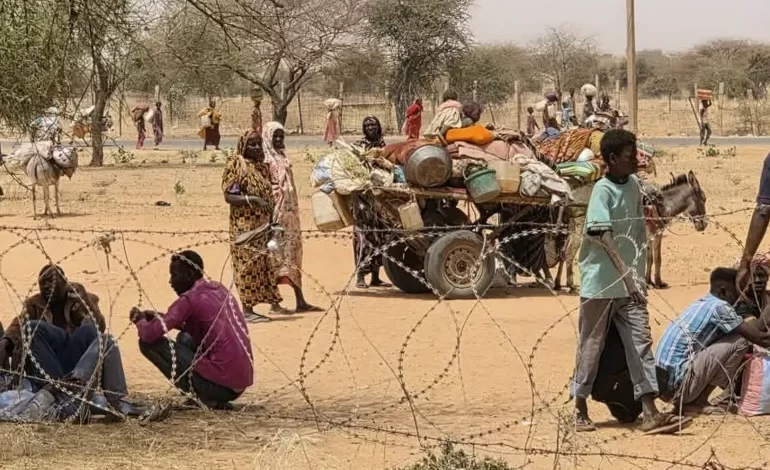
As clashes escalate between the Sudanese army and the Rapid Support Forces (RSF) across several regions, the city of El Fasher and its surroundings have become the scene of systematic abuses against civilians, amid a total absence of international oversight or legal protection.
Field testimonies obtained by Al Jazeera Net reveal the existence of a network of secret detention centers run by the RSF, where dozens are held under what have been described as “extremely harsh conditions.” These include physical torture, sexual violence, extortion, and slow killings inside water tanks.
The revelations come as battles intensify in Kordofan, with Sudanese forces advancing deeper into Darfur. Meanwhile, El Fasher has been under a suffocating siege since June 10, 2024, cut off from humanitarian supplies and basic services, deepening the plight of civilians.
Torture Methods
According to Abu Bakr Ahmed Imam, spokesperson for the Popular Resistance, the group has documented five main prisons inside El Fasher, in addition to dozens of makeshift detention sites in private homes where, he says, the RSF carries out “unprecedented forms of torture.”
Among the most prominent detention locations are: the medical supplies headquarters southeast of the city, the “Jadid Al-Seil” camp to the northeast, the “Qoz Bina” area to the south, the home of militia leader Saeed Sarkol to the east, and the village of Hilla Nuba southeast of El Fasher.
Imam added that RSF fighters are using water tanks inside houses in eastern neighborhoods as sealed prisons: “Those thrown into the tanks never come out. They are left to starve and die silently—one of the most horrific forms of slow killing we have confirmed,” he told Al Jazeera Net.
The Zamzam camp, 15 kilometers south of El Fasher and one of Darfur’s largest displacement sites, has been turned into a vast detention hub. The RSF is reported to be using service facilities, NGO offices, and schools to detain civilians fleeing the city.
Mohamed Khamis Doda, spokesperson for displaced residents of Zamzam camp, said the RSF had converted NGO buildings, schools, and even the former UNAMID headquarters into detention centers where civilians are held in harsh and secretive conditions.
He added that there are reports of organ harvesting operations inside these facilities, allegedly carried out by foreign personnel of Colombian nationality.
Additional testimonies indicate that shipping containers have been moved from within Zamzam to Abu Zreiga, south of the camp—some used as detention sites, others as makeshift medical facilities to treat RSF casualties, hidden from scrutiny or documentation.
Field sources say detainees face multiple forms of torture, including:
Flogging with whips and hanging from trees.
Physical mutilation and removal of fingernails.
Sexual violence, especially in Zamzam and Qoz Bina.
Prolonged deprivation of food and water.
Systematic Extortion
Relief worker Abdel Qader Yahya Abdullah told Al Jazeera Net that over 70 people—women and children among them—are being held inside the medical supplies headquarters under severe conditions, with no access permitted. Reports suggest torture and enforced disappearances in the area.
He added that there are 15 detention sites within Zamzam camp, along with four additional torture centers in Abu Zreiga, all run by RSF members.
According to Abdullah, families of detainees are subjected to “systematic extortion,” forced to pay large sums of money for the release of their relatives. Yet, he noted, releases are rare, with families often pressured into paying additional sums in what appears to be an organized pattern of exploitation under the guise of detention.
Beyond Control
Although El Fasher is officially designated as under Sudanese army control, the on-the-ground reality is far more complex, with shifting lines of influence between warring sides.
The Sudanese Armed Forces are confined to limited positions inside the city, mainly around the central market, El Fasher airport, Shala prison, the livestock market, Abu Shouk camp for displaced persons, and central districts.
The rest of the city is effectively under RSF siege, with sand barriers erected around it and RSF fighters entrenched in residential neighborhoods, including near Al-Salam camp to the northeast.
This overlap of control, according to field observers, has enabled the RSF to establish detention centers inside the city, whether in areas not fully secured by the army or in locations previously held by the militia before being recaptured.
Some of these facilities, located in civilian neighborhoods, remain out of reach for the army without triggering direct confrontations—leaving them practically beyond state control, despite the army’s official presence.
International Silence
Despite extensive documentation by local groups and field activists, the international community has yet to issue a clear stance on the situation in El Fasher—particularly on lifting the siege. Observers warn that continued silence risks fueling further abuses and turning the city into a stark example of the collapse of humanitarian protection in conflict zones.
Al Jazeera Net attempted to contact RSF leaders for comment on these allegations but received no response before publication.
No official RSF statements have been released regarding the fate of those reportedly held in these secret prisons, deepening uncertainty and fears over their fate.
Source: Al Jazeera