Doha Summit — The New Arab NATO
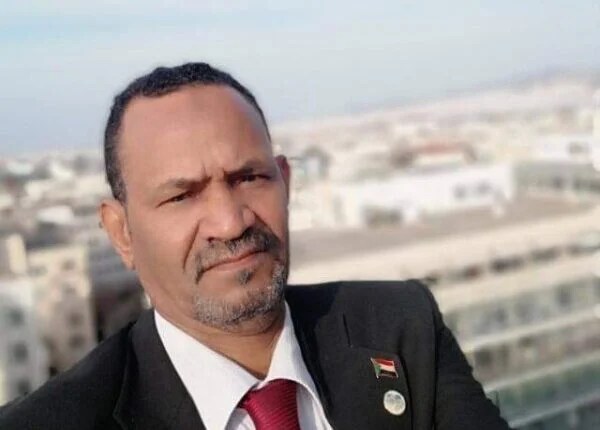
By Abdelmalik Al-Naeim Ahmed
More than fifty countries, representing the Arab League and the Organisation of Islamic Cooperation, concluded an Arab-Islamic summit in the Qatari capital, Doha. The meeting—hosted by Qatar and backed by both regional organisations—was convened in the wake of a vicious attack by Israel on residential neighbourhoods inside Doha that left destruction and a number of dead.
It is clear that the assault on Qatar came because of its support for the Palestinian cause. Israel’s campaign in Gaza — the killing of civilians, destruction of infrastructure and the mass displacement of those who remain — has continued for more than two years amid a deeply inadequate Arab response. That weak reaction encouraged Israel to escalate and to strike at other states that back Palestine, as it has done in Lebanon, Syria, Jordan, Yemen, Iran, Sudan and now, most recently, Qatar.
The attack on Qatar is therefore an attack on all Arab and Islamic countries; it is a direct warning designed to shut down any talk of a two-state solution — a plan that Israel has rejected because it seeks control over the entire territory and the expulsion of its people.
The assault on Qatar — the main item on the emergency Arab-Islamic summit’s agenda in Doha — came while Hamas leadership was present in the country for talks aimed at settling the conflict. The message sent by the attack was twofold: first, to assassinate Hamas leaders; and second, to intimidate Qatar and any Arab state that might continue mediating on behalf of the Palestinian people.
The timing of the strike is significant because Qatar, Egypt and the United States are currently working through a trilateral committee to implement earlier Washington decisions and to push for a two-state solution — an outcome that Israel has broadly refused.
This Doha summit is therefore highly significant in both timing and participation, and in the central issue that brought it together. It is true that the Israeli attack on Qatar was the immediate trigger for the meeting. But it is equally true that the war in Gaza, the need to resolve the Palestinian question, and the necessity of breaking the prolonged Arab silence — limited mostly to scattered condemnations — are among the primary reasons for this extraordinary summit.
The gathering represents the largest Arab-Islamic rally in support of Qatar and signals a revival of the idea of a strong, effective Arab coalition — even a unified Arab army — especially given the critical circumstances facing the Arab and Islamic world, and Israel’s ambition to assert control “from the sea to the river,” reviving designs to reshape a Middle East in its favour and to secure influence unavailable to other regional states. The idea of forming a joint Arab military force or a regional NATO-style alliance is not new; similar proposals surfaced in the 1950s after the 1948 hostilities but faltered. Time and necessity may now make it essential to revisit and seriously pursue such plans.
The Arab League often speaks of shared Arab national security, but these are usually discussions confined to conference halls. The Arab silence over the war in Sudan is one such example. The UAE’s intervention in Sudan and its support for militias that may further Israel’s regional objectives illustrate both collusion and weakness — a double standard applied even against member states of the same regional system.
Given that the Doha summit was convened in the immediate aftermath of the attack on Qatar, the closing statement must explicitly declare full solidarity with Qatar and condemn this heinous assault as an attack on all Arab and Islamic nations. The communiqué should also back the Palestinian cause, demand an end to the aggression in Gaza, and support Qatari, Egyptian and U.S. pressure on Israel to accept a two-state solution. The summit should also address the war in Sudan, denounce the UAE’s recruitment of mercenaries and reject behaviour that invites further aggression — particularly in light of the speech by Chairman of the Sovereignty Council, Lieutenant General Abdel Fattah al-Burhan, to the summit explaining the situation on the ground; his testimony deserves attention in the extraordinary meeting and in its final communique.
If there is one final message this Arab-Islamic gathering in Doha must leave, it is the urgent need to plug the openings through which the enemy advances. The foremost of these is the relationship some Arab states maintain with Israel — relations that Israel, unfortunately, exploits as instruments and proxies to ignite conflicts in the region, as seen in the UAE’s role in Sudan. A second vulnerability is the number of Arab governments that signed the Abraham Accords; those agreements have frequently served Israeli objectives without delivering a single tangible benefit to the Arab signatories. The attack on Qatar is a case in point.
It would be prudent for the summit states to offer frank counsel — both to one another and regarding relations with Israel — before more lives are lost tomorrow.