Is the Fighting in al-Fashir Turning into a Battle for Survival?
By Mohamed Mohamed Osman
BBC News Arabic — Cairo
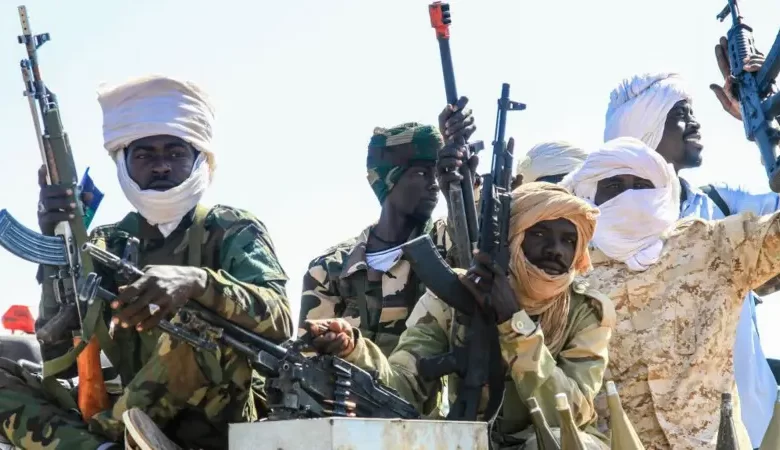
Mohamed Abdullah, an architect by profession, has taken up arms in the ongoing fighting in al-Fashir in North Darfur, fighting alongside the joint forces allied with the army against the Rapid Support Forces (RSF), which continue to besiege the city in an effort to seize control.
Abdullah told the BBC — which reached him via voice messages on WhatsApp due to the difficulty of mobile communications — that he decided to join the fighting to defend his ancestral land and his family. “I’m fundamentally against war and violence, and I worked in construction before the war,” he said. “But what happened afterward pushed me to join the city’s defenders.”
He added: “The RSF have killed many people and forced them to flee and migrate; they are trying to grab our land, so I will not stand idle. I trained to carry weapons with others at a training camp for five months, then we went out to fight… and we will keep fighting until we win and recover all our lands.”
When the war between the army and the RSF erupted in Khartoum in April 2023 and spread across much of the country, al-Fashir and northern Darfur remained mostly spared from fighting thanks to a mediation led by tribal elders. The agreement kept the military components present in the city — the Sudanese army, the joint forces, and the RSF units — in their positions and prevented clashes.
Most leaders and fighters of the joint forces come from African-origin tribes such as the Zaghawa, Fur, Masalit, and Berti. The RSF’s leaders and most of its fighters hail from Arab-origin Darfur tribes such as the Rizeigat, Ta’aisha, and Misseriya.
But after about a year of war, on 11 April 2024, things changed. When the joint forces — dominated by the Sudan Liberation Movement led by Minni Arko Minawi and the Justice and Equality Movement led by Jibril Ibrahim, two of the largest armed factions — announced they were joining the army and abandoning their previous neutrality, open conflict began in the city.
Minawi justified abandoning neutrality by saying they could not leave their people to be killed, referring to the RSF’s takeover of Nyala in South Darfur and the extensive abuses reported there against the Masalit, as documented by UN reports.
On this, Abdullah says: “Like others, I decided to join the joint forces to defend ourselves and our honor against the invading forces… For us the battle is one of existence and dignity, not merely a fight for a military victory.”
In practice, the joint forces are active and effective alongside the army in al-Fashir’s military operations. They have suffered many losses among officers and fighters during the ongoing battles, including Major General Sadiq Musa, considered one of the founders of the Justice and Equality Movement.
Asia al-Khalifa, a spokesperson and fighter with these forces, described the fighting in al-Fashir as a “sacred duty” against the “terrorist militia,” referring to the RSF. She said: “We have repelled more than 220 attacks launched by the RSF on al-Fashir over the past year, and we are prepared to fight to the last person in al-Fashir.”
The army’s Sixth Division, the headquarters force, is based in the city center and is the RSF’s primary target. Khalifa said: “Our defense of the Sixth Division is inseparable from our defense of the city; the division’s headquarters is a symbol, and its fall would mean the fall of al-Fashir.”
A Strategic Location
Al-Fashir occupies a strategic position in North Darfur: it is now the only major accessible city connecting northern Sudanese towns, such as al-Dabba, with the Darfur region due to its geographic proximity. It therefore serves as the sole gateway for humanitarian convoys coming from Port Sudan on the Red Sea coast — the current entry point for external aid — which is then transported to the rest of the region.
The city is bordered to the west by Chad and to the north by Libya, placing it in a strategically important military position for whoever controls it, particularly given the presence of armed factions and Sudanese forces inside the neighboring countries’ borders, according to media reports and regional security organizations such as the International Crisis Group.
A diverse mix of tribes and ethnicities from across Sudan live in the city, though the majority belong to the ethnic groups that supply fighters to the armed factions — the Zaghawa, Fur, and Masalit. Many of them live in displacement camps scattered across the city. Arab-origin tribes are fewer and mostly reside in South Darfur state, which is currently under RSF control.
The city hosts a large number of IDP camps — most notably Abu Shouk and Zamzam — some established more than two decades ago after Darfur’s civil war under ousted President Omar al-Bashir, in addition to newer camps set up after the current conflict that host displaced people from other Darfur states, ethnically from African-origin tribes.
“A Grand Prize”
The RSF has attacked al-Fashir dozens of times after imposing a tight siege for more than a year. Senior commanders have participated in the assaults, including RSF deputy commander Lieutenant General Abdel Rahim Dagalo, who appears in filmed clips leading attacks.
Yale University’s Humanitarian Research Lab documented the RSF building an earthen barrier around the city, believed to be aimed at tightening the siege and controlling who can enter and leave the city, which is home to about 300,000 people.
Since the outbreak of conflict, RSF fighters and allied Arab militias in Darfur have been accused of targeting non-Arab ethnic groups. The RSF has repeatedly denied these allegations.
For RSF fighters, al-Fashir represents a “grand prize” — not only for its strategic location but also because the forces have lost many senior officers and soldiers in repeated attempts to seize it.
A senior RSF officer told the BBC — speaking on condition of anonymity because he was not authorized to speak to the media — “Al-Fashir is the only remaining city in Darfur under army control, and if we manage to seize it, the entire region will come under our control.”
He added: “We have lost many senior leaders and thousands have died trying to take al-Fashir. The matter has become a personal challenge for soldiers and fighters, and we will not relent until we fully control it.”