Sudan’s Image in Foreign Media: Who Shapes It?
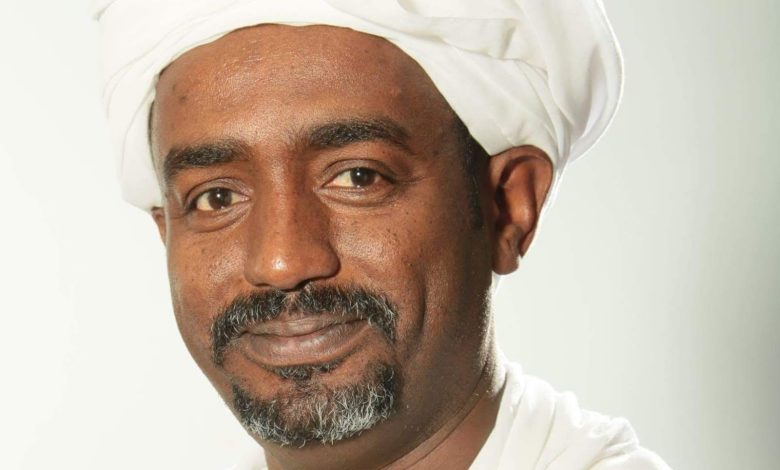
By Dr. Hassan Al-Majmour
The heated debate sparked by the decision to revoke the press license of Lina Yaqoub, head of Al Arabiya and Al Hadath bureaus in Sudan, invites us as Sudanese journalists and media professionals to reflect on deeper questions about the role and impact of international media coverage of the bloody conflict tearing through key parts of our country—particularly the Darfur states and parts of central Sudan that have since been liberated.
The Media’s Role: Positive and Negative
There is no doubt about the positive role played by global Arabic-language media outlets, which have helped bring to light atrocities against civilians and civilian infrastructure. They have given a platform to victims’ voices, eyewitness testimonies, and the stories of people forced from their homes, humiliated, dispossessed, and subjected to killings and sexual violence. They also showcased the views of state spokesmen, the armed forces, allied groups, and mobilized volunteers. Crucially, they broadcast footage of crimes documented by members of the rebel Rapid Support Forces (RSF) themselves—rather than relying solely on contradictory statements from RSF spokesmen.
On the negative side, many of these outlets neglected to use the accurate legal terminology describing the RSF as a rebel force that defected from the army to which it was legally bound. On April 15, 2023, the RSF commander publicly declared that within hours he would seize control of the country, arrest the army’s commander-in-chief and head of the Sovereignty Council, and put him on trial. Media coverage often ignored the subsequent decree dissolving the RSF, and Sudan’s demand to have the group designated as a terrorist organization. Instead, many outlets adopted the term “warring parties,” creating a false equivalence between the national armed forces—constitutionally mandated to safeguard Sudan’s borders and sovereignty—and a breakaway militia that turned its weapons first on military sites, and then against civilians in their homes, which are not legitimate military targets.
Most of these outlets also failed to seriously pursue Sudanese government and army claims that certain regional states were supplying the rebels with weapons, ammunition, mercenaries, and even food and clothing—allegations that have been substantiated by credible sources including independent international organizations, UN human rights mechanisms, and Western media investigations.
The Impact of Media Narratives
Some international Arabic-language outlets, deliberately or otherwise, have shaped a distorted narrative of the conflict. Instead of recognizing it as a rebellion by a paramilitary force using unlawful methods to pursue the narrow political aims of a single group with foreign backing, they framed it within the context of the “Framework Agreement.” This agreement ventured far beyond the limited mandate of any transitional period, tackling core national issues such as restructuring the armed forces and judiciary—matters that should be settled only through a popular mandate and constitutional legitimacy.
Instead, the media opened their platforms to minor political factions that had never won more than a handful of seats—if any—during Sudan’s democratic periods. These groups used a rhetoric alien to the Arab region’s traditional view of Sudan and Sudanese society, which has long been known for tolerance and strong social bonds. Coverage also heavily emphasized condemnation of the former regime, selectively spotlighting the 1989 coup while ignoring earlier military takeovers, and reviving old footage and internal party documents. Yet little to no attention was paid to the regime’s positive aspects—such as its support for regional allies. As the UAE president once remarked, Omar al-Bashir was the first to respond to the Arab coalition’s call for support in Yemen, leaving behind a debt of gratitude.
Should the Media Have Unlimited Freedom of Expression?
Everywhere in the world, journalism is guided by professional, ethical, and legal standards. Its ultimate purpose is to serve the public interest by holding decision-makers and institutions accountable.
Ethical standards include balance, credibility, objectivity, accuracy, depth, independence, impartiality, and humanity.
Legal standards encompass non-discrimination, indivisibility of rights, inclusiveness, accountability, justice, the rule of law, presumption of innocence, and universality of rights.
Media plays a vital role in exposing corruption, ensuring transparency and accountability, and uncovering abuses so perpetrators can be held to account. Yet journalists also carry special responsibilities when exercising freedom of expression. Article 19 of the International Covenant on Civil and Political Rights (ICCPR) allows for limited restrictions on speech to protect national security, public order, public morals, public health, and the rights and reputations of others. These restrictions must be lawful, necessary, and not open to abuse by authorities.
The law also prohibits advocacy of national, racial, or religious hatred that incites discrimination, hostility, or violence. (We will return to the subject of hate speech and free expression in a separate discussion.)
Sudan, like most states in the region, is party to the ICCPR without reservations to Article 19. This means Sudan is bound to enact clear laws and transparent national policies that both safeguard press freedom and outline the responsibilities of media outlets, preventing arbitrary restrictions.
The state is also responsible for building the capacity of Sudanese journalists and regulators, so that freedom of the press is exercised responsibly—upholding the broad traditions of public freedoms deeply rooted in our country.
Does Any Country in the Region Allow the Same Level of Coverage as Sudan?
Dear reader, I leave this question for you to answer. Compare the news coverage of Sudan’s war—whether investigative reports, documentaries, or live broadcasts—with media access and freedom in neighboring states. Consider the ease of access to information, the diversity of guests interviewed (from government officials and opposition politicians to military leaders and ordinary citizens), and the prevalence of live reporting without restrictions.
Then compare this to the level of coverage permitted in the wider region. The truth will be clear to you.
In Conclusion, Key Questions Remain:
1. Will the decision to revoke Lina Yaqoub’s press license alter Al Arabiya and Al Hadath’s coverage of Sudan?
2. Is Lina Yaqoub personally responsible for shaping the editorial policy of these channels?
3. Does Sudan’s Ministry of Information—or its foreign media apparatus—systematically monitor and analyze the country’s image in international media?