Apologies to the Martyr Qusma Ali Omar: A Collapse of Manhood, False Neutrality, and a Broken Conscience
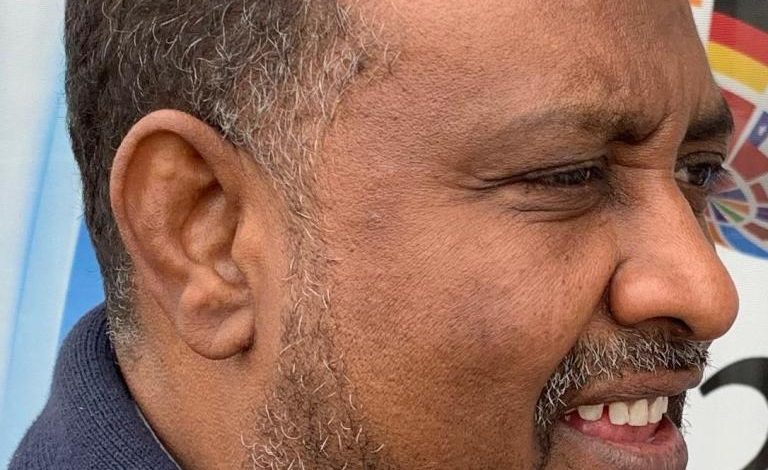
By Abdelaziz Yaqoub
In an age crowded with conflict and tragedy, sometimes a single moment emerges from the rubble of images and strikes the human conscience harder than any news bulletin. A moment that silences speech but opens the heart to a scream that cannot be muted.
I watched a video of a Sudanese woman, the martyr Qusma Ali Omar, from Nyala — reportedly from the Zaghawa tribe — shown to the world bound to a tree, hands tied as if she were a sacrificial animal before slaughter. It was an image that stabbed at the very core of humanity, before it was ever about politics or war.
That scene was not merely an act of violence, but a brazen declaration of the collapse of manhood when it becomes a hollow mask. A masculinity that boasts of subjugating women, terrifying children, and humiliating the elderly — as though strength could be proven by attacking what soldiers and mercenaries perceive to be society’s weakest link. What power is measured by assaulting a defenseless woman? What kind of “heroism” hangs from the branches of a barren tree, bearing witness to the violation of body and spirit alike?
The distorted face of one soldier in the video seemed like a mirror of his hollow inner world. The lines of rage etched on his forehead could not hide the emptiness of a soul unfilled by weapons and unmasked by gunfire. True manhood is not measured by the roar of rifles, but by the ability to restrain violence and protect the vulnerable. Here the gunmen fail, and here manhood collapses at the very first test of conscience.
Amid the darkness, other footage earlier this year showed a different moment — one of RSF commander “Jalha” rebuking a soldier nicknamed “Sharon” for dragging an elderly man by his white beard. Some might dismiss the gesture as limited or belated, but in the wider landscape of moral collapse, it appeared as a brief flicker of light. It suggested that conscience, though buried, can still stir — and that real manhood, however fleetingly, dares to say “no” in the face of humiliation.
Still, the painful question remains unanswered: how can a man be respected when he ties up a defenseless woman? How can a fleeting rebuke erase the shame of degrading the weak? This is not a philosophical or rhetorical query; it is a visceral question of dignity that resonates across Sudan — embodied in the image of a woman bound like a slaughtered lamb, an old man humiliated, and a collective conscience tested before the mirror of humanity and the memory of history.
What we saw was not just a shocking clip on a small screen; it was a mirror reflecting the collapse of an entire moral order. A mirror reminding us that manhood is not tested only on the battlefield, but in how we treat those weaker than us. Anyone who justifies, supports, or stays silent in the face of such acts becomes complicit in a moral crime — even before any legal or political court can hold them accountable.
There are slogans that mask weakness, offering false cover for hollow stances. “No to War” is one of them. On the surface it appears noble, even instinctive — but in Sudan’s current context it has become little more than a soft alignment with the aggressor, stripped of moral weight. For when war is waged by a failed coup and a rogue militia that has ravaged cities and violated human dignity, neutrality between the national army — with all its flaws — and such a militia is not neutrality at all. It is a quiet form of complicity. It is the posture of those who refuse to take a stand against blatant atrocities.
Some argue: “The army destroyed infrastructure with airstrikes.” As if war were a video game, rather than a battlefield with complex maps and shifting targets. This false equivalence seeks to equate accidental collateral damage in the fog of battle with deliberate atrocities: systematic targeting of civilians, siege, burying victims alive, terrorizing children, sexual violence, looting, and the humiliation of women and elders. What scale of justice weighs the mistakes of a national army defending its country against a militia that has made degradation its official policy?
Civilians who returned to their towns after state forces regained control did so not because they trusted militia promises, but because they trusted the state, its institutions, and the restoration of services. Had the RSF remained in control, no one would have returned — staying would have meant subjugation to repression or forced displacement.
For those who remained under militia control, staying was not a free choice; it was the result of poverty and helplessness. Those who could not afford to flee became prisoners of geography — trapped in fear and regret.
In this light, the slogan “No to War” is not a call for peace but an act of willful blindness to atrocity. It is a false balance that equates executioner and victim, error and crime, an army struggling to restore the state with a militia that attempted a coup because it sees the state as nothing but spoils. Such cold neutrality is nothing more than grayness — and gray ash builds no nation.
Condolences to all the people of Sudan for the martyr Qusma, and may God grant patience to her family, friends, and to all the women of our country.