The Intergovernmental Authority on Development (IGAD) stressed that the first condition for achieving peace in Sudan is to stop and prevent external interference in the ongoing war, coupled with ensuring a comprehensive, Sudanese-led process, establishing a clear roadmap for a transition to civilian rule, and unifying mediation efforts under one framework.
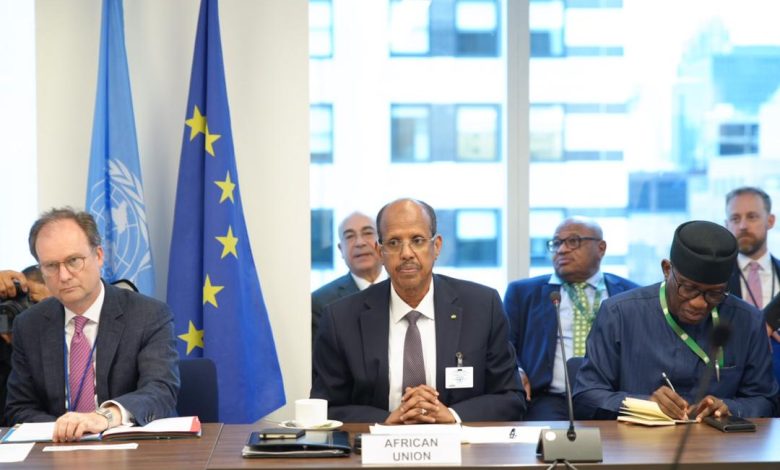
Speaking at the ministerial meeting on Sudan, held on the sidelines of the 80th session of the UN General Assembly at the invitation of the EU, AU, France, Germany, and the UK, IGAD Executive Secretary Workneh Gebeyehu reaffirmed the organization’s commitment to these principles.
He emphasized that “the Sudanese people cannot wait any longer,” stressing that their lives, dignity, and future depend on the swift response of international and regional organizations.
The joint meeting concluded that Sudan is facing the world’s most severe humanitarian and displacement crisis, with more than two-thirds of the population—around 30 million people—in need of assistance, including 24 million suffering from acute food insecurity. The statement warned that the ongoing conflict continues to devastate civilians, especially women and children, and that the suffering endured for the past two and a half years is “unacceptable” and poses a grave threat to Sudan and the wider region.
The group urged the warring parties to resume direct negotiations toward a permanent ceasefire and expressed readiness to take further measures to support its conclusion and implementation.
According to the joint statement, participants endorsed the agreement to protect critical infrastructure, facilitated by the EU, and called on the warring parties to take all necessary steps to ensure civilian protection.
The group welcomed the September 12 joint communiqué of the Quartet on ending the conflict in Sudan. It voiced support for AU and IGAD efforts to coordinate international and bilateral initiatives to pressure Sudanese parties toward a ceasefire, humanitarian relief, and political dialogue, in cooperation with partners such as the EU, Arab League, and United Nations.
The statement strongly condemned foreign military interventions in the conflict by both state and non-state actors, urging them to refrain from fueling the war—particularly through the provision of weapons and financial support—and to comply with UN Security Council Resolution 1556 (2004).
Reaffirming their firm commitment to Sudan’s sovereignty, unity, and territorial integrity, the group rejected the creation of parallel governance structures or any measures undermining the democratic aspirations of the Sudanese people.
“The Sudanese people must determine their political future through an inclusive, transparent, credible, and Sudanese-owned transitional process to restore legitimate civilian rule,” the statement said.
The group strongly condemned violations of international human rights and humanitarian law by the warring parties, urging them to honor their commitments under the Jeddah Declaration. It reiterated support for the UN Fact-Finding Mission on Sudan and for the International Criminal Court to hold perpetrators of atrocities accountable.
The statement further called on the parties to implement a humanitarian pause in El Fasher, as proposed by the UN, and to comply with UN Security Council Resolution 2736 (2024).
Separately, the group welcomed the extension of the Adré border crossing until December 2025 and urged the warring parties to allow safe, unhindered humanitarian access across all necessary routes—both cross-border and cross-line—throughout Sudan, regardless of ceasefire arrangements. It specifically called for the unlimited opening of the Adré crossing and for sustained international humanitarian presence by the UN and partner organizations across Darfur and Kordofan.