EU Warns Sudan Faces the World’s Largest Humanitarian Crisis
Sudan Events – Agencies
On the sidelines of the 80th UN General Assembly, European Commissioner for Humanitarian Affairs Hadja Lahbib issued an unprecedented warning about the deteriorating situation in Sudan, describing the conflict as “the world’s largest humanitarian crisis.” She cautioned that El Fasher, the main city in North Darfur, stands on the brink of a catastrophe that could endanger hundreds of thousands of civilians.
Systematic Collapse and Daily Violations
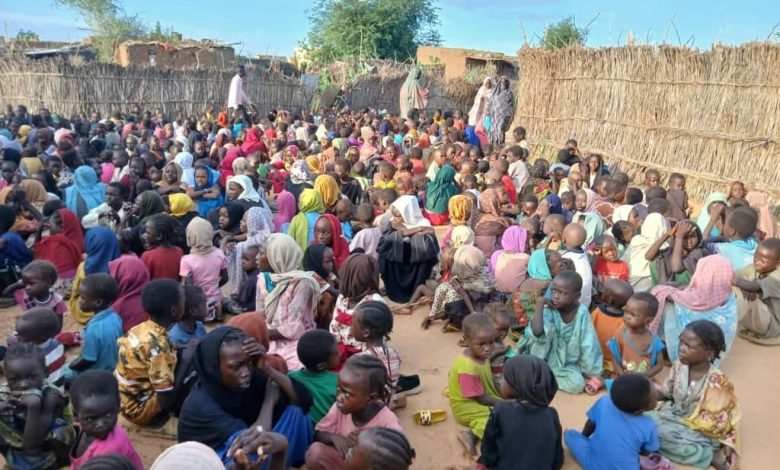
Speaking at a UN side event dedicated to Sudan, Lahbib said the country is experiencing “total collapse,” with daily violations of international humanitarian law. She stressed that the situation in El Fasher, Kadugli, and Dilling is “deeply alarming,” as fighting has trapped thousands of civilians without access to food, water, or medicine, while displacement continues both inside and beyond Sudan.
“The human toll is staggering,” she added. “Markets are being bombed, famine is being weaponized, and women and girls face sexual violence and gender-based abuse on a daily basis.”
Call for an Immediate Humanitarian Pause
The EU official urged Sudan’s warring parties to accept the UN proposal for a humanitarian ceasefire in El Fasher, in line with Security Council Resolution 2736. She emphasized that such a step would provide a “lifeline” for the rapid delivery of aid to women, children, and the elderly.
“El Fasher is on the edge of an unprecedented humanitarian disaster,” Lahbib warned. “Even a temporary humanitarian truce could mean the difference between life and death for tens of thousands.”
Europe’s Largest Aid Package in Africa
Lahbib announced that the EU has allocated more than €272 million this year for humanitarian relief in the region, including €160 million for Sudan alone—making it the largest humanitarian funding package the Union has ever delivered in Africa.
The support, she explained, includes humanitarian air bridges, sea shipments, and direct funding to organizations operating on the ground. She underlined that European aid is “neutral and based solely on humanitarian needs, regardless of territorial control.”
Risks to Aid Workers
Sudan has also become one of the world’s most dangerous countries for humanitarian workers, Lahbib noted, recording the highest number of security incidents last year—most of the victims being Sudanese nationals. “Humanitarian staff are the last lifeline for millions, and they must be protected,” she said.
The Need for a Political Solution
The commissioner stressed that the crisis cannot be solved by military or humanitarian means alone, but requires a political and diplomatic settlement. She called on the international community to unify efforts and pressure Sudanese factions to honor their commitments, pointing to the Jeddah Declaration of May 2023 as a starting point for rebuilding trust and reducing hostilities.
Background: El Fasher Under Siege
The warnings come as El Fasher—Sudan’s last army stronghold in Darfur—remains under an RSF siege for more than 500 days, making it one of the longest urban blockades in modern conflict. UN estimates indicate that more than 260,000 civilians, half of them children, face famine and medicine shortages amid continuous shelling and drone attacks.
Expert Views
Analysts say the EU’s statements reflect growing recognition that Sudan’s conflict poses a strategic threat to regional stability. Dr. Sami Abdel Halim, an international relations scholar, argued that “the EU’s announcement of its largest African aid package is significant, but insufficient unless coupled with political pressure on regional actors fueling the war.”
Humanitarian experts, meanwhile, warn that “funding and promises will remain meaningless unless safe corridors are actually opened to El Fasher and other besieged areas.” They stressed that the success of any initiative depends on protecting civilians and ensuring aid delivery without obstruction.
Conclusion
Lahbib’s address at the UN has thrust Sudan—and particularly El Fasher—back onto the international agenda. Yet the central question remains: will this renewed European and global momentum translate into concrete steps to halt the war and open humanitarian corridors, or remain a matter of diplomatic rhetoric in the face of an impending catastrophe?