From Bolívar’s Legacy to a Virtual Parliament of Peoples: How a Christian Leader Spoke Out for Muslim Blood Before Us
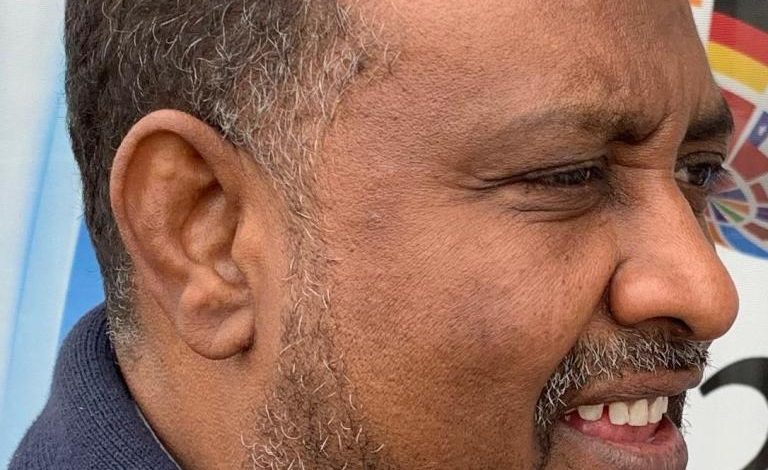
By Abdelaziz Yaqoub
When Colombian President Gustavo Petro took the podium at the United Nations, his voice was more than a passing political address. It was as if history itself emerged from the heart of Latin America to recite a requiem for Palestinian blood. He called for an army of Asian nations to liberate Palestine—as though declaring that dignity knows no borders, and conscience is not bound by faith but lives wherever free humanity resides.
This was a cry from across the Atlantic, from a country with neither oil wealth nor a seat among the giants of global finance. Yet it carried the inheritance of Bolívar, Latin America’s emblem of liberation. In contrast, the scene embarrasses us—the very peoples living in the shadow of Palestine. How can a nation thousands of miles away stand tall, while the nearest voices fall silent? How is it that a Christian leader can openly champion the cause of Muslim blood, while a billion Muslim lips from Tangier to Jakarta remain sealed?
We saw how an attack on Doha sparked global outrage. Capitals stirred, condemnations poured in, microphones raced to denounce the violation—as though the world cannot endure a scratch on oil and money. And while we condemn that crime as reprehensible, deserving denunciation and even retaliation, we cannot ignore the glaring contradiction: why was the voice louder and faster when a wall in Qatar was struck, yet shrinks to a faint whisper when Palestinian lives are extinguished daily? What equation is this that elevates financial interests over human suffering? What age is this where a barrel of oil outweighs a human soul?
The paradox becomes sharper when we recall that Christian solidarity with Muslim lives is no anomaly in history. The first migration of Muslims was to Abyssinia, land of the Christian king, the Negus, when Mecca’s hostility grew unbearable. There, Muslims found refuge in the arms of a just Christian monarch. That moment remained a white page in the book of relations between the People of the Book and the people of Islam—proof that justice transcends creed and identity, rooting itself in the free human heart. Today, Gustavo Petro rewrites that page with new ink when he invokes Palestine’s dignity in the storm.
The moment is, at once, embarrassing, shameful, and heartbreaking. Embarrassing because the honor of the ummah was defended not by the near, but by a distant voice. Shameful because Gaza’s blood has become cheaper than the political and oil calculations of ruling regimes. Heartbreaking because a billion Muslims—with their scholars, princes, kings and armies—lacked the courage to say what a Christian man from distant Colombia declared so boldly, shackled as they are by psychological defeat.
Yet amid the pain lies a small seed of hope: proof that humanity is not dead. Across continents, consciences still tremble at spilled blood. Petro’s cry is not only for Palestine, but for the idea that the world can still produce people who see a human life as more precious than black gold, more sacred than bank accounts, and higher than the limits of politics.
From here, the call does not end—it begins. The silence and betrayal of tame rulers must become the spark that builds a new voice: the voice of the peoples. A voice that cannot be crushed or tamed, rising from a virtual, borderless parliament created by free men and women everywhere—Muslims, Christians and others alike. A platform to preserve memory, resist erasure, and speak truth to injustice.
This is not the conclusion but the start of a long road—where human conscience moves beyond the paralysis of regimes to restore Palestine’s defenders, to secure justice for the oppressed and downtrodden everywhere, and to return to humanity its radiant face.
Thus, from Bolívar’s lineage, who taught a continent the meaning of liberation, to Gustavo Petro, who reminded us of the meaning of humanity, we learn once more: defending human blood is no monopoly of creed or nation. And how urgently we, the sons and daughters of this region, need to awaken from our slumber and reclaim our voice—before history records that Palestine found no defender except from afar.