Prime Minister: Sudan’s Message from the United Nations
Sudan Events – Agencies
Prime Minister Dr. Kamil Idris returned to the country on October 1, carrying a host of important discussions and files following his participation in the 80th session of the UN General Assembly.
He arrived at Port Sudan International Airport, where he was greeted by a large crowd of citizens and an official delegation that included prominent state figures and leading political personalities.
The scene was vibrant with colors and anticipation, as the airport was decorated with the Sudanese flag and the faces of those present reflected joy and expectation.
From the airport, Dr. Kamil Idris headed to the Security Service Hall in the city center. While the atmosphere was tinged with its usual caution, there was also a friendly spirit that suggested the meeting would be different from the norm. The hall was packed with journalists and media representatives eager to follow the event closely, all awaiting the Prime Minister’s remarks upon his return.
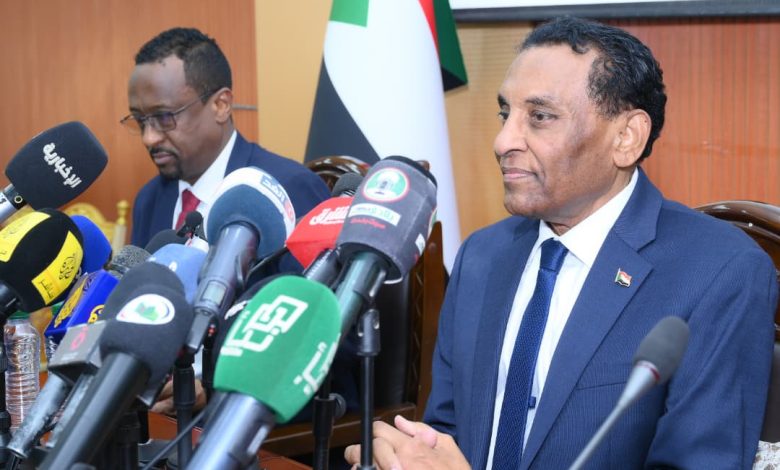
At exactly 3:00 p.m., Idris took the podium accompanied by Minister of Culture, Information, and Tourism Khalid Al-Eisair, who supervised the press conference. As the session began, the Prime Minister projected a mix of seriousness and anticipation, while reporters captured every movement and tone of his voice.
In his address, Kamal Idris stated: “We have just returned from participating in the 80th session of the UN General Assembly on behalf of the Government of Hope, the people of Sudan, and all Sudanese. We affirmed that Sudan’s people are a people of dignity and pride, that our army is strong, and that Sudan is a great nation endowed with resources, minerals, the longest river, and a legacy of great revolutions, civilizations, kingdoms, and people.”
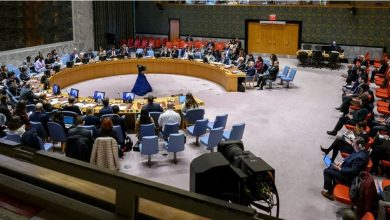
He added: “We demanded a direct diplomatic policy to classify militias as terrorist organizations, and we strongly called for the liberation of El-Fashir and the lifting of the siege imposed on it. We reaffirmed Sudan’s sovereignty and dignity, and the need to cleanse our land of all aggressors. These messages were delivered in all formal platforms and on the sidelines of the UN General Assembly. We held intensive meetings with world leaders, the UN Secretary-General, and the Chairperson of the African Union, and we received significant sympathy and support.”
The Prime Minister stressed that the most urgent priority is “to purge the homeland of militias and lift the siege on El-Fashir. We are at the forefront and will remain at the forefront, whether people like it or not. And we succeeded in conveying this message with full clarity.”
A Range of Issues
Idris also addressed a number of pressing issues, including his visit to Saudi Arabia, which he described as one of the most important and which resulted in understandings on a strategic partnership. He also raised the question of U.S. sanctions on Sudan, which featured prominently in his meetings with American officials, alongside the issues of lifting the siege on El-Fashir and other besieged cities, and advancing Sudanese-Sudanese dialogue through a relative consensus leading to stability and national revival.
He further highlighted corruption and smuggling as central priorities in the Government of Hope’s strategy, and pointed to discussions on Sudan’s return to the African Union—emphasizing that the AU needs Sudan, a founding member of the Organization of African Unity, perhaps more than Sudan needs the AU.
Concluding his speech, he extended thanks to all who contributed to what he described as “this historic journey”: “I would like to thank the Chairman of the Sovereignty Council, who was in daily contact with us, the heads of state, the UN Secretary-General, the Arab League Secretary-General, the Chairperson of the African Union, the accompanying delegation, Sudan’s UN Mission, and our embassy led by Ambassador Mohamed Abdallah Idris.”
Denying Famine
Prime Minister Idris firmly rejected reports of famine in Sudan, saying such claims in some media outlets and organizations “do not reflect reality.” He explained that what exists is siege in certain areas such as El-Fashir, which requires immediate international action to lift.
He stressed that Sudan has moved beyond any talk of famine and will not allow such narratives to be revived. He also announced that youth form the backbone of the Government of Hope, unveiling plans to empower them through housing projects and productive programs enabling their active role in development.
Al-Eisair’s Phone
Minister Khalid Al-Eisair clarified reports about raising his phone during the UN General Assembly session. He explained that his purpose was to ensure the live broadcast of the Prime Minister’s speech through Sudan News Agency (SUNA) and Sudan TV, dismissing claims circulating on social media that he was recording the event. He emphasized the ministry’s commitment to transparent and professional coverage of Sudan’s international engagements.
Combating Corruption
Idris acknowledged the presence of corruption in state institutions but pledged to fight it vigorously. He announced that all ministers in the Government of Hope will sign financial disclosure declarations to combat administrative and financial corruption, adding: “We are in the lead, at the top—whether others like it or not.”
The GERD and Diplomacy
On the Grand Ethiopian Renaissance Dam (GERD), Idris revealed detailed reviews and direct diplomatic discussions with Egypt and Ethiopia to avoid disasters similar to the recent floods in Sudan. He also noted that the Sudanese delegation reached understandings with the AU leadership and several heads of state regarding Sudan’s return to the African Union, describing it as only a matter of time.
“The AU needs Sudan more than Sudan needs it,” he stressed, underlining the strong response from African leaders and confirming that agreements had been reached within the framework of a strong, unbroken Sudan.
Visit to Saudi Arabia
Idris underscored the importance of his recent visit to Saudi Arabia at the head of a high-level delegation, describing it as one of the most significant visits he has undertaken.
The Siege of El-Fashir
He reiterated his government’s call at the UN for the international community to classify the Rapid Support Forces as a terrorist militia and to lift the siege on El-Fashir.
In closing, Idris said the delegation had also discussed lifting the blockade on El-Fashir and other towns such as Dilling and Kadugli, as well as humanitarian assistance through the UN. He noted that the army is advancing in El-Fashir and that international NGOs are ready for airdrop operations, warning that any group—militia or otherwise—that obstructs aid will be held accountable.
He also revealed in-depth discussions with the U.S. administration and humanitarian organizations regarding what he described as “unjust” U.S. sanctions.