Expanded Report on the Joint Statement Calling for an End to the Siege of El Fasher and the Urgent Airdrop of Humanitarian Aid
Sudan Events – Agencies
Introduction
More than eighty Sudanese and international organizations — including Adeela for Culture, Darfur Platform, SIHA Network, SAPA, and the Fikra Center for Studies and Development — have issued a joint statement calling on the international community to end the suffocating siege imposed by the Rapid Support Forces (RSF) on the city of El Fasher in North Darfur, as well as on other besieged towns such as Dilling and Kadugli.
The statement, titled “An Urgent Call for El Fasher and Airdrops of Aid,” sounded a dire humanitarian alarm, warning that the continuation of the current situation could lead to an unprecedented humanitarian catastrophe.
Humanitarian Situation in El Fasher
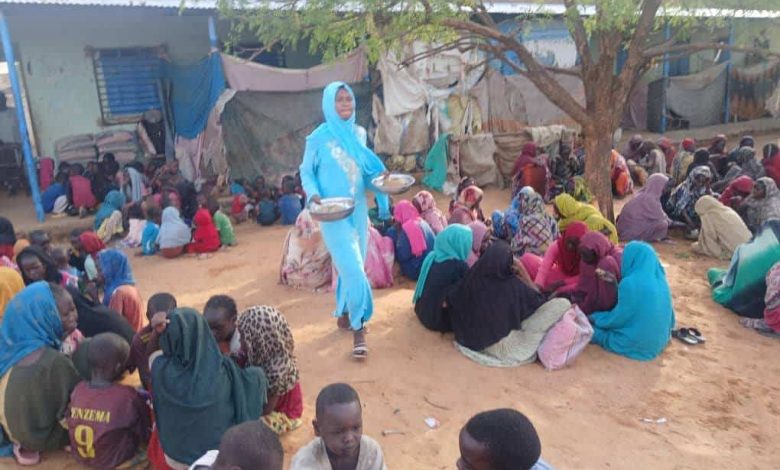
Since April 2024, El Fasher has been under a tight blockade imposed by the RSF, cutting off food, medical supplies, and essential services from an estimated 260,000 trapped civilians.
According to UN reports, more than 40% of children are suffering from malnutrition, while 11% face acute, life-threatening malnutrition. Nearly all health facilities have collapsed, epidemics are spreading rapidly, and repeated attacks have rendered road convoys for humanitarian aid impossible.
The statement asserts that starvation has become a deliberate weapon of war, not a mere byproduct of conflict — a systematic policy that constitutes crimes against humanity and potentially genocide under international humanitarian law.
Key Demands of the Statement
The joint appeal outlines several urgent calls to action:
1. Immediate lifting of the siege on El Fasher and unrestricted opening of humanitarian corridors.
2. Implementation of a humanitarian air bridge as the only remaining viable option to save lives following repeated failures of ground aid routes.
3. Political, financial, and logistical support from the United Nations, the African Union, and neighboring states — including Chad, South Sudan, and Egypt — to establish logistical hubs for air operations.
4. Political pressure on warring parties to end the use of starvation as a weapon of war and to hold perpetrators accountable.
The statement further stressed that any threat or attack on humanitarian aircraft must be considered an act of aggression against the international community as a whole.
Precedents and Successful Airdrop Operations
To strengthen its case, the statement cited several historical and contemporary precedents demonstrating the effectiveness of airdrops in saving lives during sieges:
Operation Lifeline Sudan (1989–2005), which delivered food and medicine to millions in South Sudan and the Nuba Mountains.
Recent airdrop operations in the Nuba Mountains (2024) conducted by Samaritan’s Purse, which successfully supplied civilians for months.
A Sudanese Ministry of Health airdrop to El Fasher in June 2024, delivering 20 tons of medicines and vital medical supplies.
These precedents, the statement argued, refute any doubts and affirm that airdrops are not only feasible but a legal and moral obligation that must be carried out immediately.
Legal and Ethical Dimensions
The joint statement linked the siege of El Fasher to crimes defined under the UN Convention on the Prevention and Punishment of the Crime of Genocide, emphasizing that continued international silence amounts not only to failure but to complicity in an ongoing crime.
It underscored that using starvation as a weapon of war requires a decisive international response, warning that inaction in the face of mass suffering is a moral stain on the conscience of the global community.
List of Signatories
The appeal was endorsed by 84 Sudanese and international organizations, including:
Adeela for Culture and Arts
Darfur Civil Platform
SIHA Network (Strategic Initiative for Women in the Horn of Africa)
Sapa (Sudanese American Physicians Association)
Fikra Center for Studies and Development
Darfur Bar Association
The Silmiya Women’s Coalition
Save Sudan Initiative
It was also supported by independent activists and cultural figures, such as filmmaker Ikram Hamad Fadlallah and human rights advocate Razan Mohamed Suleiman, along with dozens of organizations working in human rights, media, relief, and women’s empowerment.
Conclusion: Enough Words — Save Lives
The statement concluded in stark and urgent terms: “Much has been said, and many statements have been issued, but the catastrophe speaks for itself. No more words — it is time for action. Saving lives in El Fasher is an urgent moral and humanitarian duty that cannot be delayed or subjected to political calculation.”
The signatory organizations announced that the call remains open for additional institutions and individuals to join the appeal to break the siege and ensure the immediate, sustained delivery of humanitarian aid across Sudan.