Mixed Reactions to Prime Minister’s Decision to Establish a Special Irrigation Unit for Gezira Scheme
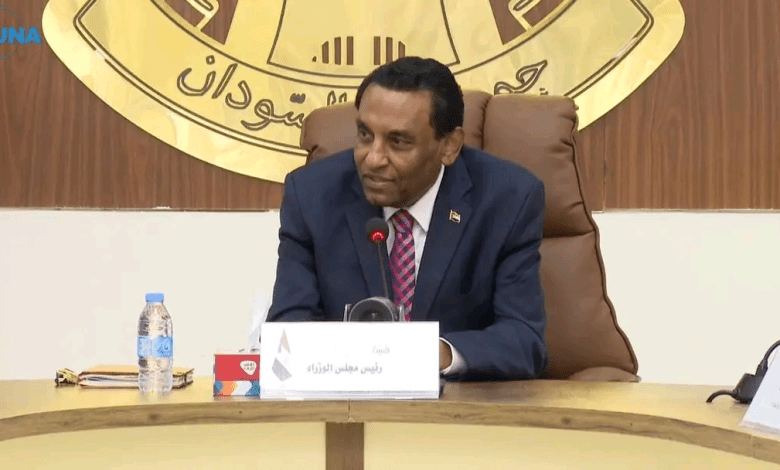
Reactions have been mixed regarding the recent decision by the Prime Minister to establish a dedicated irrigation unit for the Gezira Scheme, which will be administratively linked to the project’s management.
While some farmers welcomed the move, describing it as a victory for the will of Gezira farmers, they also viewed it as a step away from the bureaucratic sluggishness associated with the Federal Ministry of Irrigation—an inefficiency that, they argue, cost them dearly this year due to low irrigation levels, resulting in large areas of the summer crop season going unplanted or failing.
Supporting the decision, economic expert Professor Mustafa Nowari stated in a WhatsApp-based economic forum: “It was only logical for a technical body affiliated with the project management to receive its irrigation quota from the Sennar Dam (via the Ministry of Irrigation) and distribute it according to agricultural plans.”
He added that this model should apply to all irrigation projects reliant on surface or groundwater storage. Nowari stressed that such a decision falls beyond the authority of the Ministries of Agriculture and Irrigation and rightly belongs to the Prime Minister. “It is ineffective for the Gezira Scheme director to remain subject to engineers who operate outside the project’s plans and directives,” he noted.
However, not all agreed. Ahmed Babiker Hamar, Director of the National Agency for Export Development and Financing, described the decision as poor. He argued that the Prime Minister should not have intervened when a Minister of Agriculture and Irrigation—whom the PM himself appointed—is in office.
In contrast, agricultural expert Dr. Mohamed Othman Mahjoub Al-Sibai questioned the basis upon which some experts criticized the Prime Minister’s decision. He argued, “If the Minister of Agriculture is opposed to the decision, then the minister should go, and the decision should stay.” He emphasized that irrigated agricultural projects have long suffered from either flooding or drought due to conflicting and disconnected management between the Ministries of Agriculture and Irrigation.
He further claimed that poor irrigation management has crippled agricultural projects, cost the country billions of dollars, and weakened the state treasury by undermining projects’ ability to repay government debts—consequently disrupting vital services such as education, healthcare, social development, and even national defense.
Al-Sibai pointed out that only sugar projects, which were managed from inception to implementation under unified administration, avoided such issues. “We’ve never heard of a single sugar factory suffering reduced cane production due to water shortages,” he said. “In fact, sugar yields have surpassed 60 tons per feddan, despite their high water requirements.”