A joint investigation by The Guardian and Bogotá-based outlet La Silla Vacía has revealed the involvement of hundreds of Colombian mercenaries in Sudan’s civil war, contracted through private security companies allegedly linked to the United Arab Emirates (UAE), to provide military support to the paramilitary Rapid Support Forces (RSF).
According to the report, more than 300 former Colombian soldiers have travelled to Sudan over the past two years, some routed through military bases in Somalia and Ethiopia before being deployed to cities such as Nyala and El Fasher — the army’s last major stronghold in Darfur, under siege for more than 500 days.
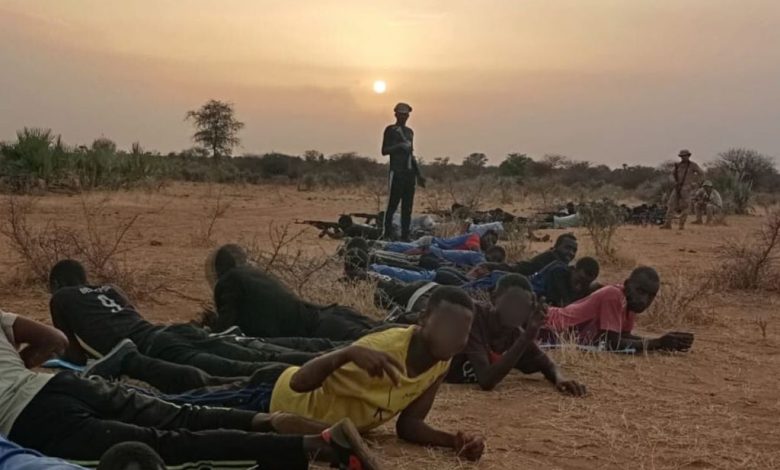
One mercenary, identified as “Carlos,” said he signed a contract worth $2,600 per month and admitted his first task was training Sudanese recruits, most of them children. “There were thousands of recruits in the camps, some adults, but mostly children. We taught them how to handle rifles, machine guns, and RPGs. After that, they were sent to the front. We were training them to go and get killed,” he told reporters.
Photos and videos obtained by the outlets show Colombian mercenaries at training camps in Zamzam — Sudan’s largest displacement camp — which in April was stormed by RSF forces in an attack that killed between 300 and 1,500 civilians, described by the UN as one of the war’s worst massacres. Other footage shows Colombian fighters, speaking with thick accents, firing weapons in the besieged city of El Fasher and carrying wounded comrades through ruined neighborhoods.
Experts say the UAE played a central role in hiring the mercenaries, continuing a pattern first established during the Yemen war when Colombian fighters were deployed by Abu Dhabi to battle the Houthis. The UAE has consistently denied any involvement in Sudan’s conflict, but testimony from mercenaries themselves and field evidence suggest otherwise.
Colombia has become one of the world’s leading exporters of mercenaries, owing to its decades-long internal conflict that left a surplus of highly trained fighters. President Gustavo Petro has condemned the phenomenon as a “trade in men turned into commodities to kill” and pledged to curb it, though low pensions and lucrative foreign offers mean the business is thriving.
Analysts from the International Crisis Group warn that the presence of foreign mercenaries adds a dangerous dimension to Sudan’s war, especially with evidence of child recruitment and the militarization of humanitarian spaces. The UN has already labelled Sudan’s displacement crisis — with nearly 13 million forced to flee — the worst in the world.
Observers argue that the revelations about Colombian mercenaries will increase international pressure for new sanctions targeting recruitment and financing networks, potentially including Emirati entities suspected of involvement. Analysts suggest that Western powers may expand sanctions to cover Gulf-based companies and individuals if credible evidence links them to sustaining Sudan’s war machine.