Realms of Foreign Relations: Balancing the Apparent and the Hidden
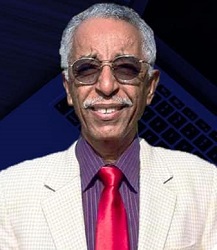
Dr. Al-Khidr Haroun
Al-Mutanabbi says: You place the dew where the sword should be in ‘Alā, a people of Mudar —
as placing the sword where the dew belongs.
The meaning is plain: put things in their proper place. A preceding couplet helps us understand it: If you honour the noble, you rule him;
If you honour the base, he rebels.
And similarly: He who makes the lion a decoy for his hunt —
the lion will hunt him when you hunt it.
It is as if the poet is advising Sayed al-Dawla to be prudent and discerning in the politics of people and rulers — to grant pardon, honour and generosity to those deserving of clemency, and to withhold indulgence from the unworthy and the base. I am convinced he was referring, by way of admonition, to identifiable people and advising the prince not to be deceived by them. Some commentators even suggested the poet was urging him to move against the weak Abbasid caliph in Baghdad, arguing that the caliph was less fit for the caliphate; they cite another couplet from the same poem: How wondrous are the courtiers whom you serve —
will my blade not beware whose hand it clasps?
Here “the courtiers” signify the ruler who wields power; “the two blades” refer to the caliph’s sword in Baghdad and Sayed al-Dawla’s sword in the Levant, even when the latter does not owe true allegiance. God knows best the poet’s intent.
This digression is only a prelude to speak about our country, Sudan, and what this ordeal — unparalleled in its modern history in the breadth of killing, humiliation and destruction wrought by hired, vindictive hands feeding on the loss of our people’s lives, faith and homeland — requires of us: to place the sword in its proper place; to know when and how to be generous and forgiving toward those who merit it; and to confront the base with the firmness, severity and steely resolve they deserve.
Since gaining independence in 1956, Sudan has been a member of the international family, recognized under the United Nations Charter. The UN’s 193 member states are supposed to be a family of nations — a community shaped by familiarity, compassion and mutual support. The UN Charter is meant to organize the life of those member states through its agencies: the World Health Organization, UNESCO, the World Food Programme, UNICEF, the International Court of Justice, and the Bretton Woods institutions — the IMF and World Bank, named after the American city where they were founded.
Formally, members are equal regardless of territory, population, strength or weakness. Reality, however, is otherwise. The five powers that emerged victorious in 1945 endowed themselves with privileges that enable any one of them to veto a Security Council resolution — a veto which effectively cancels the support of the other 14 members. The General Assembly, with its 193 states, is largely a platform for rhetorical speeches; its resolutions rarely carry real weight. As Margaret Thatcher once sneered, how can we trust a world that still lives in the age of prophecies?
Thus the Security Council — which should have been the executive body implementing General Assembly decisions — became the dominant arbiter of international relations in this unjust division. In functioning democracies, the executive follows the majority’s will as expressed in elected assemblies. Painfully, the Security Council’s power extends protection to its smaller allies: those allies enjoy the implicit shield of their powerful friend among the permanent five and act above international law. Israel is the clearest example. The UN Secretary-General is chosen only with the unanimous support of the five major powers and is constrained even in a possible second term. Do you not see how shackled and powerless he is? The United States, as host country, pays a quarter of the UN budget; Madeleine Albright famously said the UN is an instrument of U.S. foreign policy — a remark that needed no reiteration.
The UN Charter, on paper, protects member states’ sovereignty from external aggression and forbids interference in domestic affairs. In practice there are light-years between the promise and the reality. Interests — great-power interests, greed and ambition — combine with ideological and ethnic-religious bias. Elegant words about peace, security and humanitarian duty often mask a humiliating dependence. States and peoples know this, but many have no option but to placate and maneuver alongside the wall; any state that resists such blatant injustice is branded a pariah, rogue, or villain — deserving of forceful punishment. Placation has a long history: Zuhayr ibn Abi Sulma, the sage of pre-Islamic times, observed that those who do not placate in many matters become fierce like beasts. Placation is not always treachery; when used judiciously it can prevent bloodshed, reduce losses and wait for opportunities. But if it becomes a permanent policy, disguised as diplomacy, it is self-deception that entrenches humiliation. Abu Tayyib al-Mutanabbi warned: Every forbearance without strength
Is a refuge for the base;
One who is humiliated easily bows to humiliation;
A dead man feels no pain from his wound.
A leader guided by noble pride — the dignity woven into human nature — seeks routes out of humiliation by allying with a less arrogant power, if not ready to die standing. If a nation is not prepared for sacrifice, it may choose further rounds of placation to survive the storm. Arrogance takes many forms: racial, industrial, financial — the wealthy who despise the poor. Seeking an ally among the great whose arrogance is less pronounced is, under such conditions, a necessary tactic to safeguard dignity and self-respect. The wise strategist builds policy on the hidden realities between words and on soft touches; a skillful diplomat may feign what is needed in the realm of appearances while acting differently in the realm of harsh reality — the real world in which one must know the strengths and weaknesses of one’s country and what tempts others to embrace friendship or to bully. That is geopolitics.
We are in a fierce war that has lasted more than two years, driven simply by some actors’ attempt to strip us of national sovereignty, to turn us into refugees scattered across the world. They seek to exterminate us per plans designed to satisfy foreign appetites for our resources, or by spur-of-the-moment fear-driven impulses, worried by our aspirations to build a system of governance of our own making. Even under dictatorships, we never bowed fully. We long for transparent, accountable governance chosen freely by the people — a hard-won aspiration achieved before through great sacrifice, and feared by those who worry it will inspire similar uprisings in neighboring peoples humiliated by oppression.
So what should we do amid this grave calamity with the “international family” — an entity as fragile as a spider’s web, which can devour its own mother when it pleases, and whose internal bonds cause more pain than a sword? What shall we do with regional organizations — some of them nominally sisterly, yet often a source of headache like a migraine? The pain we feel is a primary and bitter oppression, sharper than the stroke of a steel blade.
Should we renounce them all and cast them away? An old sage warned against such rashness: The fool is not master among his people —
but the master is he who feigns folly.
U.S. President Theodore Roosevelt at the start of the 20th century — when America had not yet reached its present might — advised: “Speak softly and carry a big stick.” Diplomacy first; force as backup. The United States possesses such a global “big stick”; we do not. Our limited choices force us to practice a prudent, even feigned, diplomacy within a harsh world. How?
Within the UN there are still limited, tangible benefits: the Food and Agriculture Organization, WHO, UNESCO, UNICEF, and others offer real advantages that tempt us to remain within the enclosure. The General Assembly provides an annual forum that, for many poorer states, is an occasion to cry aloud on the global stage — a pressure valve that might relieve tensions at home. But have we used that platform well to expose the architects of our aggression and obtain sympathy from world leaders? Could we have done more?
Regional bodies are equally suspect. Nelson Mandela mocked the idea of a continental union funded by outsiders: the tune will be played by its funders. He knew from long struggle and 27 years in brutal imprisonment that institutions, like individuals, are subject to bribery, coercion by temptation, threats, visa denials from grand capitals, and defamation — some real, some manufactured by tools like artificial intelligence.
So what do we do? Do we curse and hide? No. Membership grants us certain posts and limited benefits; we should not abandon our place. Our presence within them can protect us from conspiracies hatched through these organizations and allow us to detect those who plot harm against our country. We should be the listening ear on the wall — to learn the identities of the cunning few who harm Sudan and the malevolent enemies who wish us ill — and signal to the world that we know, and that we will treat each actor according to his merits when the sun rises again. We might threaten withdrawal from some bodies when tactically useful, without rashly doing so.
Does the Sudanese people — suffering for more than two years in a war unlike any other, as the Chairman of the Transitional Sovereignty Council and the Prime Minister have said — not have the right to know who keeps reigniting it? Is the blame solely a criminal, hired militia — the Rapid Support Forces — while global media and legislative bodies point a finger at a particular state, namely the United Arab Emirates? If that is not the case, tell us plainly; we do not wish to curse a country to which we have ties. If it is the case, why the silence? Why waste a precious chance for our leaders to address world capitals in New York, London and other international fora to name the crime, protest that state’s involvement, and demand its removal from any peace process — while its interference continues day after day?
Israel, protected by global Zionist clout and money, and nearly total control of some media, was exposed for crimes against women, children and the elderly; we saw delegations leave the General Assembly hall in protest when its prime minister rose to speak. The world rallied for the Palestinian tragedy via social media and direct appeals. If we had similarly raised our voice to name intelligence-run armed convoys — reported by media to be organized using satellite-directed logistics and assisted by retired officers from powerful states — and shown how a tribal, family-based militia could not possibly field such capabilities while destroying hospitals, schools and food and fuel depots and murdering children, women and the elderly with internationally prohibited weapons, pointing to the state behind the aggression, we might have won sympathy.
Concealing the identity of the aggressor lets arms continue to flow to the rebel militia, prolongs Sudanese deaths and deprives civilians of electricity, potable water, and medicines. Does the silence of civilian and military leaders about the source of aggression — when speaking aloud would at least constitute a serious effort to sever the culprit’s hand — amount to a failure to stop the slaughter of Sudanese, civilian and military, and a waste of the energies of youths who volunteered to defend women, children and the old? Yesterday the Chairman of the Sovereignty Council said: “These people are hired, they rent rooms and build algorithms… your pages are hacked… your posts are suppressed — this is a battle targeting the whole of Sudan!” Who are they, Your Excellency? Shouldn’t all of Sudan know, from you personally? Shouldn’t the state mobilize all its internal and external resources to counter this threat? Aren’t such measures as vital as military preparation?
True and urgent care to stop the war is to decisively confront the source of this brutal aggression and stop the bleeding — and the apex of that effort is to halt the flow of weapons and mercenaries from that source. Suffering will continue if that does not happen.
Some may argue that naming the sponsoring state is unnecessary because our army and fighters have liberated most parts of the country through endurance and sacrifices of blood and lives — a claim worthy of respect. But if we can secure victory today at a lower cost, why defer it to tomorrow at higher cost — more innocent blood and squandered youthful energy saved for future fights? Is that not wasteful and a source of suspicion and slander that saps morale and kills trust? Cutting off the networks that target Sudan, Mr. Chairman, and stopping their harm, is a matter of transparency: telling the people the whole truth, bitter and sweet, so they may share responsibility as they ready themselves for governance after victory. That will enhance trust and strengthen patience under wartime hardships and rally public support for the leadership.
We stand with the state, its institutions, its valiant army and all its fighters. As citizens, however, we bear the duty of advising and pointing out weaknesses; we have the right to know political and diplomatic movements with full transparency. We do not, and should not, have the right to know operational military tactics — such details are secret and would be useless, indeed dangerous, to ordinary civilians like us.
Have I delivered the message? God is witness.